
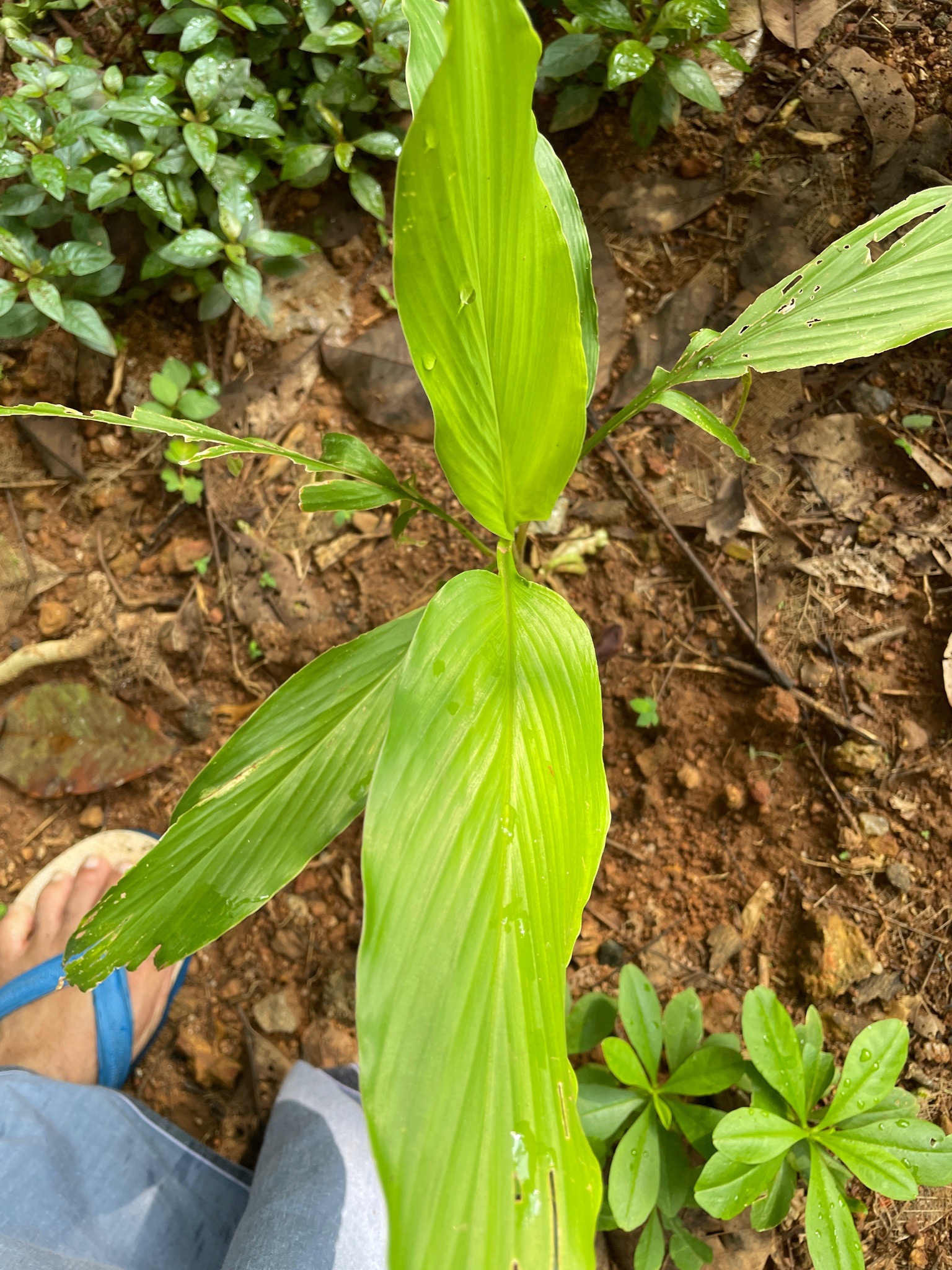
Turmeric
Curcuma longa
A herbaceous perennial plant featuring large, oblong, strongly veined green leaves arising from underground rhizomes.
- Light
- Partial shade to full sun, about 4 to 6 hours of direct or filtered sunlight per day.
- Water
- Requires regular watering to keep the soil consistently damp but not waterlogged. Reduce watering during the dormant winter period.
- Growth
- Herbaceous perennial growing up to 3 feet tall with an upright, clumping habit and spreading rhizomes.
Care instructions
Provide bright indirect light, consistently moist and well-draining soil rich in organic matter, and regular balanced fertilization during the growing season.
Growing details
Sunlight
Partial shade to full sun, about 4 to 6 hours of direct or filtered sunlight per day.
Watering
Requires regular watering to keep the soil consistently damp but not waterlogged. Reduce watering during the dormant winter period.
Soil
Rich, loamy, well-draining soil with a slightly acidic to neutral pH range of 6.0 to 6.5.
Hardiness zone
USDA Hardiness Zones 8 through 11
Growth habit
Herbaceous perennial growing up to 3 feet tall with an upright, clumping habit and spreading rhizomes.
Bloom season
Summer to early autumn, producing dense spikes of yellow or white flowers enclosed by green or pinkish bracts.
Propagation
Propagated primarily through rhizome division in spring, ensuring each section contains at least one active growth bud.
Common pests & issues
Susceptible to root rot in poorly draining soils, as well as leaf spot fungi and minor infestations by spider mites or scale insects.
Similar species
Ginger (Zingiber officinale), which features narrower, grass-like leaves compared to the broader, more prominent leaf blades of turmeric.