
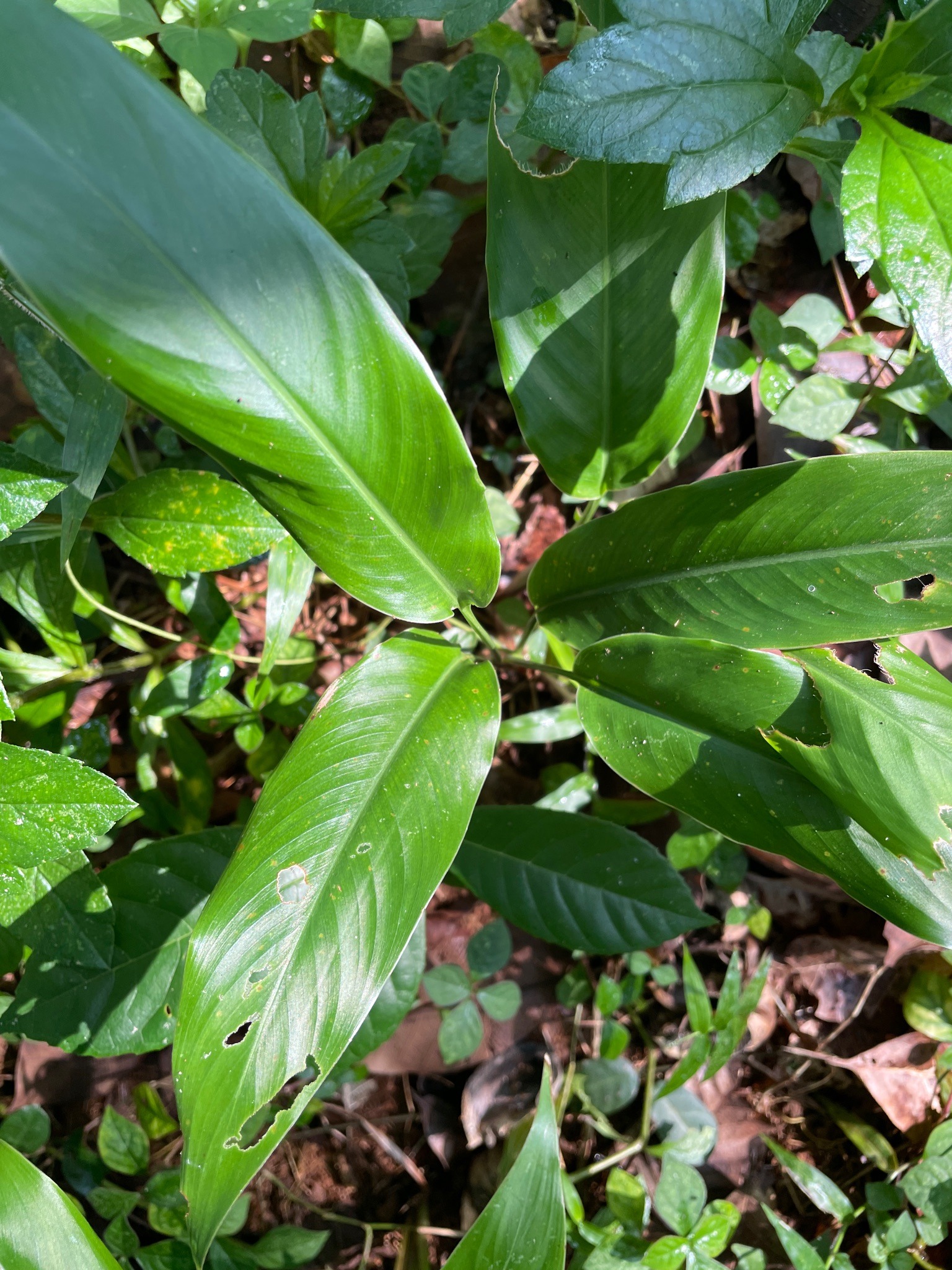
Turmeric
Curcuma longa
Turmeric is a perennial herbaceous plant featuring large, oblong, lanceolate, bright green leaves that emerge from underground rhizomes. The leaves display prominent parallel venation and taper to a point.
- Light
- Partial shade to dappled sunlight, ideally 4 to 6 hours of indirect or filtered light daily.
- Water
- Requires consistently moist soil during the active growing phase. Reduce watering significantly when the foliage begins to die back naturally during the dormant period.
- Growth
- Herbaceous perennial growing from a rhizome system, reaching heights of 2 to 3 feet with a clump-forming spread that expands via underground growth over time.
Care instructions
Grow in warm, humid conditions with consistent moisture and rich, well-draining soil. Provide partial shade to protect from harsh afternoon sun, and feed with a balanced organic fertilizer during the growing season.
Growing details
Sunlight
Partial shade to dappled sunlight, ideally 4 to 6 hours of indirect or filtered light daily.
Watering
Requires consistently moist soil during the active growing phase. Reduce watering significantly when the foliage begins to die back naturally during the dormant period.
Soil
Rich, loamy, organic-rich soil with excellent drainage and a slightly acidic to neutral pH range of 6.0 to 6.5.
Hardiness zone
USDA Hardiness Zones 8 through 11, requiring frost-free conditions.
Growth habit
Herbaceous perennial growing from a rhizome system, reaching heights of 2 to 3 feet with a clump-forming spread that expands via underground growth over time.
Bloom season
Blooms in mid to late summer, producing dense cone-like spikes of pale yellow or white flowers nestled among colorful bracts.
Propagation
Propagated by division of healthy rhizomes in early spring, ensuring each section contains at least one active growth bud.
Common pests & issues
Susceptible to rhizome rot if soils remain waterlogged. Pests can include spider mites and scale insects in dry indoor environments.
Similar species
Can be confused with other members of the Zingiberaceae family such as ginger (Zingiber officinale), but distinguished by its bright green leaves and distinct rhizome interior color.