
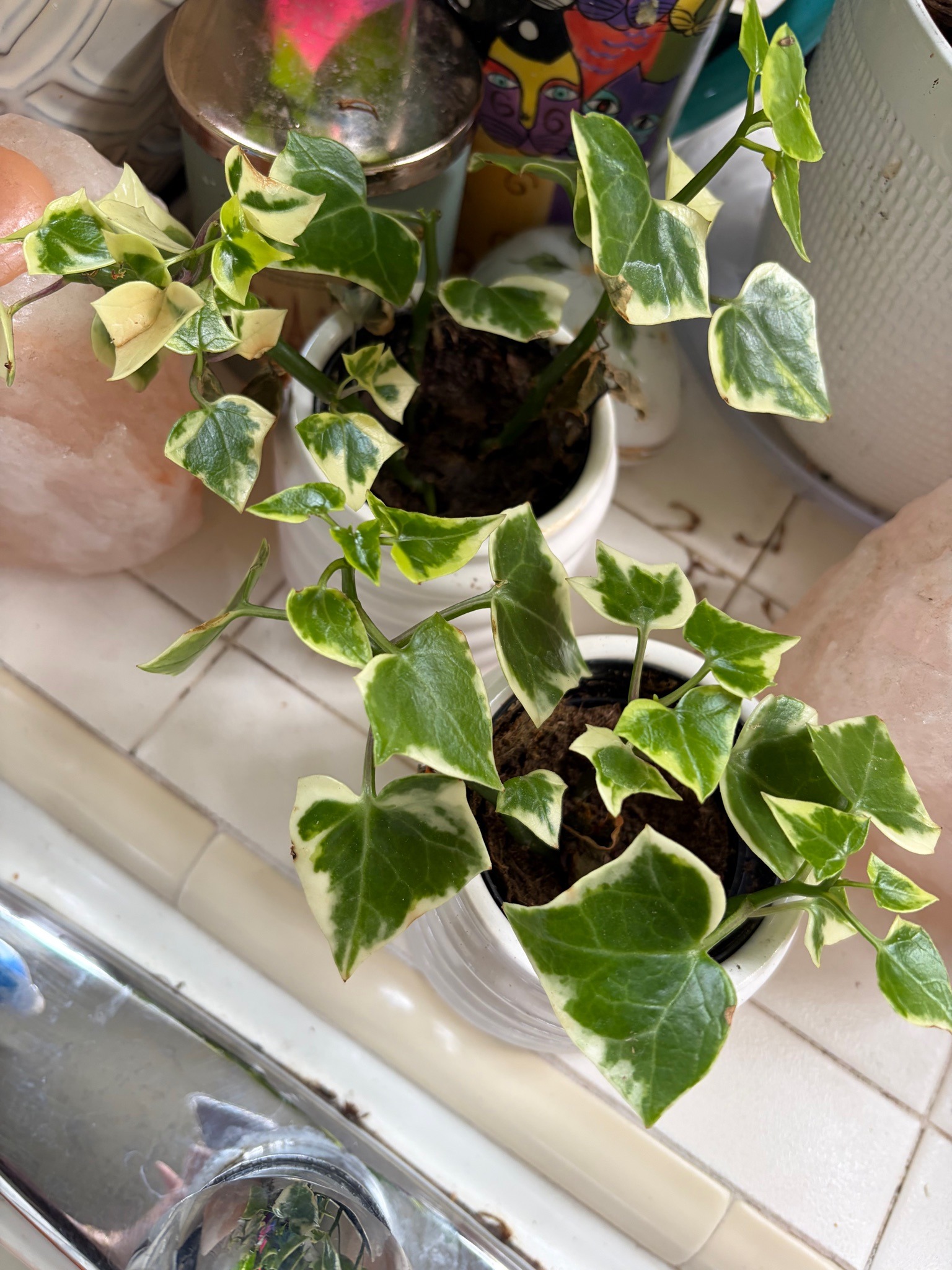
Variegated Cape Ivy
Delairea odorata 'Variegata'
A vigorous climbing or trailing perennial vine with succulent-textured, ivy-shaped leaves featuring distinctive creamy-white and green variegation.
- Light
- Bright, indirect light for about 6 hours per day; protect from harsh, direct midday sun to prevent leaf scorching.
- Water
- Water deeply when the soil is dry to the touch, approximately once every 1 to 2 weeks depending on ambient temperature and humidity. Reduce watering frequency during the winter dormancy period.
- Growth
- Trailing or climbing herbaceous perennial vine with a fast growth rate, typically reaching mature lengths of 6 to 10 feet indoors.
Care instructions
Provide bright, indirect sunlight and water thoroughly only after the top two inches of soil have completely dried out. Grow in well-draining potting media and apply a balanced liquid fertilizer diluted to half strength monthly during the active spring and summer growing seasons.
Growing details
Sunlight
Bright, indirect light for about 6 hours per day; protect from harsh, direct midday sun to prevent leaf scorching.
Watering
Water deeply when the soil is dry to the touch, approximately once every 1 to 2 weeks depending on ambient temperature and humidity. Reduce watering frequency during the winter dormancy period.
Soil
Well-draining, standard peat-based potting mix amended with perlite or pumice to ensure optimal aeration and drainage, with a preferred neutral pH range between 6.0 and 7.0.
Hardiness zone
USDA zones 9 through 11; grown primarily as an indoor houseplant or container patio plant in cooler climates.
Growth habit
Trailing or climbing herbaceous perennial vine with a fast growth rate, typically reaching mature lengths of 6 to 10 feet indoors.
Bloom season
Late autumn to winter; produces small, tubular, yellow flower clusters that lack rays, though blooming is infrequent when grown strictly indoors.
Propagation
Easily propagated through stem tip cuttings taken in spring or summer, rooted either in water or directly in a moist, sterile potting medium.
Common pests & issues
Prone to occasional infestations of aphids, mealybugs, and spider mites, which can be managed with insecticidal soap or neem oil. Root rot may occur if the plant sits in water-logged soil.
Similar species
English Ivy (Hedera helix), which can be distinguished by its woody stems and stiffer leaves, whereas Variegated Cape Ivy possesses softer, slightly succulent stems and foliage.