
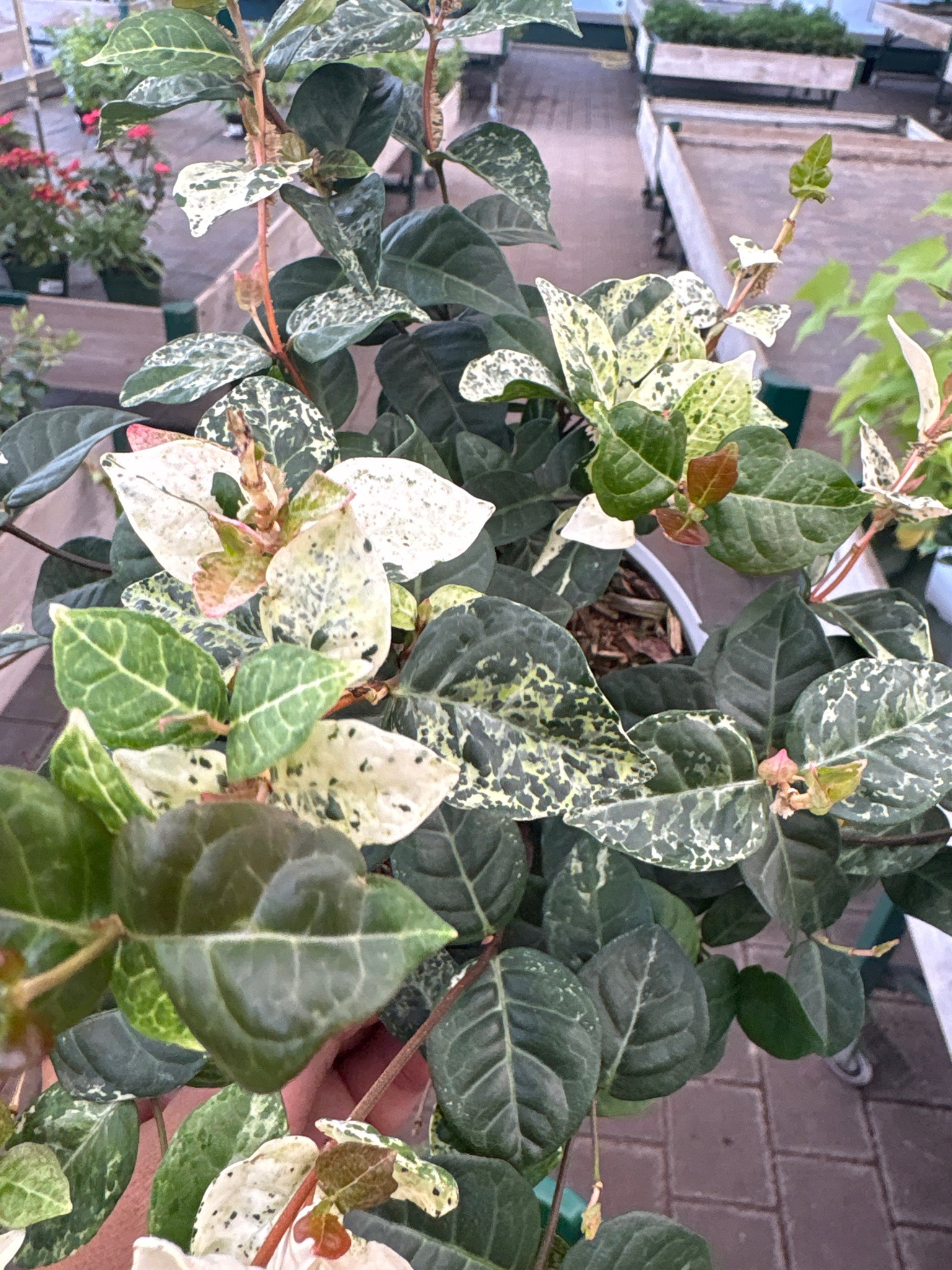
Variegated Creeping Fig
Ficus pumila 'Variegata'
A woody evergreen vine characterized by small, heart-shaped or ovate leaves with distinct white or cream variegation splashing across dark green surfaces, utilizing aerial rootlets to climb vertical surfaces.
- Light
- Bright indirect light to partial shade, approximately 4 to 6 hours daily, avoiding harsh direct sun which can scorch the variegated foliage.
- Water
- Water regularly to keep the soil consistently moist but never waterlogged. It has low drought tolerance and will drop leaves if allowed to dry out completely.
- Growth
- A fast-growing, evergreen, creeping and climbing vine reaching indoor lengths of 3 to 15 feet, easily controlled with regular pruning.
Care instructions
Provide bright, indirect sunlight and maintain evenly moist soil by watering when the top inch becomes slightly dry. Feed with a balanced, water-soluble fertilizer every four weeks during the active growing season.
Growing details
Sunlight
Bright indirect light to partial shade, approximately 4 to 6 hours daily, avoiding harsh direct sun which can scorch the variegated foliage.
Watering
Water regularly to keep the soil consistently moist but never waterlogged. It has low drought tolerance and will drop leaves if allowed to dry out completely.
Soil
Rich, well-draining potting mix with organic matter, ideally maintaining a slightly acidic to neutral pH range of 6.0 to 7.5.
Hardiness zone
USDA zones 9 through 11, grown primarily as an indoor houseplant or annual container vine in colder regions.
Growth habit
A fast-growing, evergreen, creeping and climbing vine reaching indoor lengths of 3 to 15 feet, easily controlled with regular pruning.
Bloom season
Rarely flowers indoors; mature outdoor specimens produce hidden syconium fruits, categorized generally as non-flowering in standard cultivation.
Propagation
Easily propagated via stem tip cuttings placed in moist propagation medium or water during the spring and summer months.
Common pests & issues
Prone to spider mites and scale insects in dry indoor environments; overwatering can cause root rot and leaf drop.
Similar species
Hedera helix (English ivy), distinguished by its lobed leaf margins compared to the entire margins and heart-shaped base of Ficus pumila.