
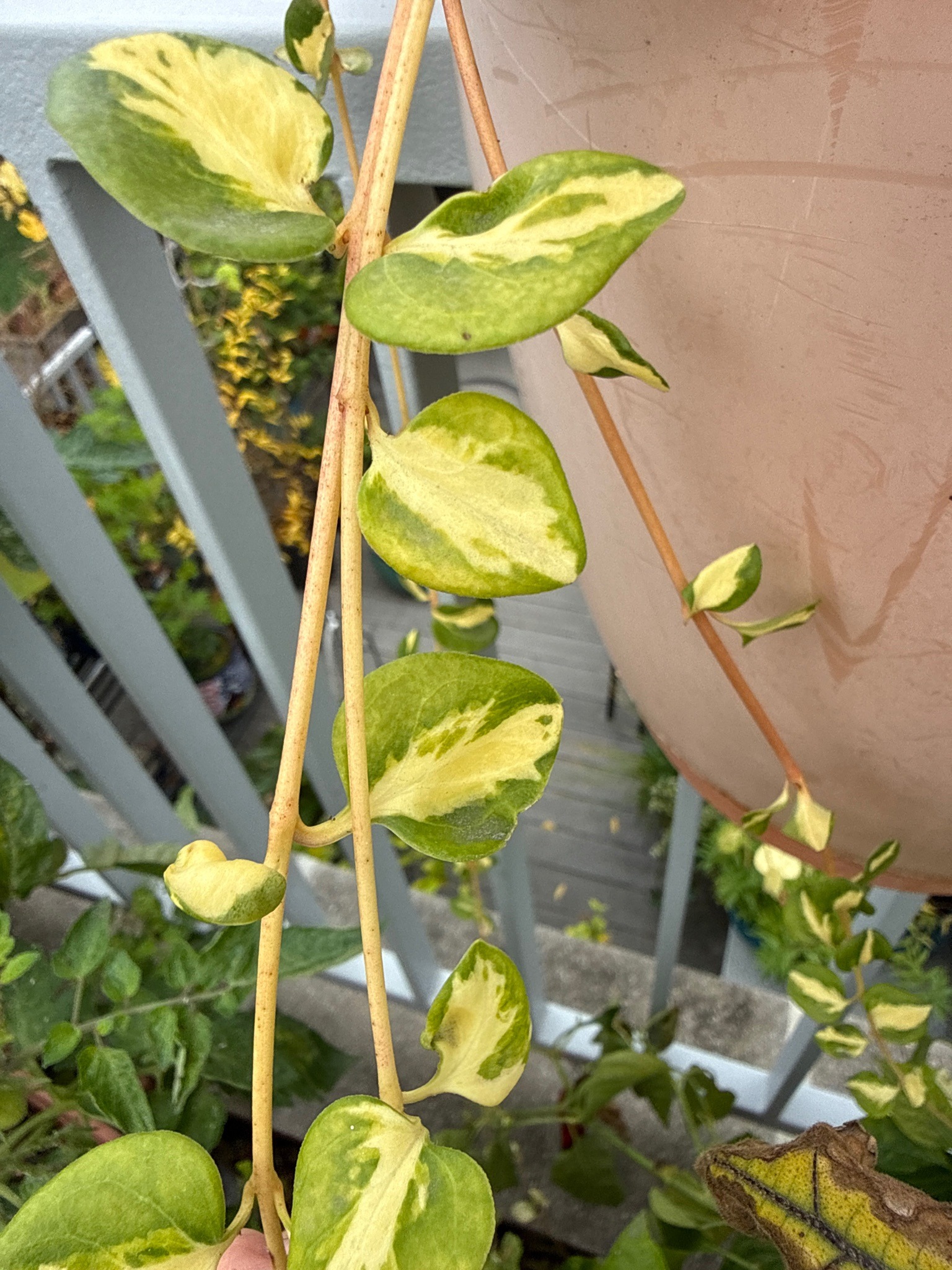
Variegated Peperomia
Peperomia obtusifolia variegata
A popular trailing or upright houseplant featuring thick, succulent-like spoon-shaped leaves with striking cream, yellow, and green variegation along reddish-brown stems.
- Light
- Bright, indirect light for 6 to 8 hours daily; avoid harsh direct sun which can scorch the leaves.
- Water
- Water thoroughly only when the top two inches of soil are completely dry. Drought tolerant due to succulent leaves, but susceptible to root rot if overwatered.
- Growth
- Perennial evergreen epiphyte with a cascading or upright bushy habit, reaching heights and spreads of 10 to 12 inches with a moderate growth rate.
Care instructions
Provide bright, indirect sunlight and allow the potting mix to dry out significantly between watering sessions. Plant in a loose, well-draining soil mix designed for epiphytes or succulents, and feed lightly during the active growing season.
Growing details
Sunlight
Bright, indirect light for 6 to 8 hours daily; avoid harsh direct sun which can scorch the leaves.
Watering
Water thoroughly only when the top two inches of soil are completely dry. Drought tolerant due to succulent leaves, but susceptible to root rot if overwatered.
Soil
Well-draining, aerated potting mix containing perlite, peat, and orchid bark, with a slightly acidic to neutral pH range of 6.0 to 7.0.
Hardiness zone
USDA zones 10 through 12; grown primarily as an indoor plant in cooler temperate regions.
Growth habit
Perennial evergreen epiphyte with a cascading or upright bushy habit, reaching heights and spreads of 10 to 12 inches with a moderate growth rate.
Bloom season
Blooms during spring and summer, producing slender, rat-tail-like spikes of tiny, non-showy greenish-white flowers.
Propagation
Easily propagated through stem cuttings or single-leaf cuttings placed in moist perlite or water during the spring and summer months.
Common pests & issues
Prone to root rot and fungal leaf spot if kept in excessively wet soil or humid, stagnant air. Mealybugs and spider mites can occasionally affect indoor specimens.
Similar species
Peperomia obtusifolia (plain green variety) and various cultivars of Hoya, distinguished by Peperomia's alternating fleshy leaves and distinct inflorescence spikes.