
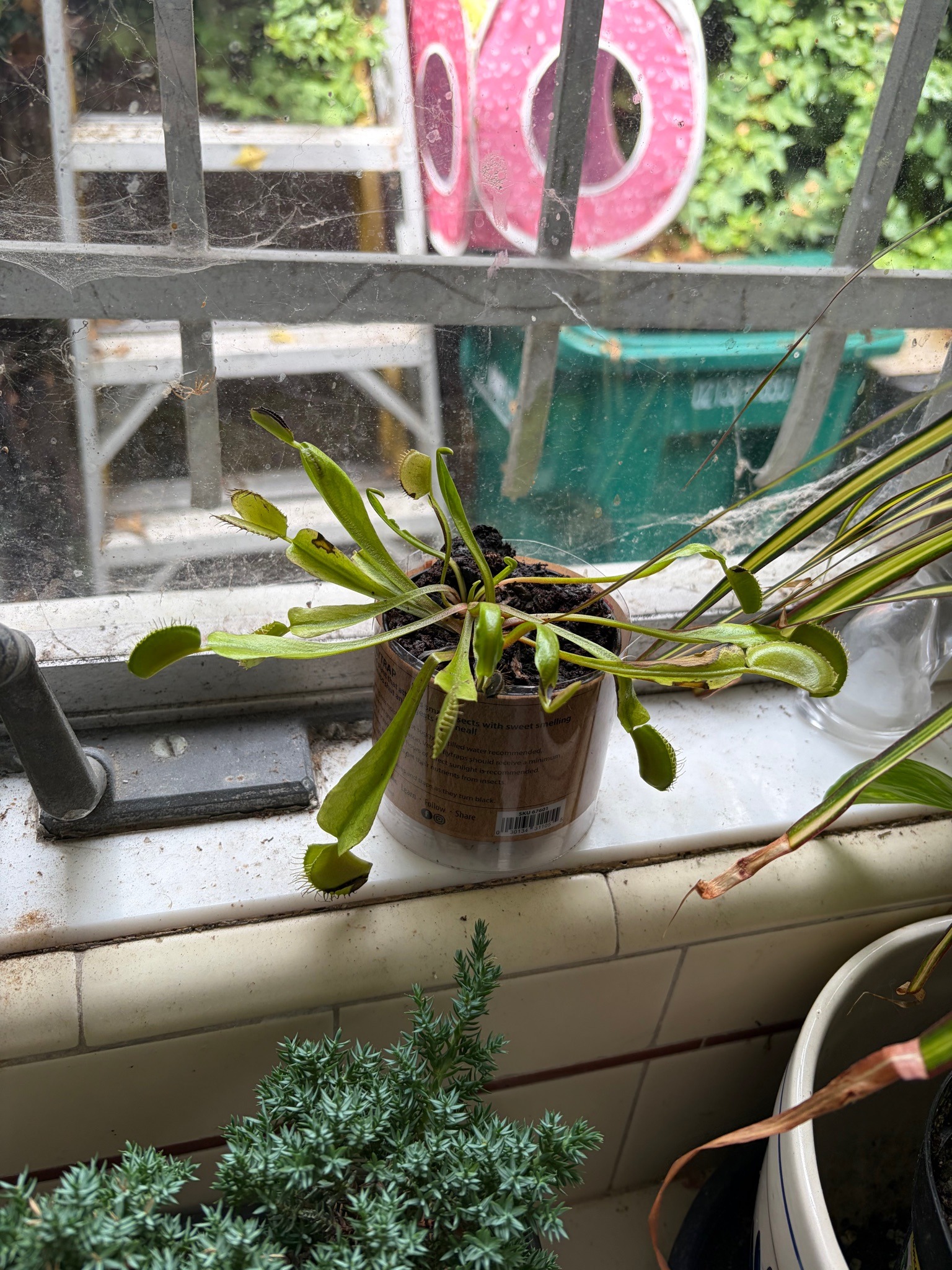
Venus Flytrap
Dionaea muscipula
A small rosette-forming perennial featuring modified leaf blades that function as rapid snap traps, bordered by stiff marginal cilia and attached to flattened petiole leaves.
- Light
- Full sun, requiring a minimum of 6 to 8 hours of direct sunlight daily to maintain deep coloration and healthy growth.
- Water
- Keep the soil continuously moist at all times. Use the tray method by placing the pot in a shallow dish of distilled, reverse osmosis, or rain water. Never allow the medium to dry out completely, and avoid using mineral-rich tap water.
- Growth
- Low-growing perennial rosette reaching mature heights of 3 to 5 inches with a spread of up to 6 inches, growing at a moderate rate.
Care instructions
Provide at least six hours of direct sunlight daily. Keep the growing medium consistently wet using distilled water or rainwater by utilizing the tray method, avoiding tap water. Plant in a nutrient-poor medium such as a mix of peat moss and perlite without any added fertilizers.
Growing details
Sunlight
Full sun, requiring a minimum of 6 to 8 hours of direct sunlight daily to maintain deep coloration and healthy growth.
Watering
Keep the soil continuously moist at all times. Use the tray method by placing the pot in a shallow dish of distilled, reverse osmosis, or rain water. Never allow the medium to dry out completely, and avoid using mineral-rich tap water.
Soil
Nutrient-deficient, acidic growing medium, typically a 1:1 ratio of unfertilized peat moss and perlite or coarse sand. Ideal pH ranges between 4.5 and 5.5.
Hardiness zone
USDA zones 7 through 10. Requires a distinct winter dormancy period with cooler temperatures and shorter photoperiods to survive long-term.
Growth habit
Low-growing perennial rosette reaching mature heights of 3 to 5 inches with a spread of up to 6 inches, growing at a moderate rate.
Bloom season
Late spring to early summer, producing small white flowers clustered on a tall, upright scape held well above the traps to prevent pollinators from becoming prey.
Propagation
Propagated by division of established multi-crowned rhizomes in late winter or by seed sown on a surface of moist peat moss.
Common pests & issues
Susceptible to root rot if kept in stagnant, waterlogged conditions with poor airflow, or mineral buildup if tap water is used. Fungal leaf spot can occur in humid, stagnant environments.
Similar species
Drosera species (Sundews) feature glandular tentacles instead of hinged snap traps, and Sarracenia species (Pitcher Plants) utilize vertical tube-shaped leaves rather than active closing traps.