
Vietnamese Balm
Elsholtzia ciliata
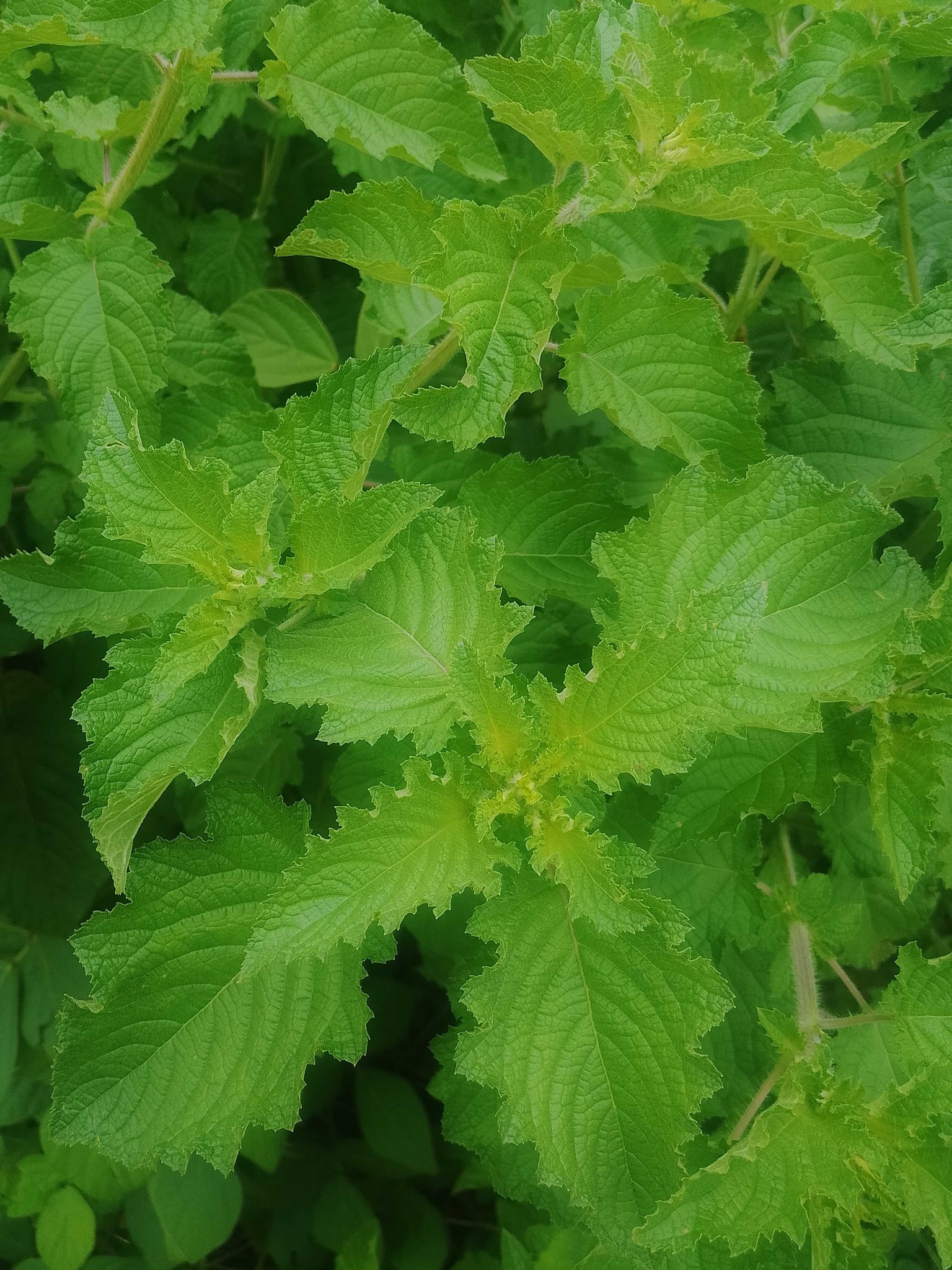
An herbaceous annual plant featuring bright green, opposite leaves with prominently serrated margins and a distinct wrinkled texture, growing on branching square stems characteristic of the mint family.
- Light
- Full sun to partial shade, requiring approximately 6 hours of direct sunlight daily.
- Water
- Requires regular watering whenever the top inch of soil feels dry. It prefers consistently moist soil and does not tolerate prolonged drought.
- Growth
- An upright, branching herbaceous annual growing to a mature height of 1 to 2 feet with a spread of about 1 foot, featuring a moderate growth rate.
Care instructions
Provide full sun to partial shade, regular watering to keep the soil evenly moist but well-drained, and a balanced liquid fertilizer during the active growing season.
Growing details
Sunlight
Full sun to partial shade, requiring approximately 6 hours of direct sunlight daily.
Watering
Requires regular watering whenever the top inch of soil feels dry. It prefers consistently moist soil and does not tolerate prolonged drought.
Soil
Prefers rich, loamy, well-draining soil with an optimal pH range between 6.0 and 7.0.
Hardiness zone
USDA zones 4 through 9, grown predominantly as an annual in cooler climates.
Growth habit
An upright, branching herbaceous annual growing to a mature height of 1 to 2 feet with a spread of about 1 foot, featuring a moderate growth rate.
Bloom season
Blooms from mid-summer to early autumn, producing dense, terminal spike inflorescences packed with small purple or pinkish flowers.
Propagation
Propagated easily by sowing seeds directly in spring after the danger of frost has passed, or by stem cuttings rooted in water or moist potting mix.
Common pests & issues
Susceptible to root rot if overwatered or planted in heavy, poorly draining soil. Pests may include aphids and spider mites, which can be managed with insecticidal soap.
Similar species
Often confused with other members of the Lamiaceae family such as mint (Mentha spp.) or perilla (Perilla frutescens), but can be distinguished by its distinct floral spike structure and unique leaf serration patterns.