
Watermelon
Citrullus lanatus
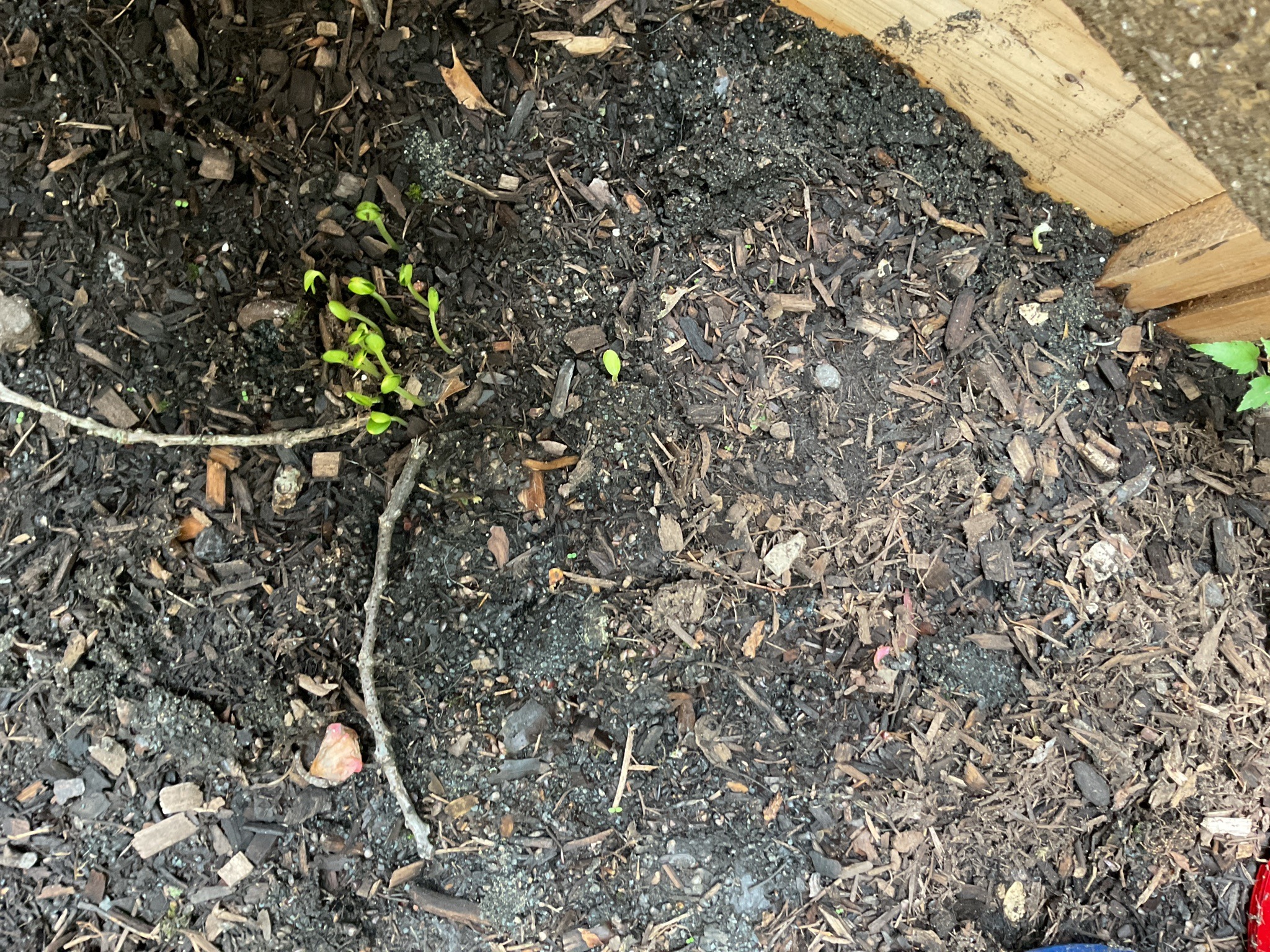
The image shows very young seedlings emerging from the soil. They feature smooth, oval to oblong cotyledons (seed leaves) on slender green stems, which are typical early developmental stages for vines in the gourd family.
- Light
- Full sun, requiring at least 6 to 8 hours of direct sunlight daily.
- Water
- Requires moderate and consistent moisture, especially during germination and early growth. Keep the soil evenly moist but not waterlogged. Avoid overhead watering to prevent moisture-related foliage issues.
- Growth
- Sprawling annual vine with a rapid growth rate, producing long, trailing stems that can spread up to several feet across the ground or climb with support structures.
Care instructions
Provide full sun and consistently moist, well-draining soil rich in organic matter. Water at the base regularly, allowing the top inch of soil to dry out between waterings. Apply a balanced fertilizer during the growing season to support vigorous vine development.
Growing details
Sunlight
Full sun, requiring at least 6 to 8 hours of direct sunlight daily.
Watering
Requires moderate and consistent moisture, especially during germination and early growth. Keep the soil evenly moist but not waterlogged. Avoid overhead watering to prevent moisture-related foliage issues.
Soil
Prefers loose, sandy loam or well-amended organic soil with excellent drainage and a slightly acidic to neutral pH range of 6.0 to 6.8.
Hardiness zone
Typically grown as an annual in USDA hardiness zones 3 through 11, thriving in warm summer temperatures.
Growth habit
Sprawling annual vine with a rapid growth rate, producing long, trailing stems that can spread up to several feet across the ground or climb with support structures.
Bloom season
Blooms during mid-summer, producing small, yellow, monoecious flowers with distinct male and female blossoms.
Propagation
Propagated primarily from seeds sown directly into warm soil after the last spring frost, or started indoors in biodegradable pots a few weeks prior to transplanting.
Common pests & issues
Susceptible to fungal problems such as powdery mildew and downy mildew, as well as common sap-sucking pests like aphids. Ensure adequate air circulation and proper spacing to minimize issues.
Similar species
Other members of the Cucurbitaceae family, such as cantaloupe or squash seedlings, which also exhibit similar oval cotyledons at the earliest germination stage.
User notes
Looks like it could be a watermelon. I did plant watermelon seeds there.