
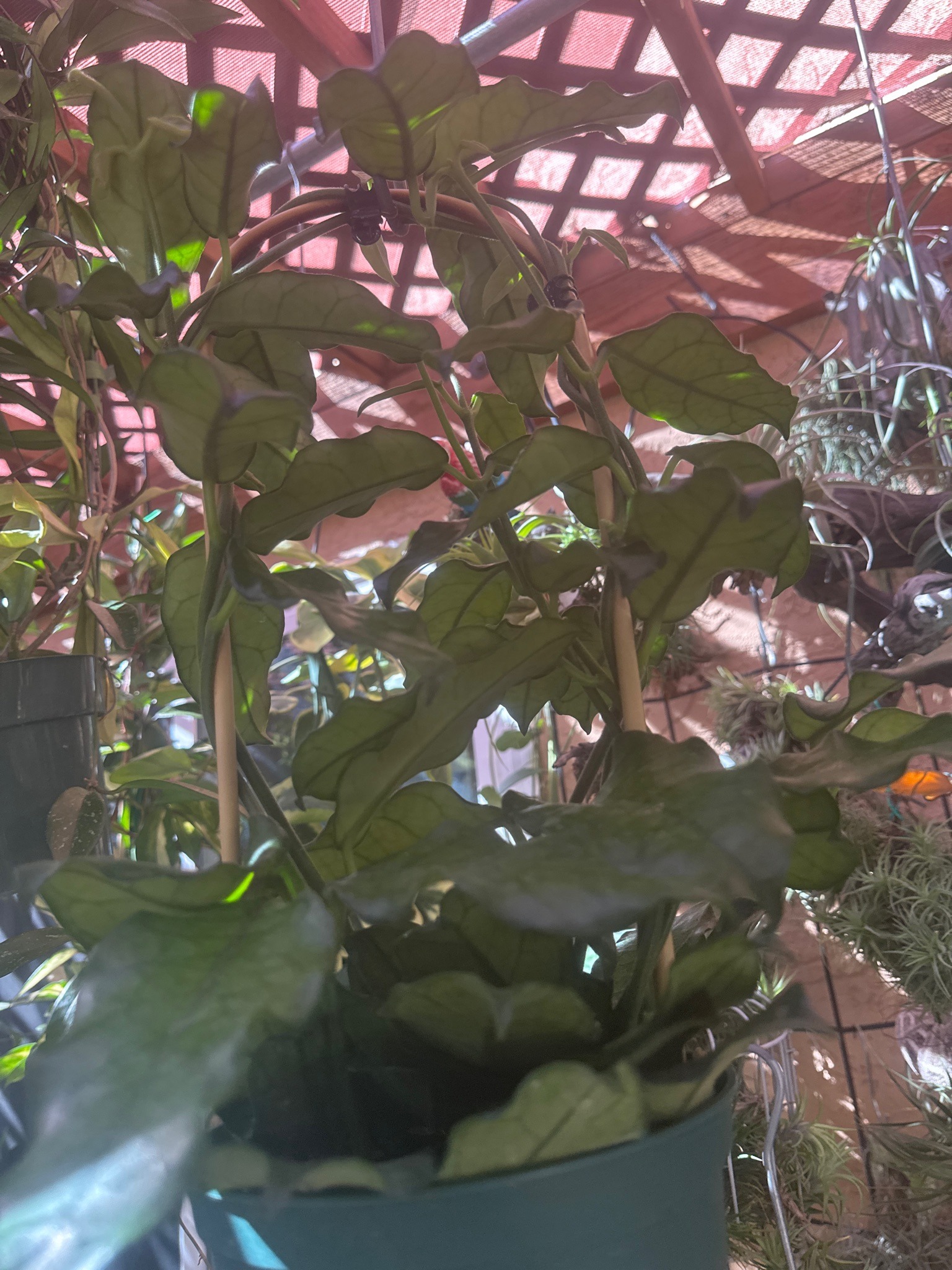
Wax Plant
Hoya finlaysonii
An epiphytic climbing vine featuring thick, succulent leaves with prominent, dark, reticulate veining and undulating margins, trained here on a support trellis.
- Light
- Bright, indirect light, approximately 6 to 8 hours per day. Avoid intense direct sun which can scorch the leaves.
- Water
- Allow the potting medium to dry out completely between waterings. Reduce watering frequency during the cooler winter months.
- Growth
- Perennial evergreen climbing vine that produces twining stems, reaching lengths of 6 feet or more when supported by a trellis or stake.
Care instructions
Provide bright, indirect sunlight for 6 to 8 hours daily. Water thoroughly when the soil is completely dry, ensuring good drainage to prevent waterlogging. Use a well-aerated orchid bark mix with a balanced liquid fertilizer diluted to half strength applied monthly during the growing season.
Growing details
Sunlight
Bright, indirect light, approximately 6 to 8 hours per day. Avoid intense direct sun which can scorch the leaves.
Watering
Allow the potting medium to dry out completely between waterings. Reduce watering frequency during the cooler winter months.
Soil
Well-draining, coarse epiphytic mix containing orchid bark, perlite, and peat moss with a slightly acidic to neutral pH range of 6.0 to 7.0.
Hardiness zone
USDA Hardiness Zones 10 to 11. Grown primarily as an indoor houseplant in cooler climates, requiring frost protection.
Growth habit
Perennial evergreen climbing vine that produces twining stems, reaching lengths of 6 feet or more when supported by a trellis or stake.
Bloom season
Spring and summer, producing clusters of small, star-shaped, waxy flowers with a subtle fragrance.
Propagation
Propagated easily via stem cuttings with at least one node, placed in water, sphagnum moss, or a well-draining propagation medium until roots develop.
Common pests & issues
Susceptible to mealybugs and scale insects. Root rot can occur if the plant sits in excessively wet, poorly draining soil.
Similar species
Hoya macrophylla and Hoya callistophylla, which also feature distinct leaf veining but can be distinguished by specific leaf shape proportions and veining patterns.