
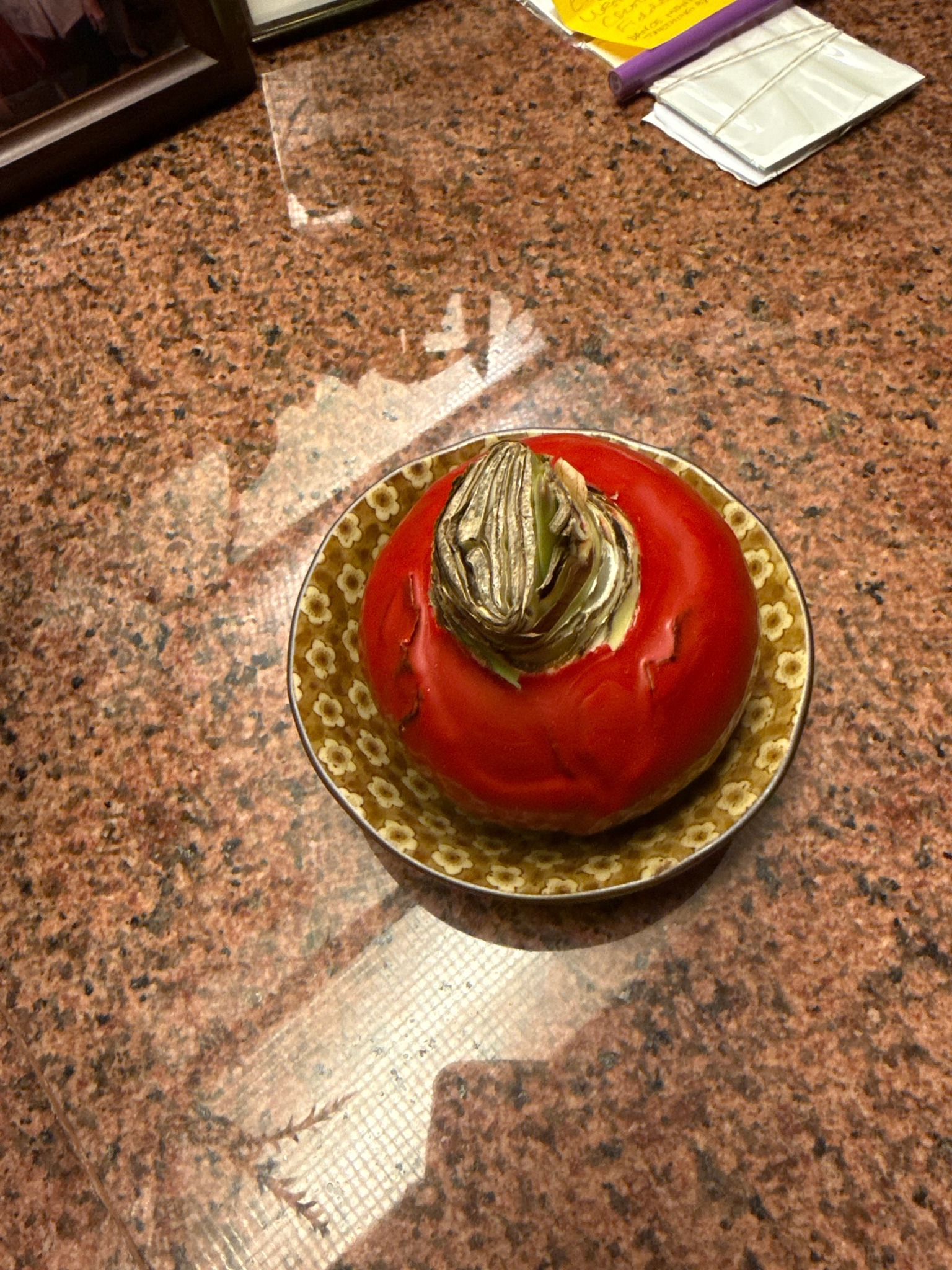
Waxed Amaryllis Bulb
Hippeastrum spp.
A large, dormant amaryllis bulb completely enclosed in a smooth, colorful wax coating, allowing it to grow and bloom without requiring soil or watering.
- Light
- Bright, indirect sunlight for 6 to 8 hours daily; avoid direct, harsh afternoon sun.
- Water
- None required. The wax coating seals in moisture, and supplemental watering will damage the bulb.
- Growth
- Perennial bulb producing a single tall, upright flowering scape followed by strap-shaped leaves, reaching a height of 18 to 24 inches.
Care instructions
Place the waxed bulb in a bright location with indirect sunlight. No water or soil is needed throughout its growth cycle, as the bulb stores all necessary moisture and nutrients internally. Rotate occasionally for even stem development.
Growing details
Sunlight
Bright, indirect sunlight for 6 to 8 hours daily; avoid direct, harsh afternoon sun.
Watering
None required. The wax coating seals in moisture, and supplemental watering will damage the bulb.
Soil
Not applicable as these bulbs are grown without soil.
Hardiness zone
USDA Zones 9 to 11 when planted outdoors, though waxed decorative bulbs are typically kept indoors as annual novelties.
Growth habit
Perennial bulb producing a single tall, upright flowering scape followed by strap-shaped leaves, reaching a height of 18 to 24 inches.
Bloom season
Winter to early spring, producing large, trumpet-shaped flowers in shades of red, pink, white, or variegated patterns.
Propagation
Typically propagated by offsets or division of the mother bulb, though wax-dipped bulbs are generally treated as single-season decorative items and cannot be easily re-propagated after flowering.
Common pests & issues
Minimal pest and disease issues while sealed in wax, but prolonged exposure to extreme heat or physical damage to the wax seal can cause premature drying or fungal growth.
Similar species
Other bulbous ornamentals such as Clivia or Haemanthus, though distinguished by the distinct large, round bulb shape and decorative wax coating of prepared Hippeastrum.