
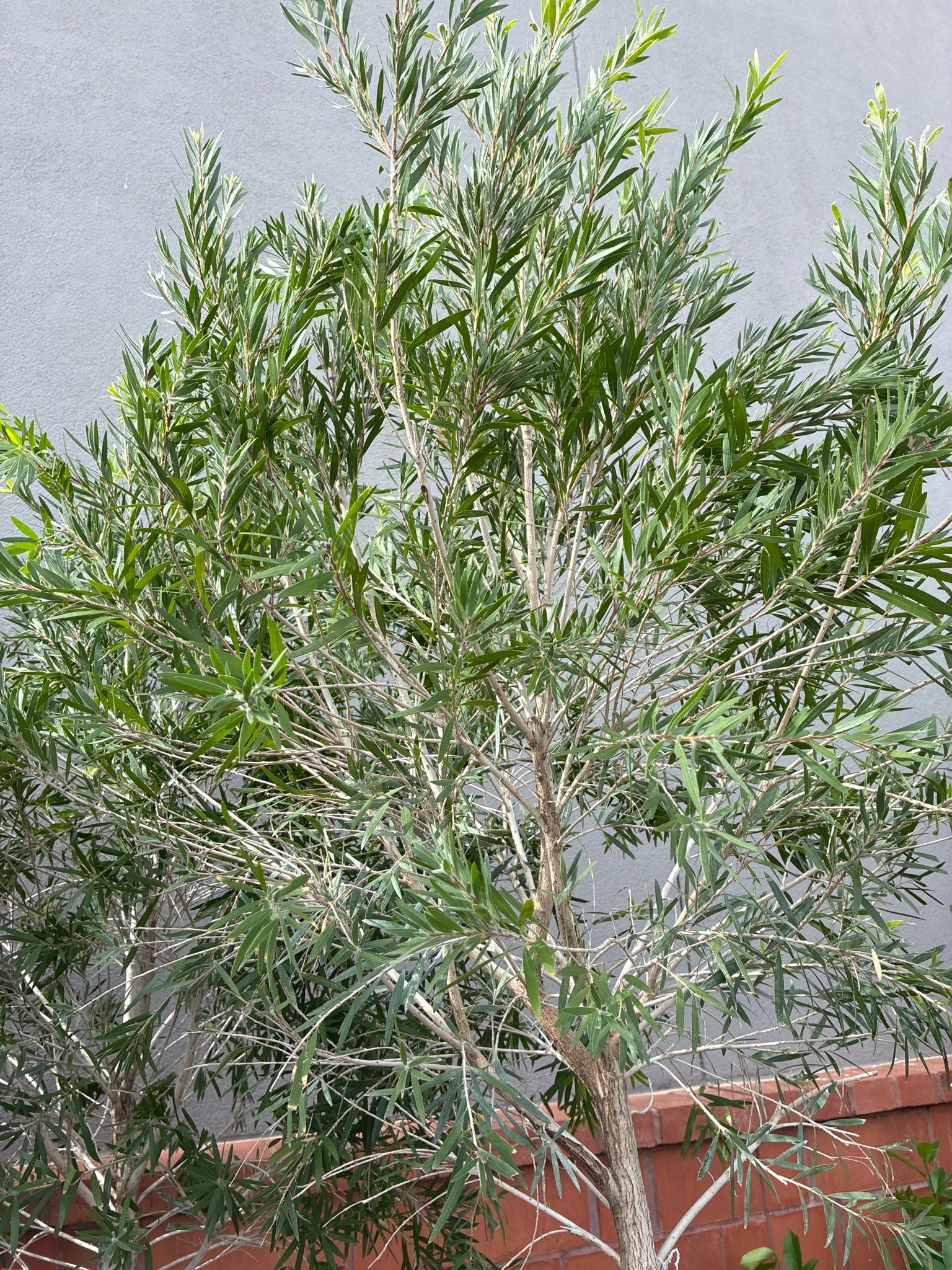
Weeping Bottlebrush
Melaleuca viminalis
A large evergreen shrub or small tree featuring cascading, weeping branches, narrow lance-shaped leaves, and distinctive bright red flower clusters resembling traditional bottle brushes.
- Light
- Full sun, requiring at least six to eight hours of direct sunlight daily
- Water
- Water deeply and regularly during the first year to establish a strong root system. Once established, reduce watering to moderate levels, allowing soil to dry slightly between waterings, though it appreciates consistent moisture.
- Growth
- Perennial evergreen tree or large shrub with a weeping growth habit, typically growing to a mature height of 15 to 30 feet and a spread of 15 to 20 feet with a moderate growth rate.
Care instructions
Provide full sun exposure, plant in well-drained loamy or sandy soil, and water regularly while establishing. Once established, it exhibits moderate drought tolerance. Apply a balanced, low-phosphorus fertilizer in spring to support healthy foliage and flowering.
Growing details
Sunlight
Full sun, requiring at least six to eight hours of direct sunlight daily
Watering
Water deeply and regularly during the first year to establish a strong root system. Once established, reduce watering to moderate levels, allowing soil to dry slightly between waterings, though it appreciates consistent moisture.
Soil
Adaptable to a variety of soils including sand, loam, and clay, provided they have good drainage. Prefers slightly acidic to neutral pH levels between 6.0 and 7.0.
Hardiness zone
USDA Hardiness Zones 8 through 11
Growth habit
Perennial evergreen tree or large shrub with a weeping growth habit, typically growing to a mature height of 15 to 30 feet and a spread of 15 to 20 feet with a moderate growth rate.
Bloom season
Spring and summer, producing dense, cylindrical bright red flower spikes that lack true petals and consist mostly of prominent stamens.
Propagation
Propagated primarily through semi-hardwood cuttings taken in late spring or summer, or from seeds sown on the surface of a moist propagating medium.
Common pests & issues
Generally resilient, but can occasionally be affected by scale insects, aphids, or root rot if planted in poorly draining soil. Prevent issues by ensuring adequate air circulation and proper soil drainage.
Similar species
Callistemon citrinus (Lemon Bottlebrush), which has stiffer, more upright branches and foliage that releases a distinct lemon scent when crushed, distinguishing it from the weeping branches of Melaleuca viminalis.