
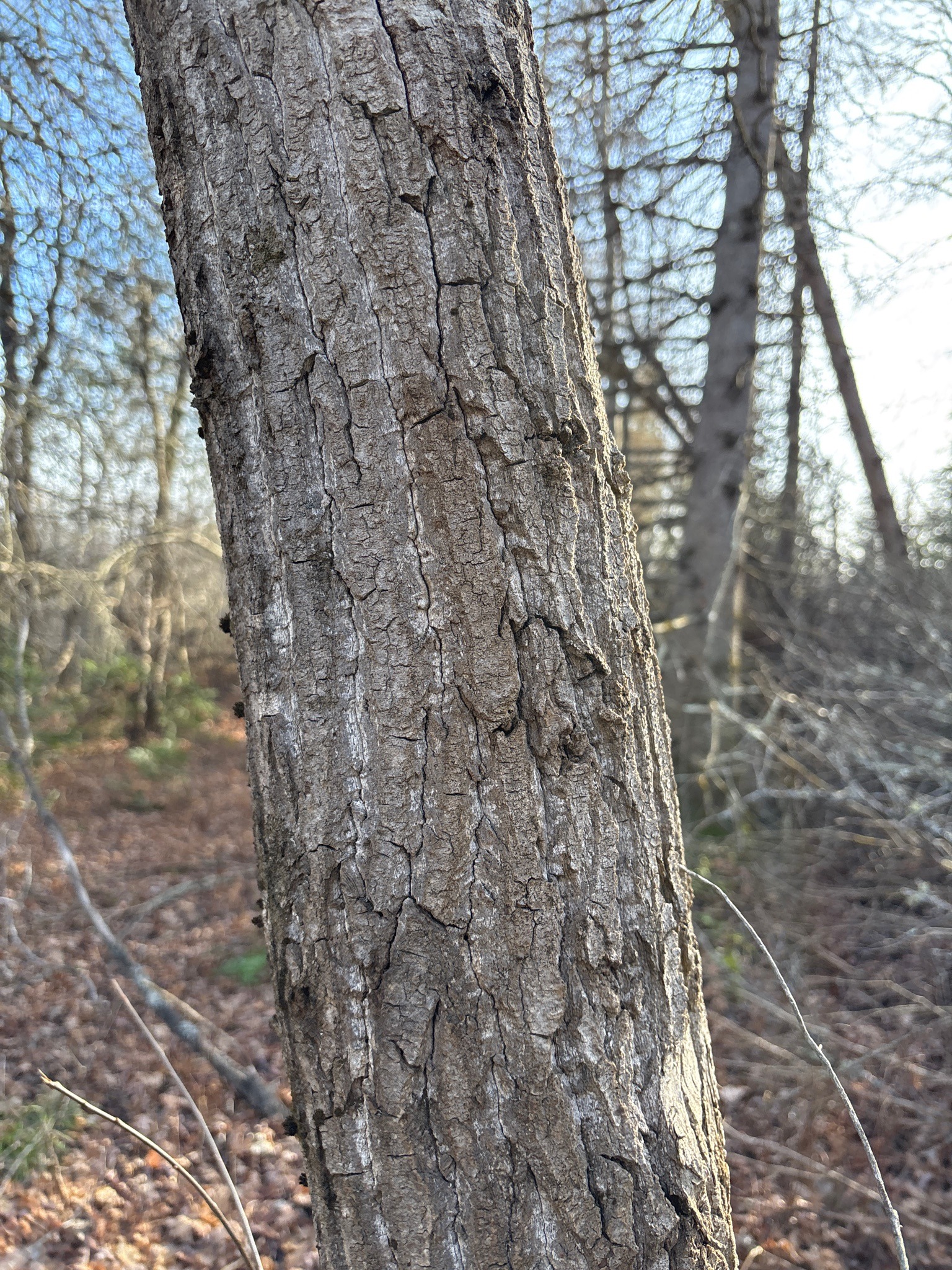
White Ash
Fraxinus americana
A large deciduous tree featuring distinctive, deeply furrowed bark with diamond-shaped ridges, opposite compound leaves, and a straight trunk.
- Light
- Full sun to partial shade, requiring at least 6 hours of direct sunlight daily
- Water
- Prefers consistent moisture, especially when young. Established trees have moderate drought tolerance but perform best with regular watering during dry spells.
- Growth
- Perennial deciduous tree with an upright, oval to rounded canopy, growing up to 80 feet tall with a moderate to fast growth rate.
Care instructions
Provide full sun to partial shade, well-draining moist soil, and regular watering during establishment. Minimal fertilizer is typically required once established.
Growing details
Sunlight
Full sun to partial shade, requiring at least 6 hours of direct sunlight daily
Watering
Prefers consistent moisture, especially when young. Established trees have moderate drought tolerance but perform best with regular watering during dry spells.
Soil
Grows best in deep, fertile, moist, and well-draining loamy soils with a slightly acidic to neutral pH range of 6.0 to 7.0.
Hardiness zone
USDA zones 3 through 9
Growth habit
Perennial deciduous tree with an upright, oval to rounded canopy, growing up to 80 feet tall with a moderate to fast growth rate.
Bloom season
Spring; produces inconspicuous greenish-purple flowers in tight clusters before the leaves emerge.
Propagation
Propagated primarily from seeds collected in autumn, or through softwood cuttings taken in late spring.
Common pests & issues
Vulnerable to the emerald ash borer beetle, as well as fungal leaf spots and rust diseases.
Similar species
Green Ash (Fraxinus pennsylvanica), which has smoother, less deeply furrowed bark and grows naturally in wetter soils.