
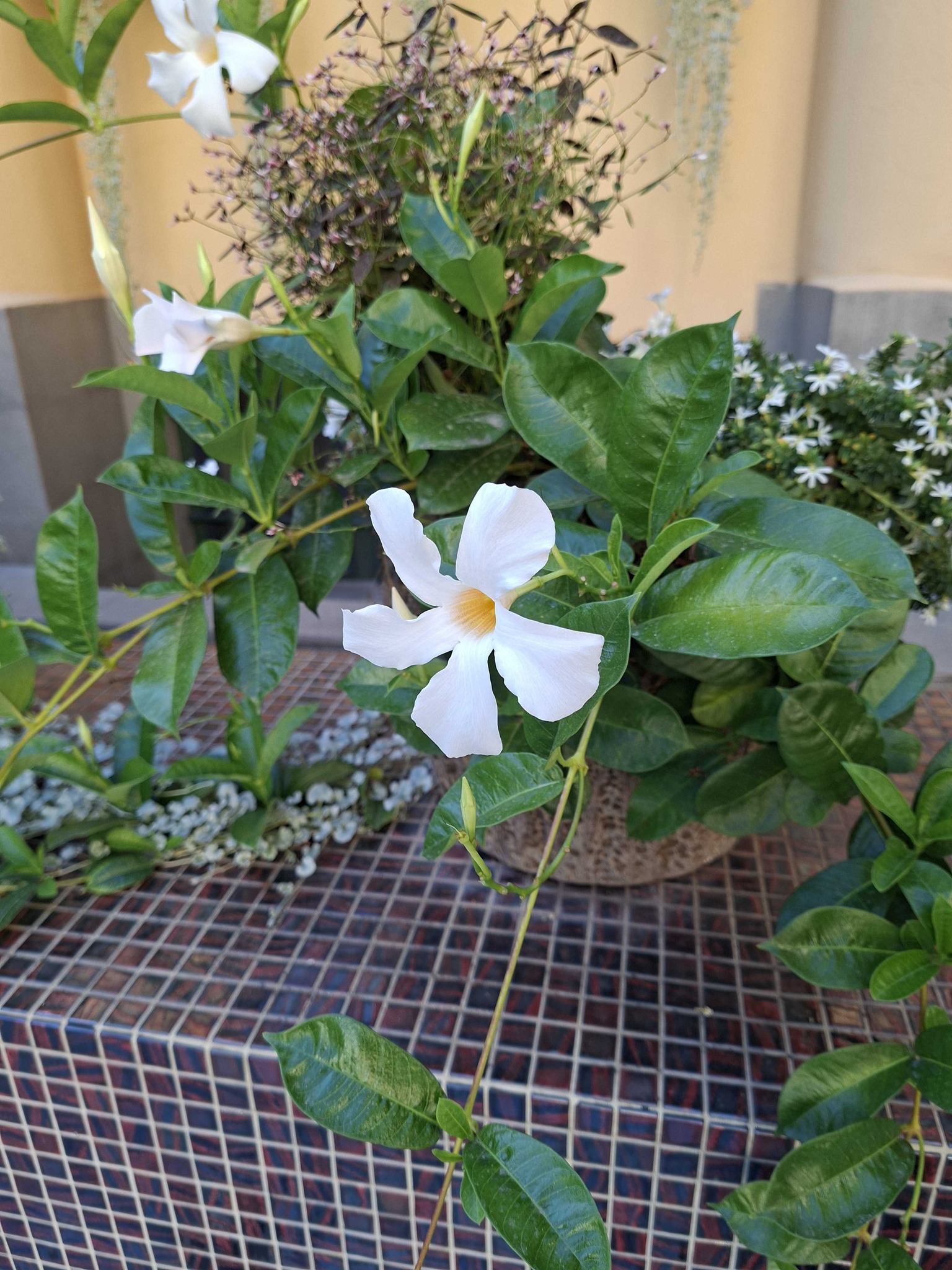
White Mandevilla
Mandevilla sanderi
A popular tropical vine featuring glossy, dark green, leathery leaves and large, trumpet-shaped white flowers with a yellow throat.
- Light
- Full sun to partial shade, requiring at least 6 hours of bright light daily.
- Water
- Water deeply when the top inch of soil becomes dry. Reduce watering frequency slightly during the winter months.
- Growth
- A twining evergreen vine or shrubby climber that can reach mature heights of 6 to 10 feet with a moderate growth rate.
Care instructions
Provide bright, indirect sunlight, keep the soil consistently moist but well-drained, and apply a balanced liquid fertilizer every two to four weeks during the active growing season.
Growing details
Sunlight
Full sun to partial shade, requiring at least 6 hours of bright light daily.
Watering
Water deeply when the top inch of soil becomes dry. Reduce watering frequency slightly during the winter months.
Soil
Rich, loamy, and well-draining soil with a slightly acidic to neutral pH range of 6.0 to 7.0.
Hardiness zone
USDA Hardiness Zones 9 through 11, grown as an annual in cooler regions.
Growth habit
A twining evergreen vine or shrubby climber that can reach mature heights of 6 to 10 feet with a moderate growth rate.
Bloom season
Blooms continuously from late spring through autumn, producing large, showy, five-petaled white flowers with golden centers.
Propagation
Propagated primarily through stem cuttings taken in spring or early summer, using rooting hormone and providing high humidity.
Common pests & issues
Susceptible to aphids, mealybugs, and spider mites, as well as root rot if overwatered or kept in poorly draining soil.
Similar species
Dipladenia, which has a more shrub-like, bushier growth habit compared to the twining vine structure of Mandevilla.