
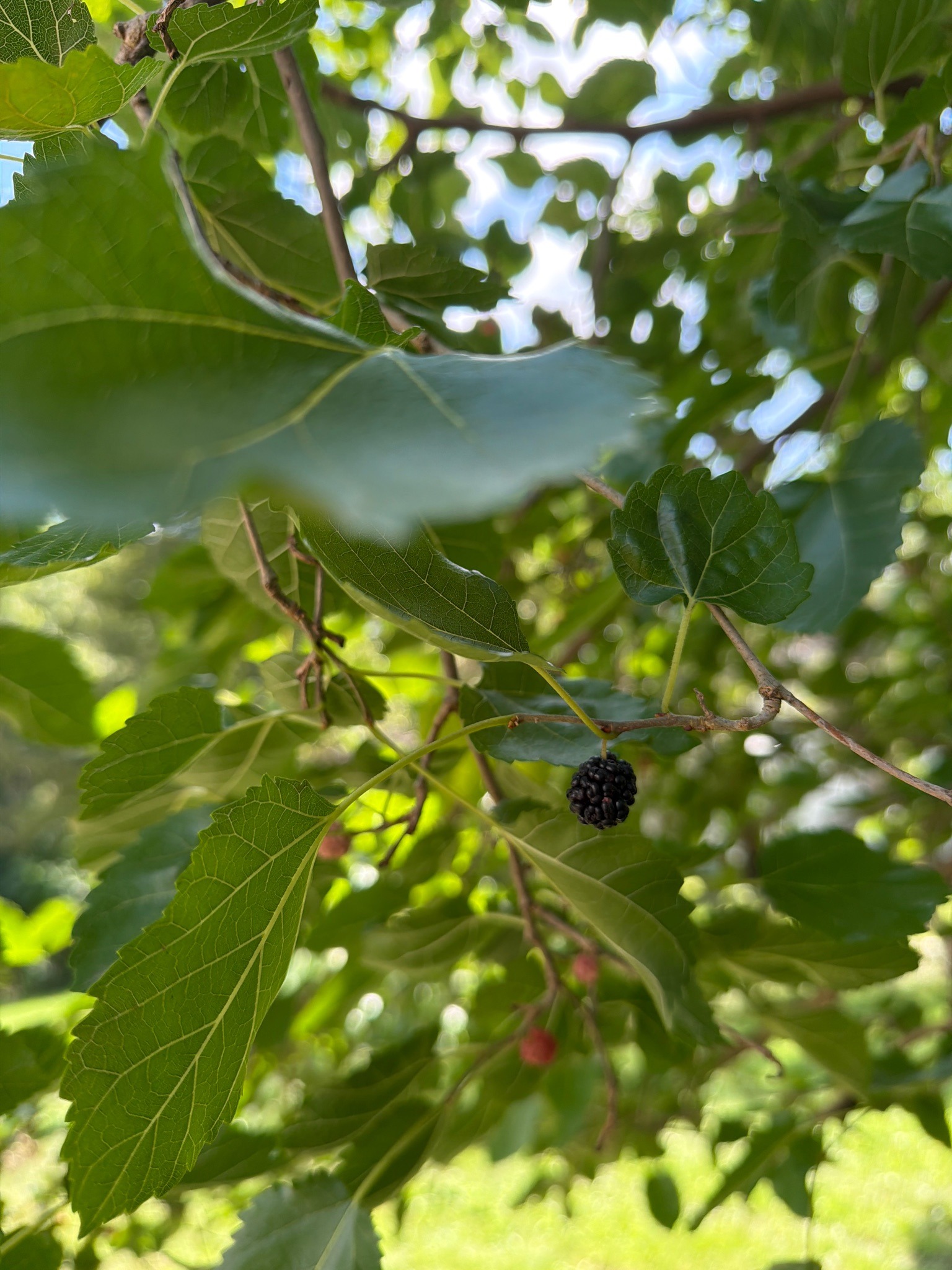
White Mulberry
Morus alba
A deciduous tree featuring alternate, serrated leaves that frequently exhibit variable lobing on the same branch, accompanied by aggregate cluster structures changing from green through red to dark purple.
- Light
- Full sun, requiring at least six to eight hours of direct sunlight daily
- Water
- Moderate water requirements; water deeply when the top few inches of soil feel dry, reducing frequency once established
- Growth
- Perennial woody tree with a fast growth rate, typically reaching mature heights of 30 to 50 feet with an equally wide spreading canopy
Care instructions
Provide full sun exposure and well-draining soil. Water deeply during establishment, after which the tree tolerates periods of drought. Apply a balanced, slow-release fertilizer in early spring if growth appears slow.
Growing details
Sunlight
Full sun, requiring at least six to eight hours of direct sunlight daily
Watering
Moderate water requirements; water deeply when the top few inches of soil feel dry, reducing frequency once established
Soil
Adaptable to a wide range of soil types including clay, loam, and sand, provided they offer adequate drainage; prefers a neutral to slightly acidic pH range of 6.0 to 7.0
Hardiness zone
USDA zones 4 through 9
Growth habit
Perennial woody tree with a fast growth rate, typically reaching mature heights of 30 to 50 feet with an equally wide spreading canopy
Bloom season
Spring; flowers are inconspicuous greenish catkins that develop into cylindrical aggregate structures maturing in summer
Propagation
Propagated easily through hardwood or softwood stem cuttings, layering, or by sowing seeds in a cold frame during spring
Common pests & issues
Generally resilient, though occasionally susceptible to leaf spot, canker, and scale insects; proper air circulation helps prevent fungal problems
Similar species
Red Mulberry (Morus rubra), which features larger leaves with rougher upper surfaces and pubescent undersides compared to the shinier leaves of the white mulberry