
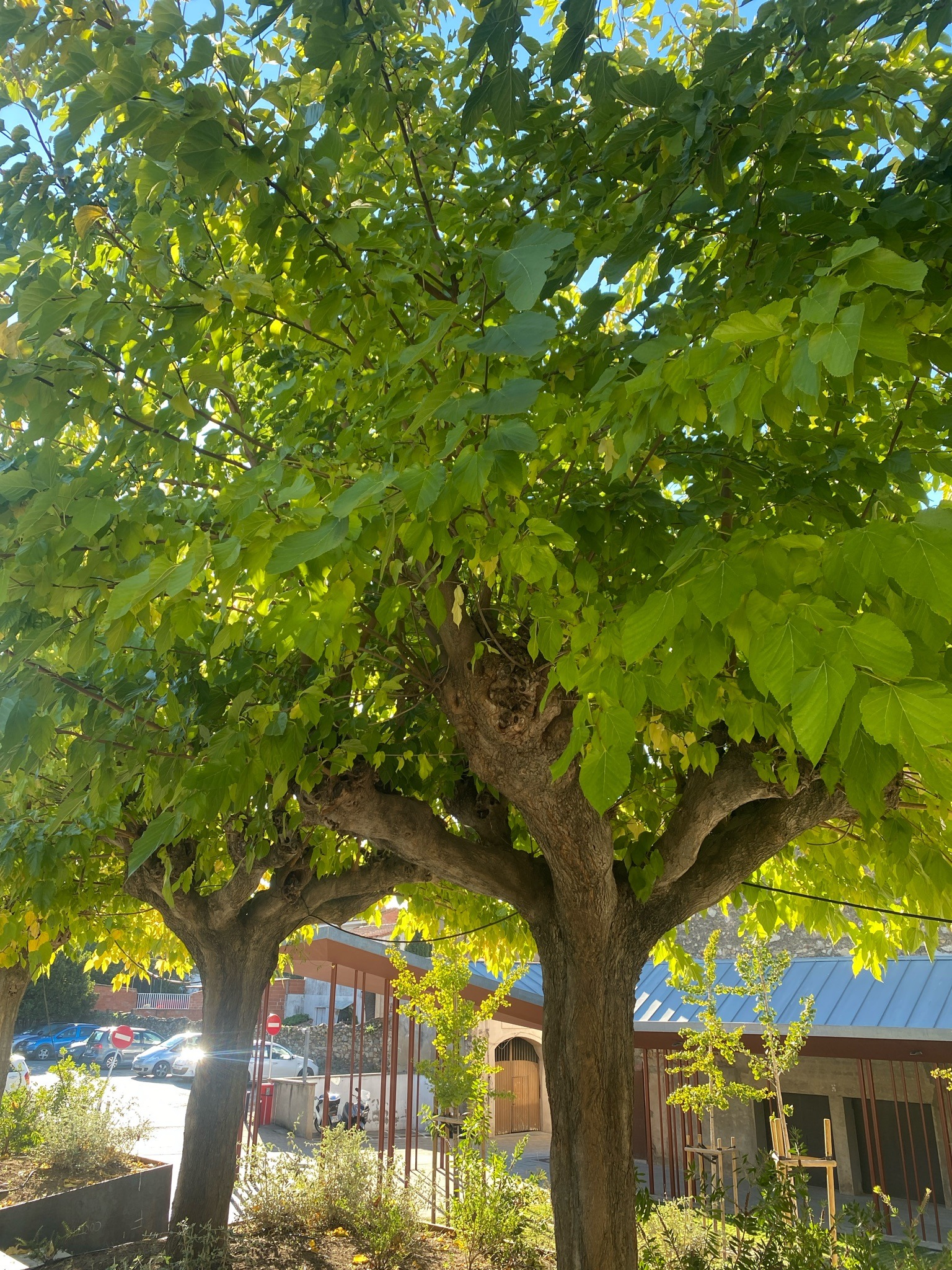
White Mulberry
Morus alba
A medium to large deciduous tree featuring a dense, rounded crown, deeply fissured grayish-brown bark, and alternate, variable leaves that are often lobed or unlobed with serrated margins.
- Light
- Full sun, requiring at least six to eight hours of direct sunlight daily.
- Water
- Moderate water needs once established. It displays good drought tolerance but performs best with regular moisture during dry spells.
- Growth
- Perennial deciduous tree with a fast growth rate, typically reaching mature heights of 30 to 50 feet with an equally wide spreading canopy.
Care instructions
Provide full sun exposure and well-draining soil. Water deeply during establishment, and maintain a moderate watering schedule. Prune during the dormant winter months to shape the canopy and remove dead or crossing branches.
Growing details
Sunlight
Full sun, requiring at least six to eight hours of direct sunlight daily.
Watering
Moderate water needs once established. It displays good drought tolerance but performs best with regular moisture during dry spells.
Soil
Adaptable to a wide range of soil types including loam, sand, and clay, provided they are well-draining. Prefers a neutral to slightly acidic pH range of 6.0 to 7.0.
Hardiness zone
USDA zones 4 through 9
Growth habit
Perennial deciduous tree with a fast growth rate, typically reaching mature heights of 30 to 50 feet with an equally wide spreading canopy.
Bloom season
Spring; produces small, inconspicuous greenish-white catkins followed by clustered aggregate structures that transition from white to pink and dark purple.
Propagation
Propagated easily through hardwood or softwood cuttings, grafting cultivars onto rootstocks, or by sowing seeds in spring after a period of cold stratification.
Common pests & issues
Generally resilient, but can occasionally be affected by cankers, leaf spot, root rot in poorly draining soils, and pests such as scales, whiteflies, and spider mites.
Similar species
Red Mulberry (Morus rubra), which features larger, rougher leaves that are densely hairy on the underside, and Paper Mulberry (Broussonetia papyrifera), which has fuzzy, softly textured leaves and smoother bark.