
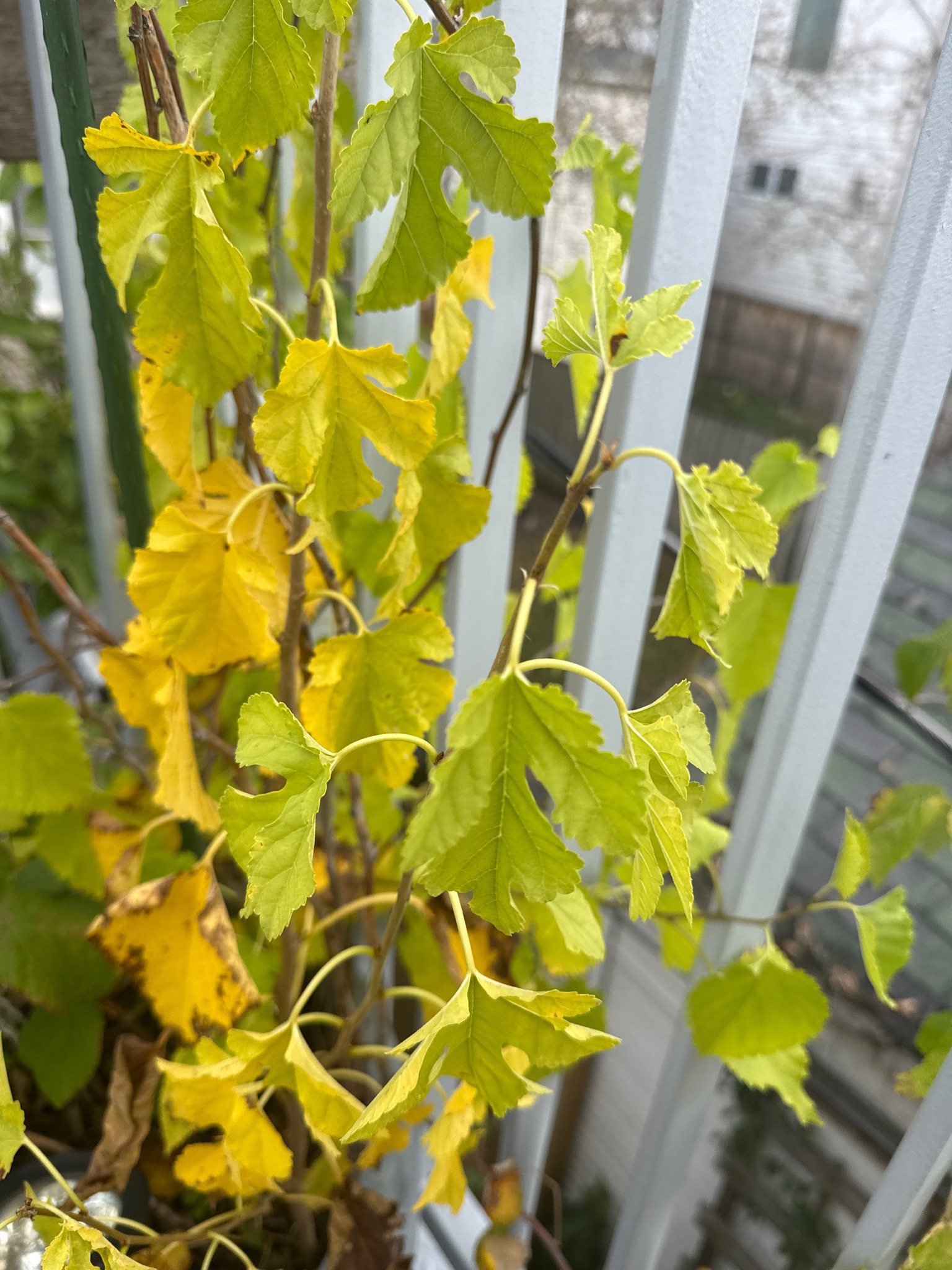
White Mulberry
Morus alba
A fast-growing deciduous tree or large shrub with variable leaf shapes, ranging from unlobed to deeply lobed with serrated margins, featuring bright green foliage that turns yellow in autumn.
- Light
- Full sun, requiring at least 6 hours of direct sunlight per day.
- Water
- Moderate water needs. Highly drought-tolerant once established. Water thoroughly when the top two inches of soil feel dry. Avoid waterlogged soils.
- Growth
- Perennial deciduous tree or large shrub with a rounded, spreading crown. Can reach mature heights of 30 to 50 feet with a similar spread if unpruned, growing at a fast rate.
Care instructions
Provide full sun and well-draining soil. Water deeply during establishment and maintain moderate moisture, allowing soil to dry slightly between waterings. Apply a balanced, slow-release fertilizer in early spring.
Growing details
Sunlight
Full sun, requiring at least 6 hours of direct sunlight per day.
Watering
Moderate water needs. Highly drought-tolerant once established. Water thoroughly when the top two inches of soil feel dry. Avoid waterlogged soils.
Soil
Adaptable to a wide range of soil types including loam, clay, and sand, provided they have good drainage. Prefers a neutral to slightly acidic pH range of 6.0 to 7.0.
Hardiness zone
USDA Hardiness Zones 4 through 8, demonstrating strong cold and heat tolerance.
Growth habit
Perennial deciduous tree or large shrub with a rounded, spreading crown. Can reach mature heights of 30 to 50 feet with a similar spread if unpruned, growing at a fast rate.
Bloom season
Spring. Produces small, inconspicuous green catkin flowers that are wind-pollinated, followed by cylindrical aggregate clusters maturing from white to pinkish-purple.
Propagation
Propagated easily through hardwood or softwood cuttings, grafting, or by seeds sown in spring after a period of cold stratification.
Common pests & issues
Generally resilient, but can occasionally be affected by leaf spot, powdery mildew, and scale insects. Ensure good air circulation and avoid overhead watering to prevent fungal issues.
Similar species
Red Mulberry (Morus rubra), which has rougher, larger leaves that are usually softly hairy on the underside, and Paper Mulberry (Broussonetia papyrifera), which features distinctly fuzzy, soft leaves with velvety textures.