
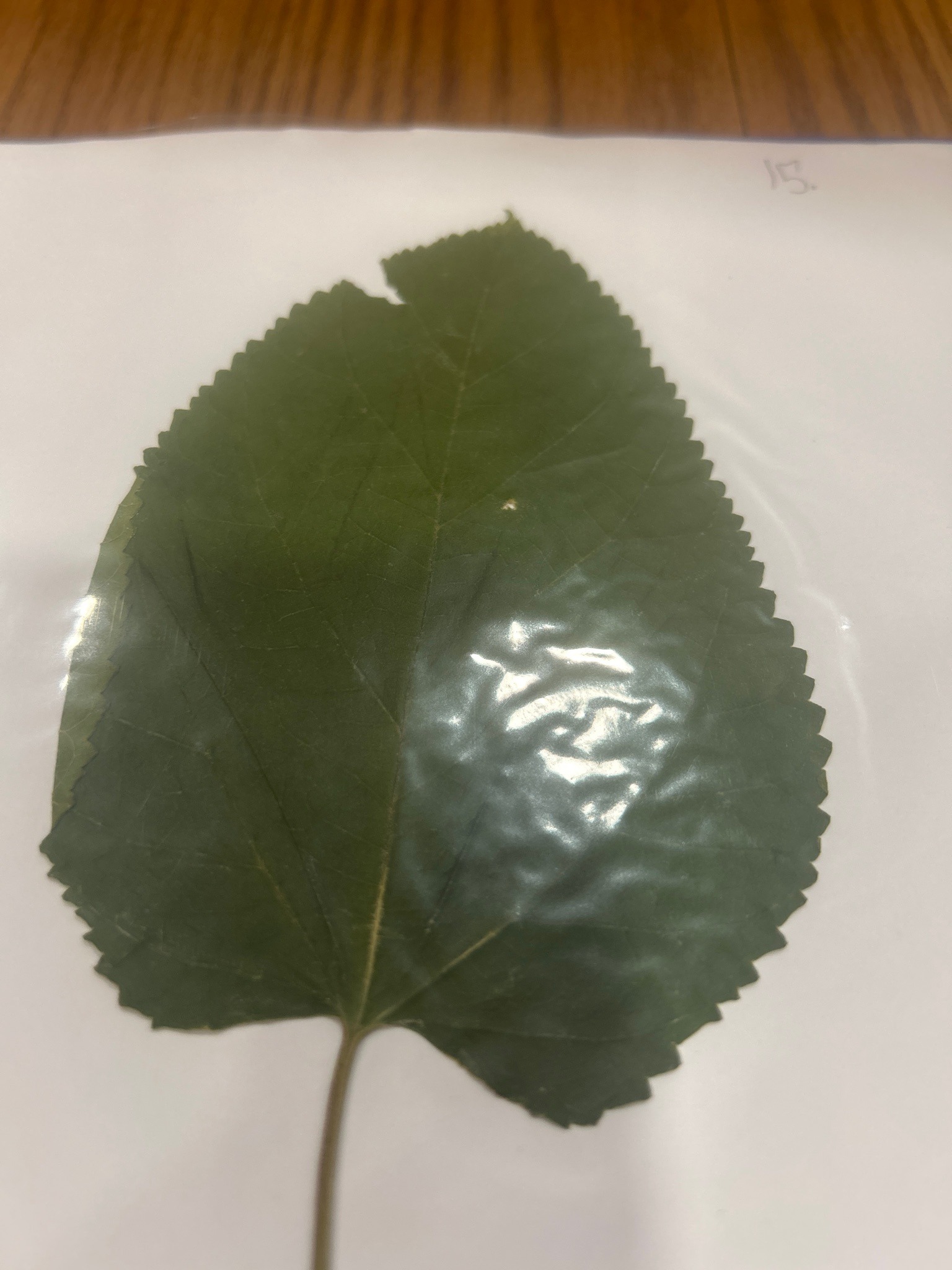
White Mulberry
Morus alba
A medium-sized deciduous tree with alternate, simple leaves that are often irregularly lobed, featuring finely serrated margins and prominent palmate venation.
- Light
- Full sun, requiring at least 6 hours of direct sunlight daily
- Water
- Moderate watering needs. Allow the top inch of soil to dry out between waterings. Highly adaptable to various moisture levels once established.
- Growth
- Fast-growing deciduous tree reaching mature heights of 30 to 50 feet with an equally wide, rounded canopy.
Care instructions
Provide full sun and well-draining soil. Water regularly during the establishment phase, transitioning to moderate drought tolerance once mature. Fertilize sparingly in early spring if growth is slow.
Growing details
Sunlight
Full sun, requiring at least 6 hours of direct sunlight daily
Watering
Moderate watering needs. Allow the top inch of soil to dry out between waterings. Highly adaptable to various moisture levels once established.
Soil
Adaptable to a wide range of soil types including clay, loam, and sand, provided they have good drainage. Prefers a neutral to slightly acidic pH range of 6.0 to 7.0.
Hardiness zone
USDA Hardiness Zones 4 through 8
Growth habit
Fast-growing deciduous tree reaching mature heights of 30 to 50 feet with an equally wide, rounded canopy.
Bloom season
Spring, producing small, inconspicuous green catkins followed by clustered compound fruits.
Propagation
Propagated easily from softwood or hardwood cuttings, as well as by seed sown in autumn or stratified for spring planting.
Common pests & issues
Generally resilient, but can occasionally be affected by leaf spot, powdery mildew, and scale insects.
Similar species
Red Mulberry (Morus rubra), which can be distinguished by its larger, rougher leaves that are densely hairy underneath, whereas White Mulberry leaves are typically smoother and glossy.