
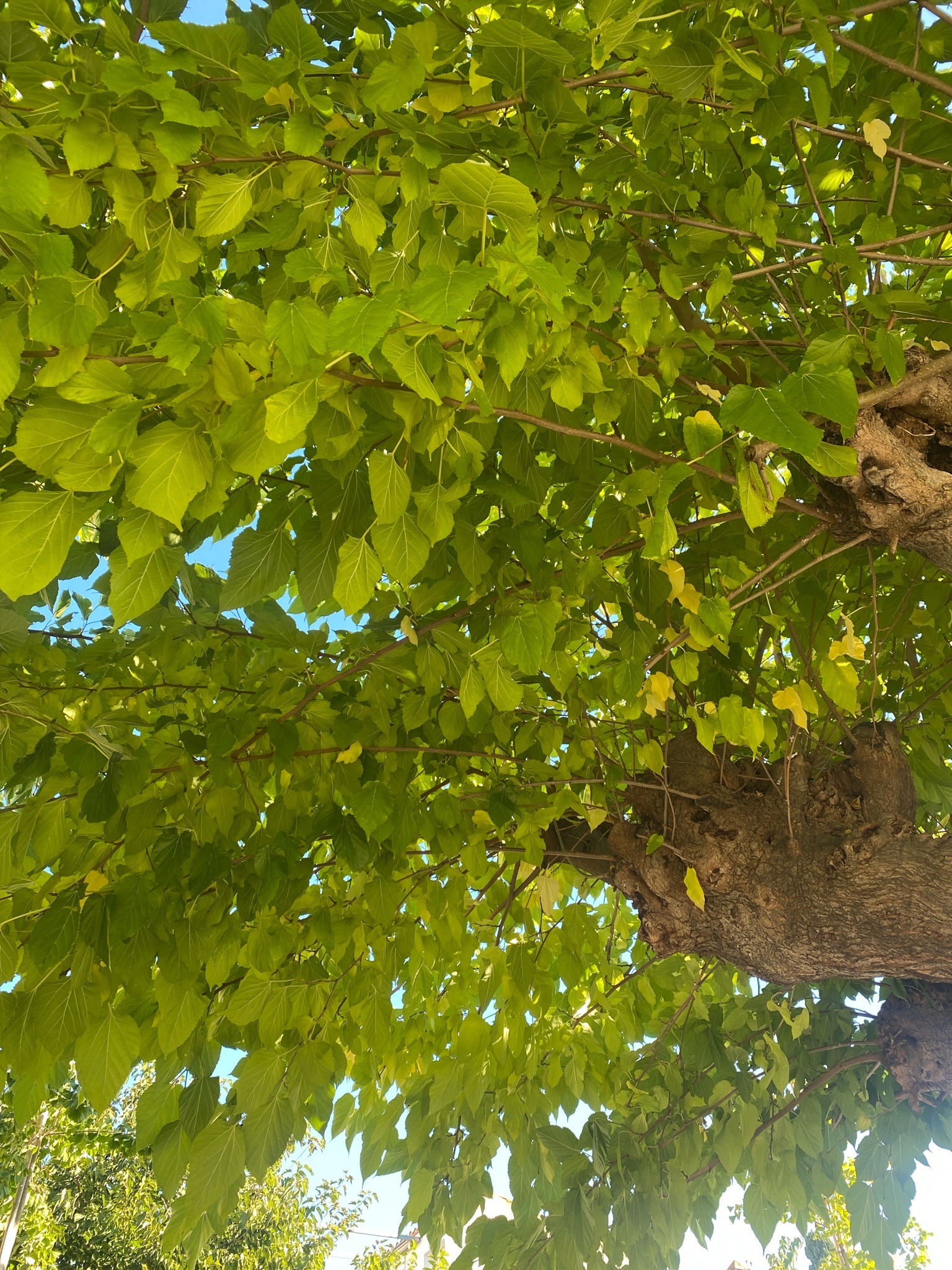
White Mulberry
Morus alba
A deciduous tree featuring a dense canopy of alternate, simple leaves that are often lobed or unlobed with serrated margins, and rugged, furrowed bark on older trunks.
- Light
- Full sun, requiring at least 6 hours of direct sunlight daily
- Water
- Moderate watering. Prefers consistent moisture when young, but develops good drought tolerance once established.
- Growth
- Fast-growing perennial tree with a rounded crown, reaching mature heights of 30 to 50 feet and a similar spread.
Care instructions
Provide full sun and well-draining soil. Water deeply during establishment, then maintain moderate moisture. Prune in late winter or early spring while dormant to shape the canopy and remove dead wood.
Growing details
Sunlight
Full sun, requiring at least 6 hours of direct sunlight daily
Watering
Moderate watering. Prefers consistent moisture when young, but develops good drought tolerance once established.
Soil
Adaptable to a wide range of soil types including clay, loam, and sand, provided they are well-draining. Prefers a pH range of 6.0 to 7.5.
Hardiness zone
USDA zones 4 through 8
Growth habit
Fast-growing perennial tree with a rounded crown, reaching mature heights of 30 to 50 feet and a similar spread.
Bloom season
Spring. Produces small, inconspicuous greenish-white catkins followed by composite multiple fruits that mature from white to pinkish-purple.
Propagation
Propagated easily from softwood or hardwood cuttings, layering, or by seeds sown in spring after cold stratification.
Common pests & issues
Generally resilient, but can occasionally be affected by scale insects, whiteflies, leaf spot, and powdery mildew. Ensure good air circulation to prevent fungal problems.
Similar species
Red Mulberry (Morus rubra), which has rougher, larger leaves with hairy undersides compared to the smoother, shinier leaves of the White Mulberry.