
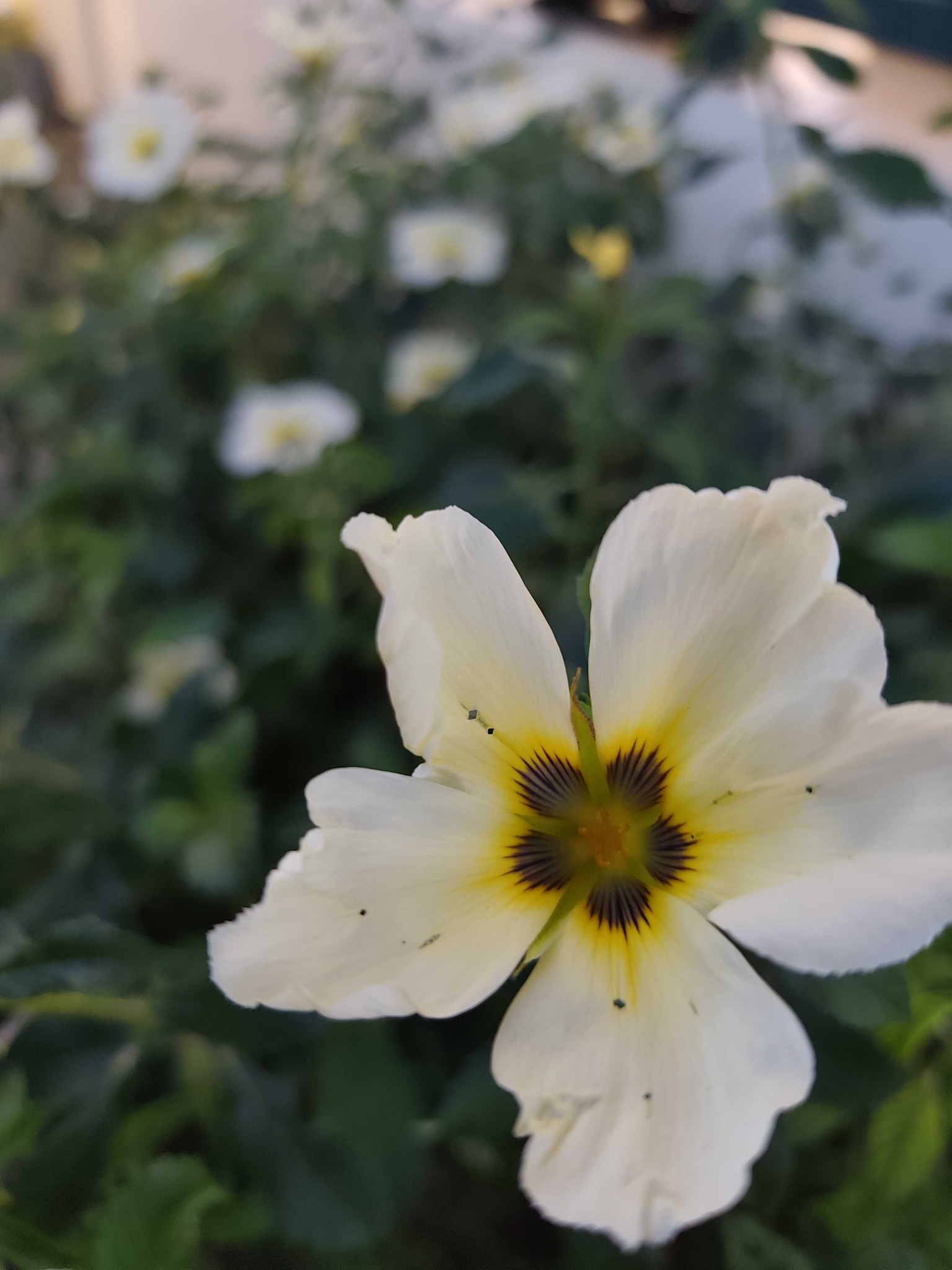
White Sage Rose
Turnera subulata
Turnera subulata, commonly known as the white sage rose or dark-eye turnera, is a perennial herbaceous subshrub featuring delicate white flowers with a distinctive dark purple or brownish-black center surrounding a yellow throat. The leaves are dark green, serrated, and oval-shaped.
- Light
- Full sun, requiring at least six hours of direct sunlight daily
- Water
- Moderate watering needs. Water deeply when the topsoil feels dry, reducing frequency during cooler winter months. It tolerates brief dry spells once established.
- Growth
- A low-growing, bushy perennial subshrub that typically reaches a height and spread of 1 to 2 feet with a moderate growth rate
Care instructions
Provide full sun exposure for optimal flowering. Water regularly, allowing the top inch of soil to dry out between waterings. Use a well-draining, loamy or sandy soil mix and apply a balanced liquid fertilizer monthly during the active growing season.
Growing details
Sunlight
Full sun, requiring at least six hours of direct sunlight daily
Watering
Moderate watering needs. Water deeply when the topsoil feels dry, reducing frequency during cooler winter months. It tolerates brief dry spells once established.
Soil
Well-draining sandy, loamy, or organic-rich soils with a neutral to slightly acidic pH range of 6.0 to 7.0
Hardiness zone
USDA Hardiness Zones 9 through 11, grown as an annual in cooler climates
Growth habit
A low-growing, bushy perennial subshrub that typically reaches a height and spread of 1 to 2 feet with a moderate growth rate
Bloom season
Blooms continuously from late spring through autumn, producing solitary white flowers with dark centers that open in the morning and close by afternoon
Propagation
Propagated easily from softwood cuttings taken in spring or summer, or by sowing seeds in warm, well-draining potting medium
Common pests & issues
Generally resilient, but susceptible to root rot if overwatered or planted in poorly draining soil. Pests like aphids and spider mites can occasionally affect foliage and can be treated with insecticidal soap.
Similar species
Turnera ulmifolia (Yellow Sage Rose), which shares a similar growth habit and leaf structure but features bright yellow flowers instead of white