
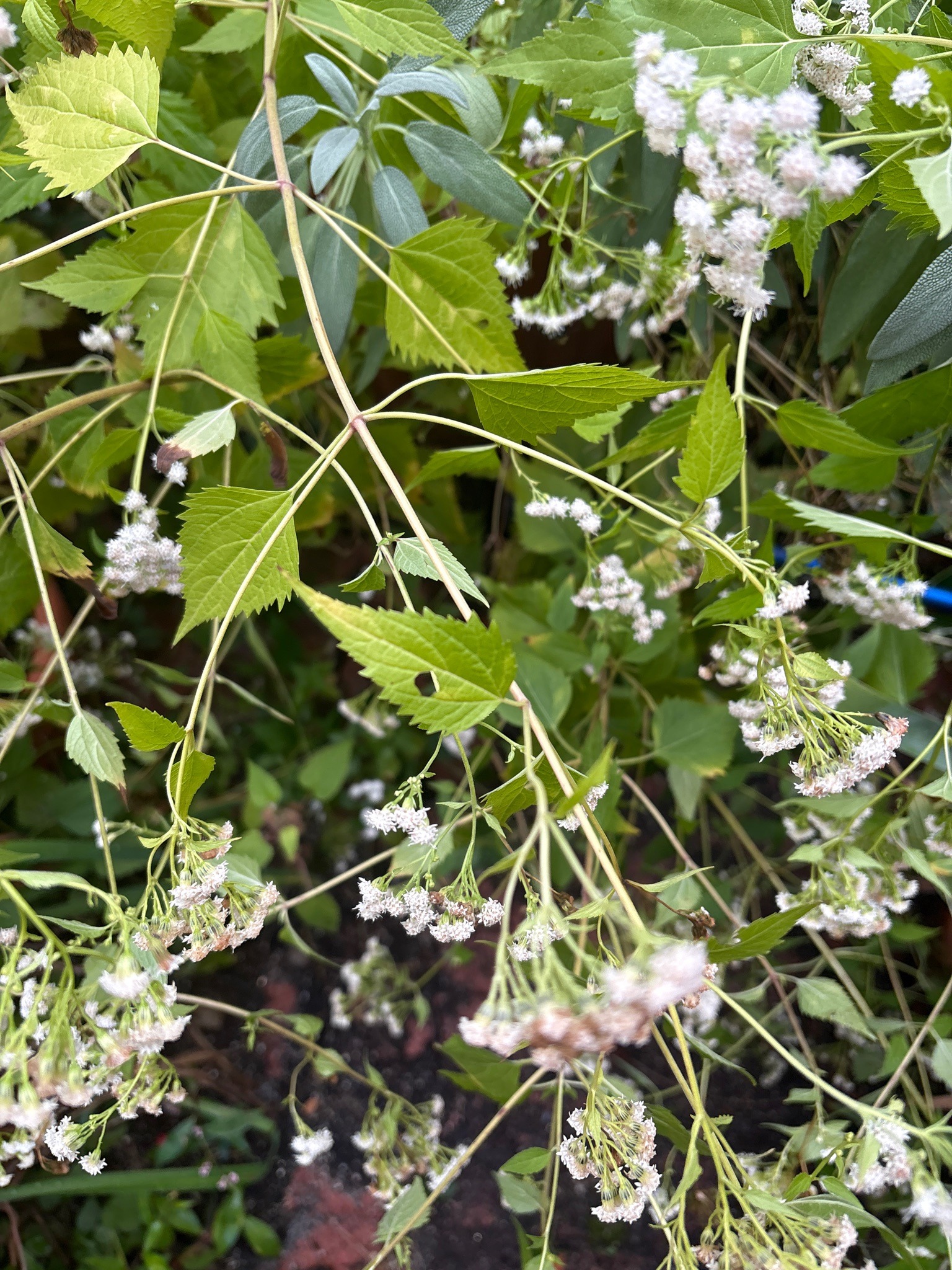
White Snakeroot
Ageratina altissima
White snakeroot is an herbaceous perennial plant with branching stems, opposite leaves that are ovate with sharply toothed margins, and small clusters of bright white composite flowers blooming in flat-topped terminal clusters.
- Light
- Partial shade to full shade, performing best with filtered morning sunlight and protected from intense afternoon heat.
- Water
- Requires moderate and consistent moisture. Water deeply when the top inch of soil begins to dry out, ensuring the soil does not remain perpetually waterlogged.
- Growth
- An upright, clump-forming herbaceous perennial reaching mature heights of 1 to 4 feet with a similar spread, growing at a moderate rate.
Care instructions
Provide partial shade and moderate, consistent moisture in well-draining, humus-rich soil. Mulch around the base to retain moisture during dry periods.
Growing details
Sunlight
Partial shade to full shade, performing best with filtered morning sunlight and protected from intense afternoon heat.
Watering
Requires moderate and consistent moisture. Water deeply when the top inch of soil begins to dry out, ensuring the soil does not remain perpetually waterlogged.
Soil
Prefers rich, organic, loamy soils with good drainage and a slightly acidic to neutral pH range of 6.0 to 7.0.
Hardiness zone
USDA Hardiness Zones 3 through 8
Growth habit
An upright, clump-forming herbaceous perennial reaching mature heights of 1 to 4 feet with a similar spread, growing at a moderate rate.
Bloom season
Blooms from mid-summer through late autumn, producing abundant clusters of small, thread-like white flower heads.
Propagation
Easily propagated via seeds sown in spring or autumn, or through root division during the dormant season.
Common pests & issues
Generally resilient, but may occasionally be affected by powdery mildew or rust in overly damp, crowded conditions. Monitor for aphids or spider mites.
Similar species
Can be confused with other white-flowered Asteraceae members such as boneset (Eupatorium perfoliatum), which features fused leaves, whereas white snakeroot has distinct, stalked opposite leaves.