
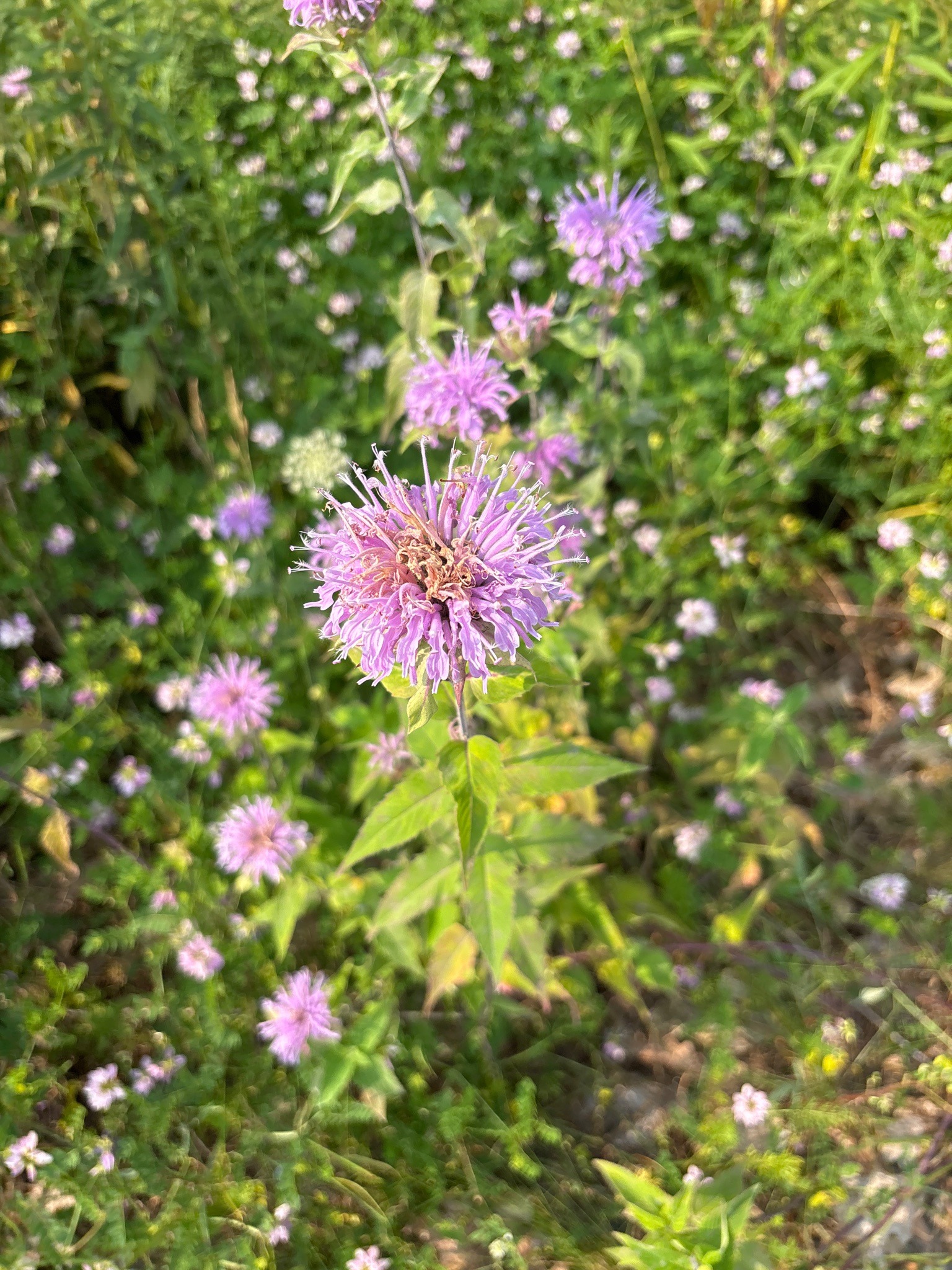
Wild Bergamot
Monarda fistulosa
An herbaceous perennial plant featuring square stems, opposite aromatic leaves, and distinctive terminal clusters of tubular, lavender to pink flowers.
- Light
- Full sun to partial shade, approximately 6 hours of direct sunlight daily
- Water
- Moderate water needs; allow the top inch of soil to dry out between waterings. Drought tolerant once fully established.
- Growth
- Herbaceous perennial forming upright clumps with a height of 2 to 4 feet and a spread of 2 to 3 feet, spreading steadily via rhizomes.
Care instructions
Provide full sun to partial shade in well-draining soil. Water regularly during establishment and periods of drought, ensuring good air circulation to prevent fungal issues.
Growing details
Sunlight
Full sun to partial shade, approximately 6 hours of direct sunlight daily
Watering
Moderate water needs; allow the top inch of soil to dry out between waterings. Drought tolerant once fully established.
Soil
Prefers loamy, well-draining soil with a neutral to slightly alkaline pH range of 6.0 to 7.5, though adaptable to clay and sandy soils.
Hardiness zone
USDA Hardiness Zones 3 through 9
Growth habit
Herbaceous perennial forming upright clumps with a height of 2 to 4 feet and a spread of 2 to 3 feet, spreading steadily via rhizomes.
Bloom season
Blooms from mid-summer to late summer, producing dense, rounded clusters of tubular pink or lavender flowers.
Propagation
Propagated easily by division of established clumps in spring or autumn, or by sowing seeds directly in the garden after the final frost.
Common pests & issues
Prone to powdery mildew in humid environments or when planted too densely; ensure adequate spacing and airflow to minimize occurrence.
Similar species
Easily confused with Bee Balm (Monarda didyma), which typically features bright red flowers, whereas Wild Bergamot features lavender to pink blossoms.