
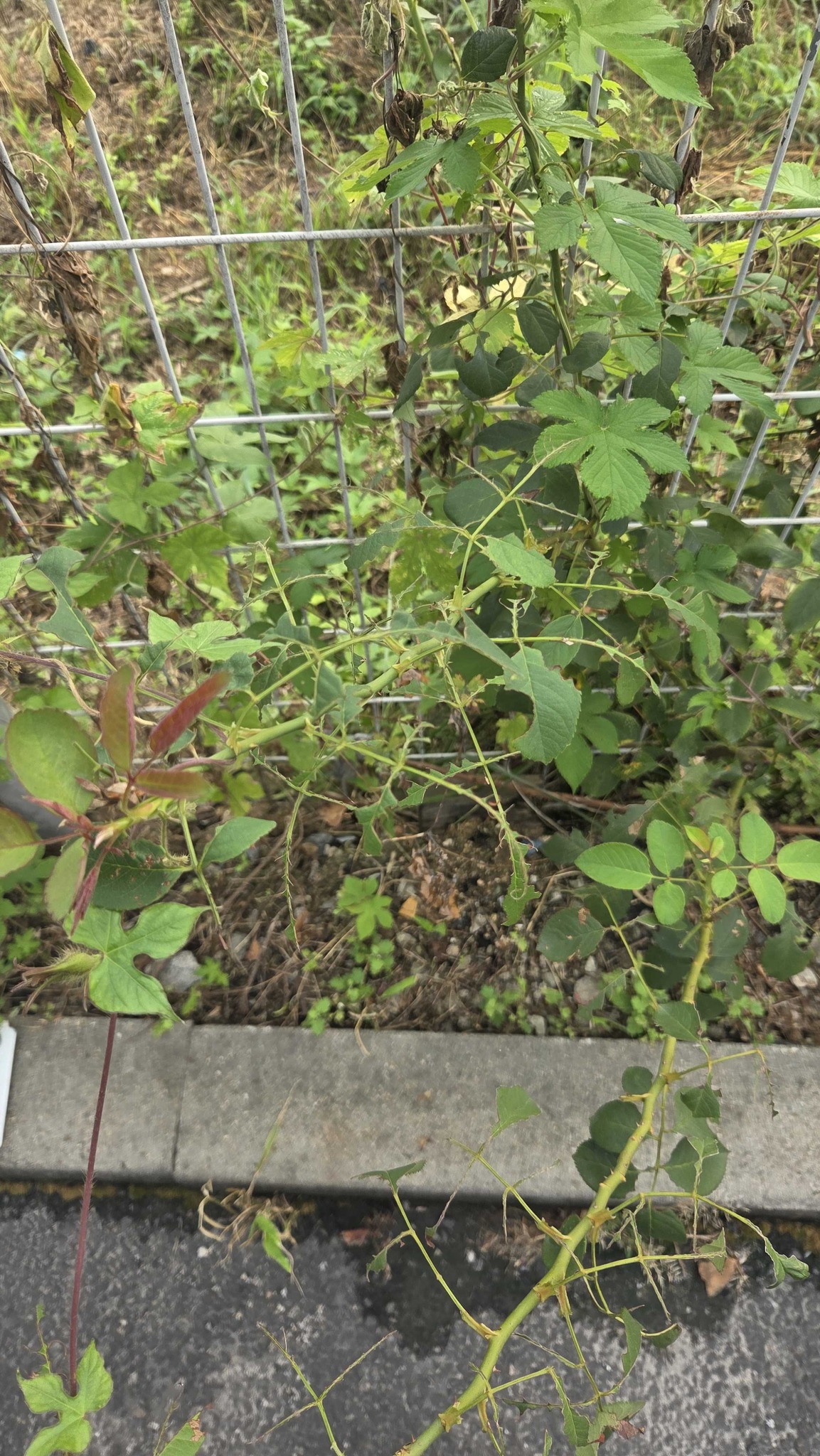
Wild Blackberry
Rubus fruticosus
A vigorous scrambling shrub featuring thorny arching stems (canes), alternate compound leaves usually composed of three to five leaflets, and white to pale pink flowers.
- Light
- Full sun to partial shade, requiring at least 6 hours of direct sunlight daily for optimal development.
- Water
- Moderate watering needs. Water deeply during establishment and prolonged dry spells, allowing the soil to dry out slightly between waterings.
- Growth
- Deciduous scrambling shrub with arching, thorny stems that can grow 3 to 10 feet tall and spread aggressively via root suckers and tip layering.
Care instructions
Provide full sun to partial shade with regular watering during dry periods. Plant in well-draining soil rich in organic matter. Prune back old fruiting canes annually to encourage new vigorous growth.
Growing details
Sunlight
Full sun to partial shade, requiring at least 6 hours of direct sunlight daily for optimal development.
Watering
Moderate watering needs. Water deeply during establishment and prolonged dry spells, allowing the soil to dry out slightly between waterings.
Soil
Prefers loamy, well-draining soil with a slightly acidic to neutral pH range of 5.5 to 6.8.
Hardiness zone
USDA hardiness zones 3 through 9.
Growth habit
Deciduous scrambling shrub with arching, thorny stems that can grow 3 to 10 feet tall and spread aggressively via root suckers and tip layering.
Bloom season
Blooms in late spring to mid-summer, producing small clusters of white or pale pink five-petaled flowers.
Propagation
Propagated easily through stem tip layering, root cuttings, or division of established root clumps.
Common pests & issues
Susceptible to fungal diseases such as rust and powdery mildew, as well as cane borers and aphids. Ensure good air circulation and remove infected canes promptly.
Similar species
Often confused with raspberries (Rubus idaeus), which can be distinguished by their hollow fruit clusters that detach easily from the receptacle, whereas blackberries retain the core.