
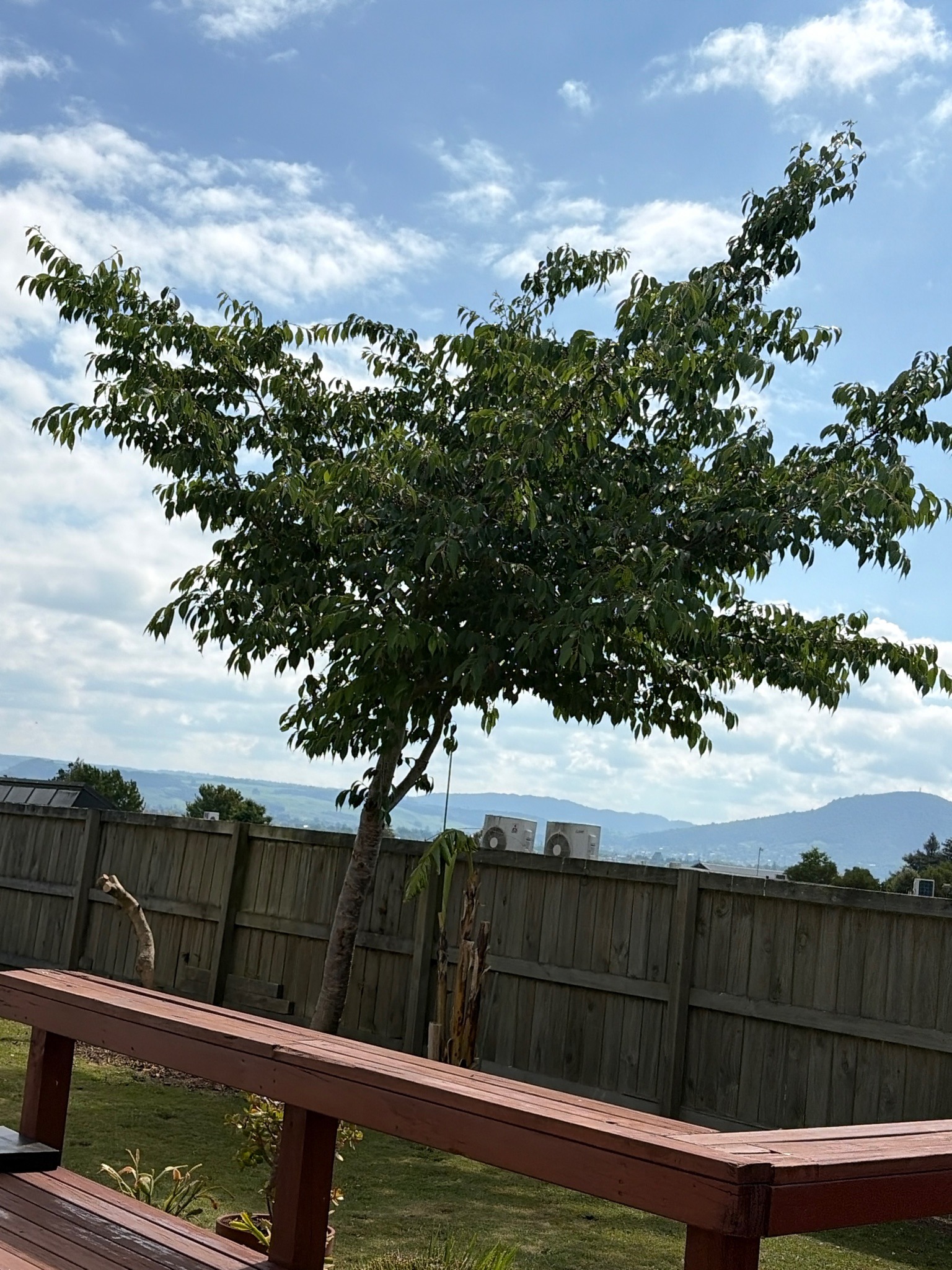
Wild Cherry
Prunus avium
A medium to large deciduous tree with an upright, spreading canopy, glossy dark green ovate leaves with serrated margins, smooth reddish-brown bark featuring horizontal lenticels, and clusters of white flowers appearing in spring.
- Light
- Full sun, requiring at least 6 to 8 hours of direct sunlight per day.
- Water
- Moderate watering needs. Water deeply once a week during dry spells, allowing the top couple of inches of soil to dry out between waterings to prevent root rot.
- Growth
- Deciduous perennial tree with a fast to moderate growth rate, reaching mature heights of 30 to 60 feet with a comparable spread.
Care instructions
Provide full sun exposure and well-draining soil. Water regularly during establishment and periods of drought. Apply a balanced slow-release fertilizer in early spring.
Growing details
Sunlight
Full sun, requiring at least 6 to 8 hours of direct sunlight per day.
Watering
Moderate watering needs. Water deeply once a week during dry spells, allowing the top couple of inches of soil to dry out between waterings to prevent root rot.
Soil
Prefers fertile, loamy, moist, and well-draining soils with a neutral pH range between 6.0 and 7.0.
Hardiness zone
USDA Hardiness Zones 3 through 7.
Growth habit
Deciduous perennial tree with a fast to moderate growth rate, reaching mature heights of 30 to 60 feet with a comparable spread.
Bloom season
Spring, producing delicate white or pale pink five-petaled flowers in drooping clusters.
Propagation
Propagated primarily through hardwood cuttings, budding, or grafting onto appropriate rootstocks in late winter or early spring.
Common pests & issues
Susceptible to aphids, scale insects, powdery mildew, and bacterial canker. Ensure good air circulation and avoid overhead watering to minimize fungal concerns.
Similar species
Prunus cerasus (Sour Cherry), which generally has a smaller stature and more drooping branches compared to the upright and larger habit of Prunus avium.