
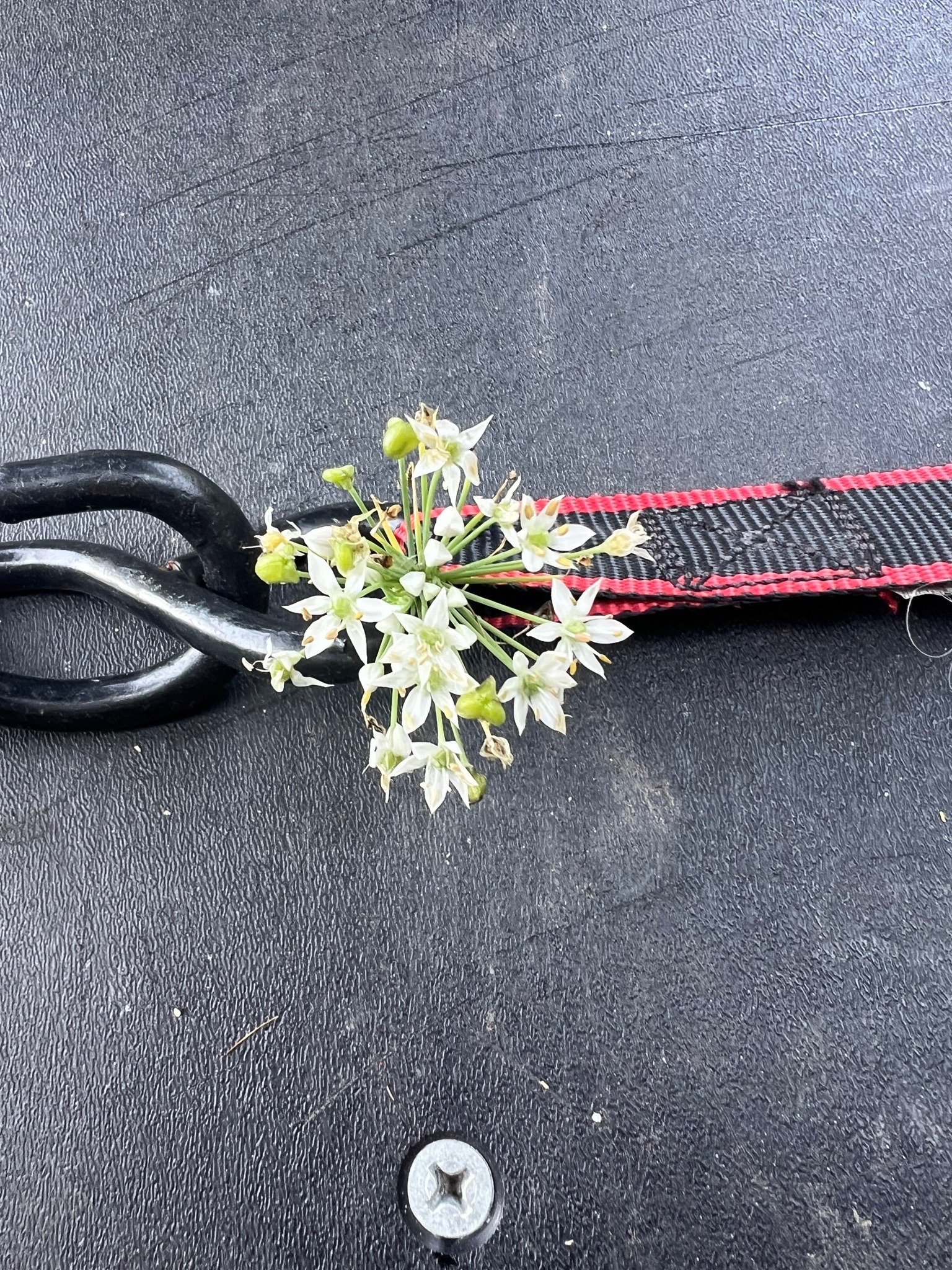
Wild Garlic
Allium vineale
A bulbous perennial herb featuring slender, hollow, cylindrical leaves and a distinctive rounded umbel of small white to greenish or pinkish flowers, often interspersed with small bulbils.
- Light
- Full sun to partial shade, requiring at least 6 hours of direct sunlight daily for optimal growth.
- Water
- Moderate watering needs; allow the soil to dry slightly between watering sessions. Drought-tolerant once established, and susceptible to bulb rot if kept in excessively soggy soil.
- Growth
- Perennial bulbous plant growing up to 1 to 3 feet in height, spreading via underground bulblets and aerial bulbils with a moderate to fast growth rate.
Care instructions
Provide full sun to partial shade and well-draining soil. Water moderately when the top few inches of soil become dry. Fertilize lightly in early spring with a balanced slow-release fertilizer if soil fertility is low.
Growing details
Sunlight
Full sun to partial shade, requiring at least 6 hours of direct sunlight daily for optimal growth.
Watering
Moderate watering needs; allow the soil to dry slightly between watering sessions. Drought-tolerant once established, and susceptible to bulb rot if kept in excessively soggy soil.
Soil
Prefers loose, loamy, or sandy soils with excellent drainage and a neutral to slightly acidic pH range of 6.0 to 7.0.
Hardiness zone
USDA zones 4 through 9
Growth habit
Perennial bulbous plant growing up to 1 to 3 feet in height, spreading via underground bulblets and aerial bulbils with a moderate to fast growth rate.
Bloom season
Blooms from late spring through mid-summer, producing rounded umbels of small, star-shaped white, pink, or greenish flowers.
Propagation
Propagates readily through division of underground offsets, or via the aerial bulbils produced in the flower clusters.
Common pests & issues
Generally resilient against major pests and diseases, though can occasionally be affected by fungal leaf spots or rust in overly humid conditions, and can be difficult to eradicate once established.
Similar species
Similar to other Allium species such as Allium sativum and Allium schoenoprasum, but distinguished by its hollow tubular leaves, bulbils in the flower cluster, and specific growth habit.