
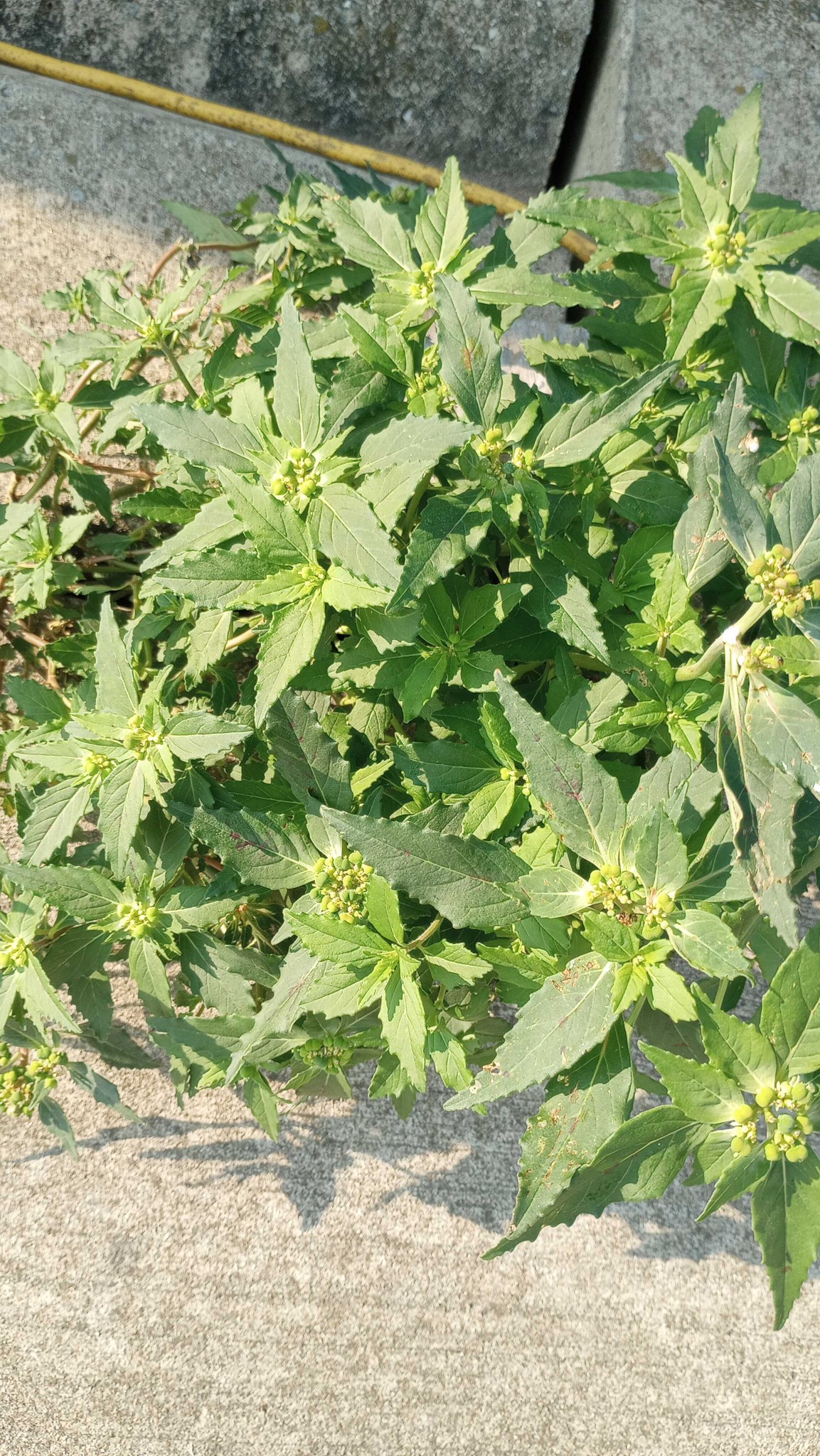
Wild Poinsettia
Euphorbia heterophylla
An annual or short-lived perennial herb with alternate, variable leaves ranging from linear to deeply lobed or fiddle-shaped. The upper leaves often form colorful bracts surrounding small, inconspicuous cluster flowers at the stem tips.
- Light
- Full sun to partial shade, requiring at least 6 hours of direct sunlight daily for optimal growth.
- Water
- Moderate water needs; allow the top few inches of soil to dry out completely between waterings. Drought-tolerant once established, and susceptible to root rot if overwatered or kept in poorly draining soil.
- Growth
- An upright, branching annual or short-lived herbaceous perennial herb, reaching heights of 1 to 3 feet with a spread of 1 to 2 feet, exhibiting a moderate growth rate.
Care instructions
Provide full sun to partial shade and well-draining soil. Allow the soil to dry out between moderate watering sessions. Fertilization is generally not necessary in wild settings, but a balanced, low-concentration fertilizer can be applied during active growth if grown ornamentally.
Growing details
Sunlight
Full sun to partial shade, requiring at least 6 hours of direct sunlight daily for optimal growth.
Watering
Moderate water needs; allow the top few inches of soil to dry out completely between waterings. Drought-tolerant once established, and susceptible to root rot if overwatered or kept in poorly draining soil.
Soil
Prefers loose, sandy, or loamy well-draining soils with a neutral to slightly acidic pH range of 6.0 to 7.0.
Hardiness zone
USDA zones 9 through 11, typically grown as an annual in cooler temperate regions.
Growth habit
An upright, branching annual or short-lived herbaceous perennial herb, reaching heights of 1 to 3 feet with a spread of 1 to 2 feet, exhibiting a moderate growth rate.
Bloom season
Blooms from summer through autumn, featuring small, clustered cyathia flowers surrounded by modified leaves or bracts that may show lighter green or yellowish tones at the base.
Propagation
Propagated primarily by seeds released naturally from mature capsules or collected and sown directly in warm soil during spring.
Common pests & issues
Generally resilient, but can occasionally be affected by root rot in waterlogged soils and minor infestations of aphids or spider mites in dry indoor or greenhouse conditions.
Similar species
Easily confused with other members of the Euphorbia genus, such as painted spurge (Euphorbia cyathophora), but distinguished by leaf shape variations and subtle differences in the coloration and gland structure of the floral cyathia.