
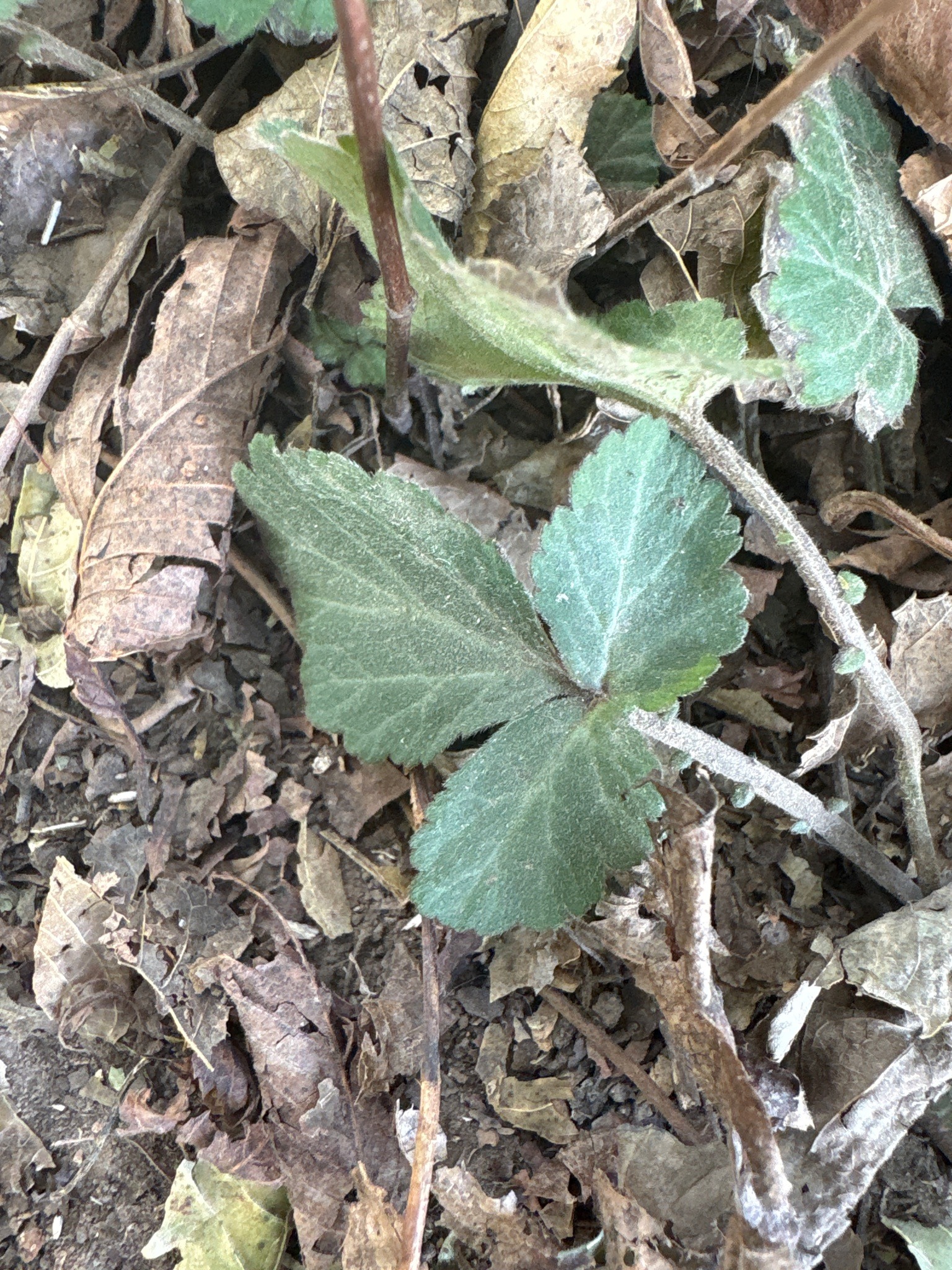
Wild Strawberry
Fragaria vesca
A low-growing herbaceous perennial featuring compound leaves divided into three leaflets with distinctly toothed margins, emerging from basal rosettes alongside slender stolons.
- Light
- Full sun to partial shade, requiring at least six hours of direct sunlight daily for optimal growth.
- Water
- Water deeply and regularly, allowing the top inch of soil to dry slightly between waterings; drought tolerance is low.
- Growth
- Herbaceous perennial forming a low mat via runners, reaching a mature height of 4 to 10 inches with a spreading growth rate.
Care instructions
Provide full sun to partial shade with consistently moist, well-draining soil rich in organic matter. Water regularly during dry spells and apply a balanced, slow-release fertilizer in early spring.
Growing details
Sunlight
Full sun to partial shade, requiring at least six hours of direct sunlight daily for optimal growth.
Watering
Water deeply and regularly, allowing the top inch of soil to dry slightly between waterings; drought tolerance is low.
Soil
Prefers loamy, rich, well-draining soils with a slightly acidic to neutral pH range of 6.0 to 7.0.
Hardiness zone
USDA zones 3 through 10, demonstrating strong cold tolerance during winter months.
Growth habit
Herbaceous perennial forming a low mat via runners, reaching a mature height of 4 to 10 inches with a spreading growth rate.
Bloom season
Blooms in mid to late spring with small, five-petaled white flowers.
Propagation
Propagates easily through rooted runners (stolons) in summer, or via seed sown in spring.
Common pests & issues
Susceptible to fungal leaf spots and root rots in poorly drained soils, as well as occasional aphid infestations; managed through proper spacing and good air circulation.
Similar species
Can resemble Potentilla indica (mock strawberry), which features yellow flowers and aggregate fruits held upright, whereas Fragaria vesca has white flowers and pendulous aggregate fruits.