
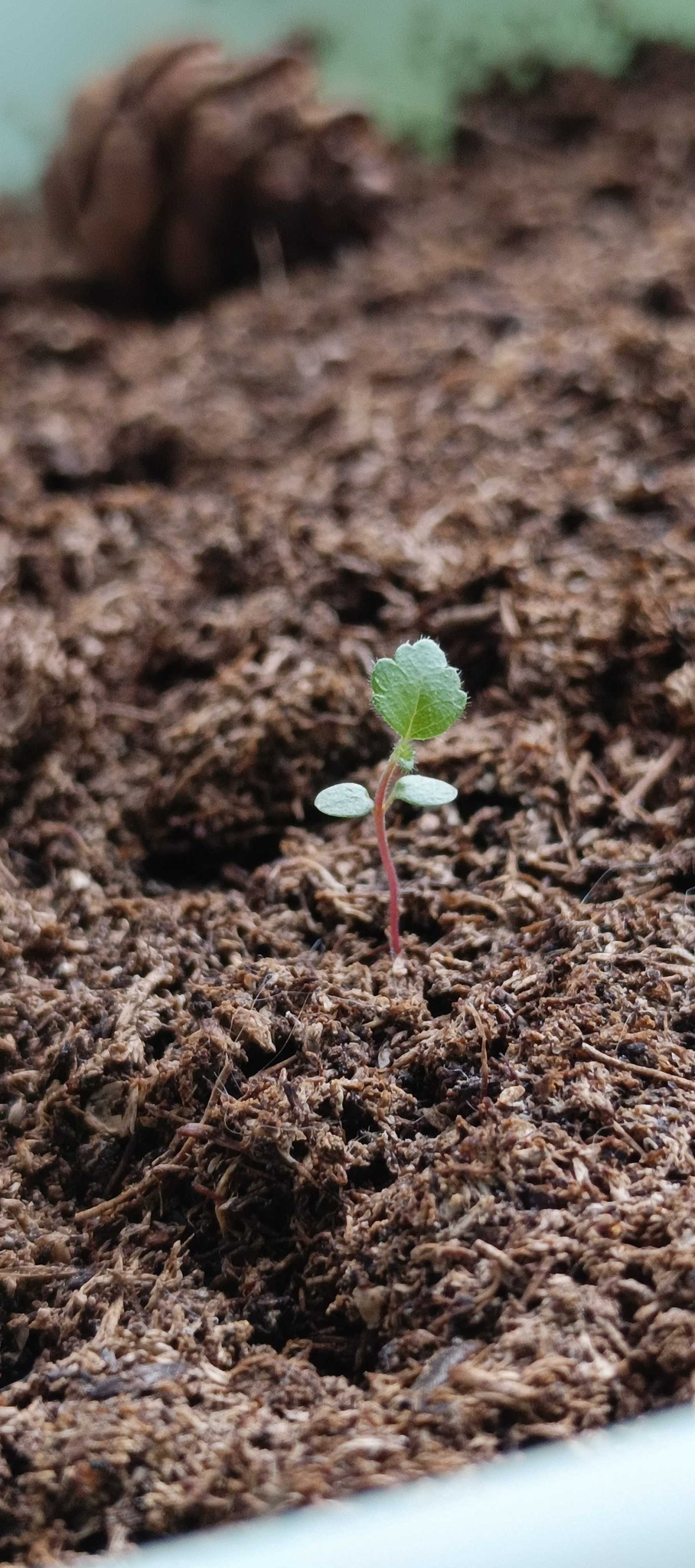
Wild Strawberry
Fragaria vesca
A small, low-growing perennial with trifoliate green leaves, white five-petaled flowers, and small, intensely flavored red fruits. Seedlings feature tiny, rounded cotyledons and a reddish stem soon followed by serrated true leaves.
- Light
- Full sun to partial shade; ideally 6-8 hours of sunlight daily for best fruit production.
- Water
- Keep soil consistently moist but not waterlogged. Seedlings need frequent light misting. Mature plants are moderately drought-tolerant.
- Growth
- Perennial herb; grows to 6-10 inches tall and spreads via runners (stolons) to form a dense groundcover.
Care instructions
Provide bright light and consistent moisture. Once established, they are hardy. Replant in well-draining soil and ensure good air circulation. Fertilize lightly during the growing season.
Growing details
Sunlight
Full sun to partial shade; ideally 6-8 hours of sunlight daily for best fruit production.
Watering
Keep soil consistently moist but not waterlogged. Seedlings need frequent light misting. Mature plants are moderately drought-tolerant.
Soil
Well-drained, loamy soil rich in organic matter. Prefers slightly acidic to neutral pH (5.5-7.5).
Hardiness zone
Zones 3-9
Growth habit
Perennial herb; grows to 6-10 inches tall and spreads via runners (stolons) to form a dense groundcover.
Bloom season
Late spring to early summer; white flowers with yellow centers followed by small red cone-shaped berries.
Propagation
Commonly through runners, seed, or crown division in the spring or fall.
Common pests & issues
Prone to slugs, aphids, and spider mites. Vulnerable to powdery mildew and leaf spot if air circulation is poor.
Similar species
Mock Strawberry (Potentilla indica) which has yellow flowers and tasteless, upward-facing fruit, whereas Wild Strawberry has white flowers and pendulous sweet fruit.