
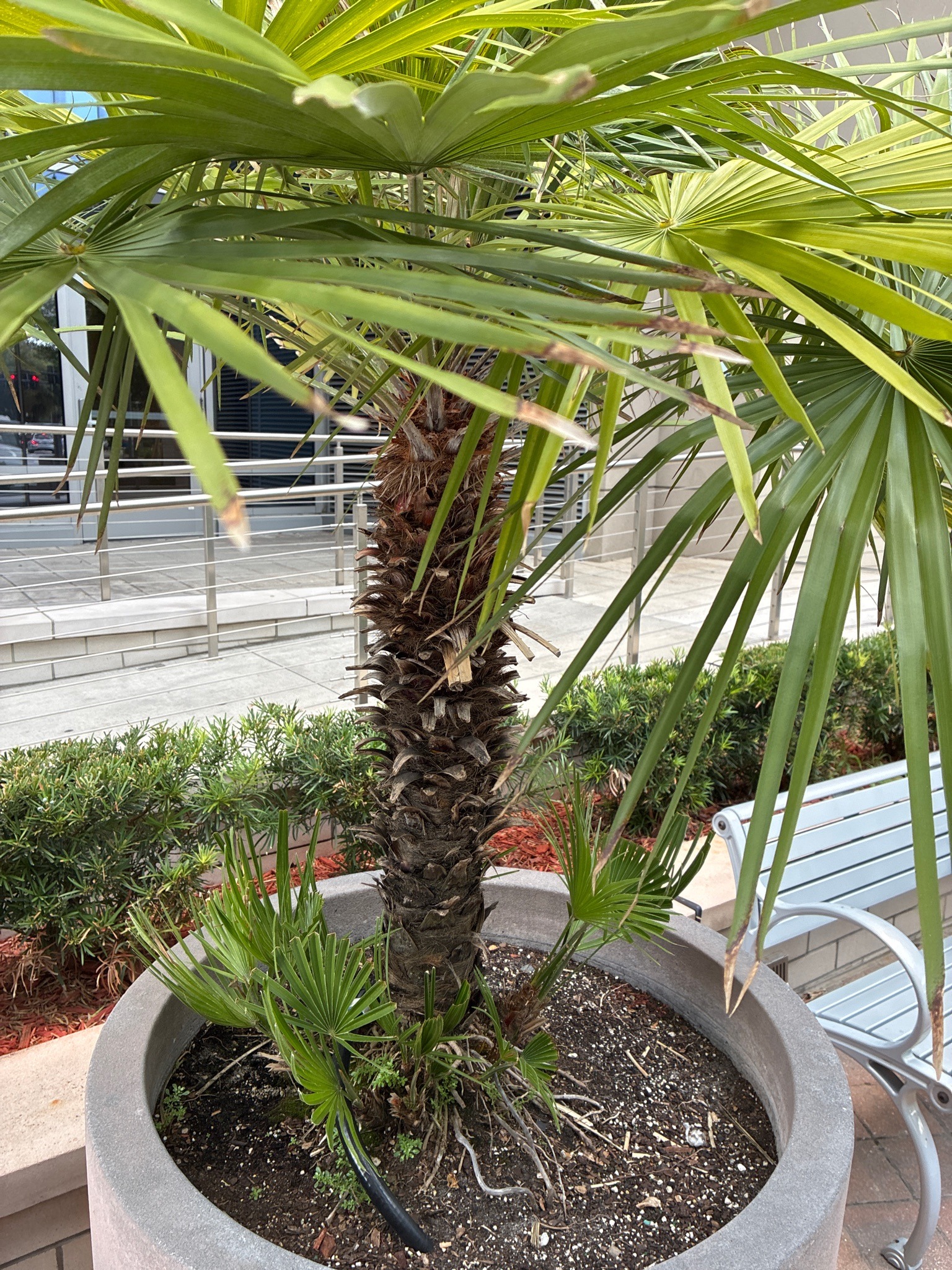
Windmill Palm
Trachycarpus fortunei
A hardy, slow-growing evergreen palm featuring a slender trunk covered in dense, brown, burlap-like fibers and large, dark green fan-shaped fronds.
- Light
- Full sun to partial shade (4-6+ hours of light); can tolerate more shade in very hot climates.
- Water
- Moderate. Water when the top 2 inches of soil feel dry. Mature specimens can tolerate brief dry periods but prefer consistent moisture. Avoid waterlogging.
- Growth
- Perennial evergreen tree; slow growth rate reaching 20-40 feet tall and 6-10 feet wide at maturity.
Care instructions
Provide full sun to partial shade in well-draining soil. Water regularly while establishing; once mature, it is moderately drought-tolerant. Apply a slow-release palm fertilizer in spring and summer.
Growing details
Sunlight
Full sun to partial shade (4-6+ hours of light); can tolerate more shade in very hot climates.
Watering
Moderate. Water when the top 2 inches of soil feel dry. Mature specimens can tolerate brief dry periods but prefer consistent moisture. Avoid waterlogging.
Soil
Well-draining, loamy or sandy soil; prefers slightly acidic to neutral pH (5.5 to 7.5).
Hardiness zone
USDA zones 7b-11; known as one of the most cold-hardy palms, surviving temperatures down to 5-10°F (-12°C to -15°C).
Growth habit
Perennial evergreen tree; slow growth rate reaching 20-40 feet tall and 6-10 feet wide at maturity.
Bloom season
Late spring to early summer; produces large branched clusters of small yellow flowers (dioecious) followed by blue-black fruits on female plants.
Propagation
Primarily by seeds, which can take 2-3 months to germinate at warm temperatures.
Common pests & issues
Leaf spot, scale insects, and palm aphids. Susceptible to root rot if soil is poorly drained. High winds can shred the fan-like fronds.
Similar species
Mediterranean Fan Palm (Chamaerops humilis) which is multi-trunked and has sharper spines; and Dwarf Palmetto (Sabal minor) which lacks the hairy fibrous trunk.