
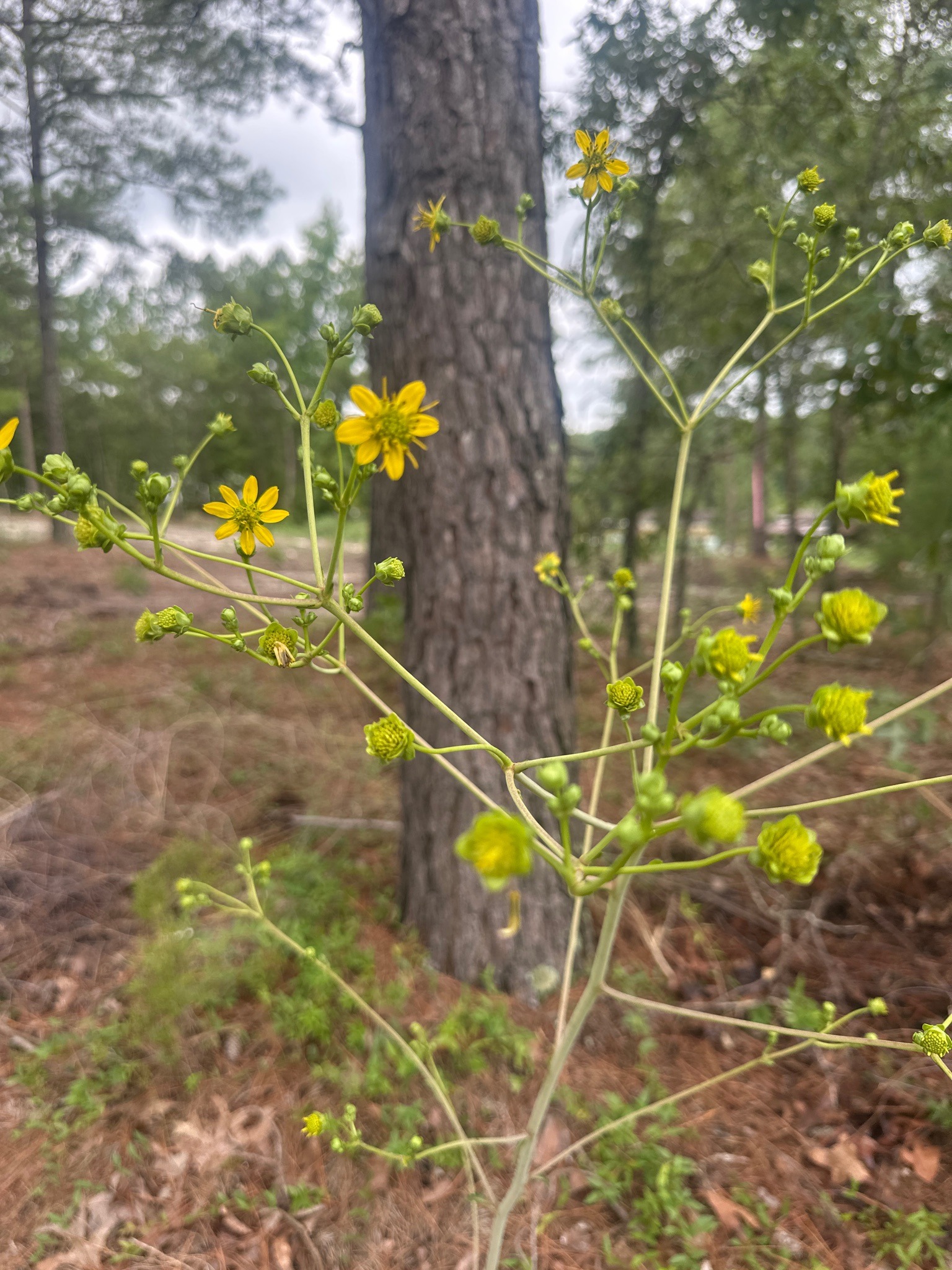
Wingstem
Verbesina alternifolia
A tall native perennial characterized by winged stems and bright yellow, daisy-like flowers with drooping ray petals and prominent central disks, blooming atop branching stems.
- Light
- Full sun to partial shade; prefers around 4 to 6 hours of light daily.
- Water
- Requires moderate to high moisture; benefits from consistent moisture and natural rainfall, though mature plants can endure brief periods of drought.
- Growth
- Herbaceous perennial growing erect and clump-forming, reaching heights of 4 to 8 feet with a spread of 2 to 4 feet.
Care instructions
Thrives in sunny to partially shaded locations with moist, well-draining soil. Requires consistent moisture, especially during dry spells, and grows well in naturalized gardens or meadow plantings with little added fertilizer.
Growing details
Sunlight
Full sun to partial shade; prefers around 4 to 6 hours of light daily.
Watering
Requires moderate to high moisture; benefits from consistent moisture and natural rainfall, though mature plants can endure brief periods of drought.
Soil
Prefers moist, rich, organic-rich loam or clay soils with good drainage; neutral to slightly acidic pH.
Hardiness zone
USDA Zones 4 through 8.
Growth habit
Herbaceous perennial growing erect and clump-forming, reaching heights of 4 to 8 feet with a spread of 2 to 4 feet.
Bloom season
Late summer to autumn; produces bright yellow flower heads with reflexed ray petals surrounding a pronounced greenish-yellow center disk.
Propagation
Easily propagated by seed sown in autumn or by root division in early spring before new growth begins.
Common pests & issues
Generally resilient, though susceptible to powdery mildew in high humidity or overcrowded conditions.
Similar species
Verbesina occidentalis (Yellow Crownbeard) has opposite leaves, whereas Verbesina alternifolia features mostly alternate leaves along the winged stem.