
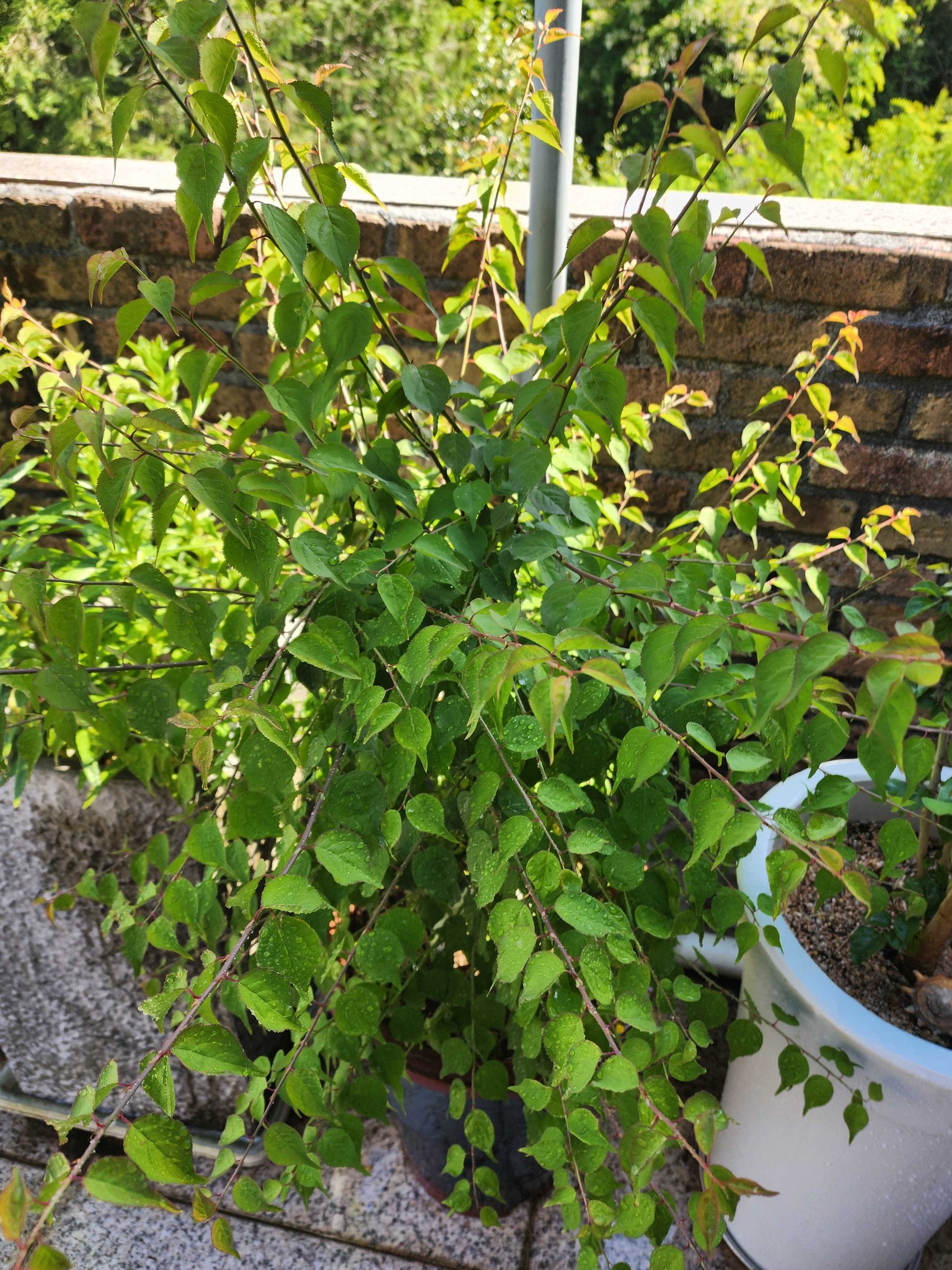
Winter Jasmine
Jasminum nudiflorum
A deciduous, arching shrub known for its bright yellow flowers that appear on bare stems in late winter or early spring. It has long, slender, green quadrangular stems and small, trifoliate leaves.
- Light
- Full sun to partial shade (at least 4-6 hours of sunlight for best flowering).
- Water
- Moderate watering; needs to be watered weekly or more often in extreme heat. Once established, it is moderately drought-tolerant.
- Growth
- Deciduous perennial shrub with a trailing or arching habit. Can reach 4-10 feet in height and 3-7 feet in spread. Growth rate is moderate to fast.
Care instructions
Provide full sun to partial shade in well-draining soil. It is very adaptable and requires little maintenance other than pruning after flowering to maintain shape and encourage new growth. Water regularly during the first growing season to establish roots.
Growing details
Sunlight
Full sun to partial shade (at least 4-6 hours of sunlight for best flowering).
Watering
Moderate watering; needs to be watered weekly or more often in extreme heat. Once established, it is moderately drought-tolerant.
Soil
Prefers well-drained loamy or sandy soil; adaptable to pH ranging from 6.0 to 8.0.
Hardiness zone
USDA Zones 6-9
Growth habit
Deciduous perennial shrub with a trailing or arching habit. Can reach 4-10 feet in height and 3-7 feet in spread. Growth rate is moderate to fast.
Bloom season
Late winter to early spring (January to March); flowers are funnel-shaped, yellow, and approximately 1 inch wide. The flowers are generally unscented.
Propagation
Propagates easily via semi-hardwood cuttings or layering; the stems naturally root when they touch the ground (layering).
Common pests & issues
Relatively pest-free but can sometimes attract aphids or mealybugs. Over-watering in heavy soil can lead to root rot.
Similar species
Forsythia (blooms at similar times but has a more upright growth habit and woody stems) and Primrose Jasmine (Jasminum mesnyi, which is evergreen and less cold-hardy).