
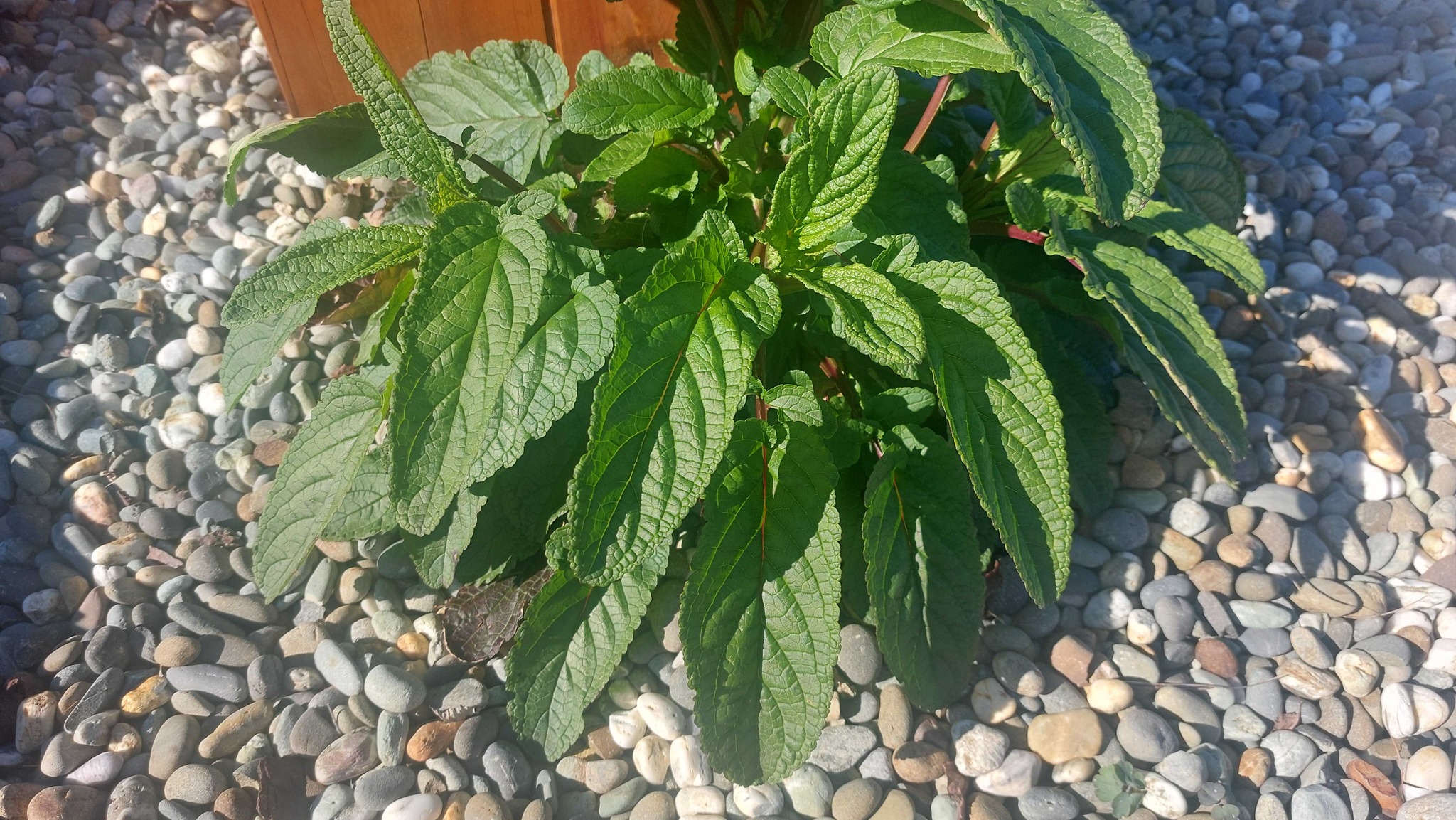
Wood sage
Teucrium scorodonia
Wood sage is a herbaceous perennial plant featuring wrinkled, oblong-lanceolate green leaves with crenate margins and reddish stems. The foliage is arranged in opposite pairs and has a distinctive textured surface.
- Light
- Full sun to partial shade, requiring around 4 to 6 hours of direct or filtered sunlight daily.
- Water
- Moderate watering needs. Allow the top inch of soil to dry out between waterings. Drought tolerant once established, but avoid prolonged waterlogging.
- Growth
- Herbaceous perennial forming a low, clump-forming mound reaching 1 to 2 feet in height with a similar spread, exhibiting a moderate growth rate.
Care instructions
Provide full sun to partial shade with well-draining soil. Water moderately, allowing the soil to dry slightly between watering sessions, and apply a balanced fertilizer in spring to support healthy seasonal growth.
Growing details
Sunlight
Full sun to partial shade, requiring around 4 to 6 hours of direct or filtered sunlight daily.
Watering
Moderate watering needs. Allow the top inch of soil to dry out between waterings. Drought tolerant once established, but avoid prolonged waterlogging.
Soil
Prefers sandy or loamy, well-draining soils with a neutral to slightly acidic pH range of 6.0 to 7.0.
Hardiness zone
USDA hardiness zones 6 through 9, demonstrating good cold tolerance in temperate winter climates.
Growth habit
Herbaceous perennial forming a low, clump-forming mound reaching 1 to 2 feet in height with a similar spread, exhibiting a moderate growth rate.
Bloom season
Flowers from mid to late summer, producing spikes of pale yellow or yellowish-green, two-lipped flowers.
Propagation
Propagated successfully via stem cuttings taken in spring or early summer, as well as by seed sowing or root division of established clumps.
Common pests & issues
Generally robust, but can occasionally be affected by root rot in poorly draining soils or minor infestations of aphids and spider mites.
Similar species
Can be distinguished from common sage (Salvia officinalis) by its yellowish-green flowers and wrinkled leaves with distinct red-tinged veins on stems.