
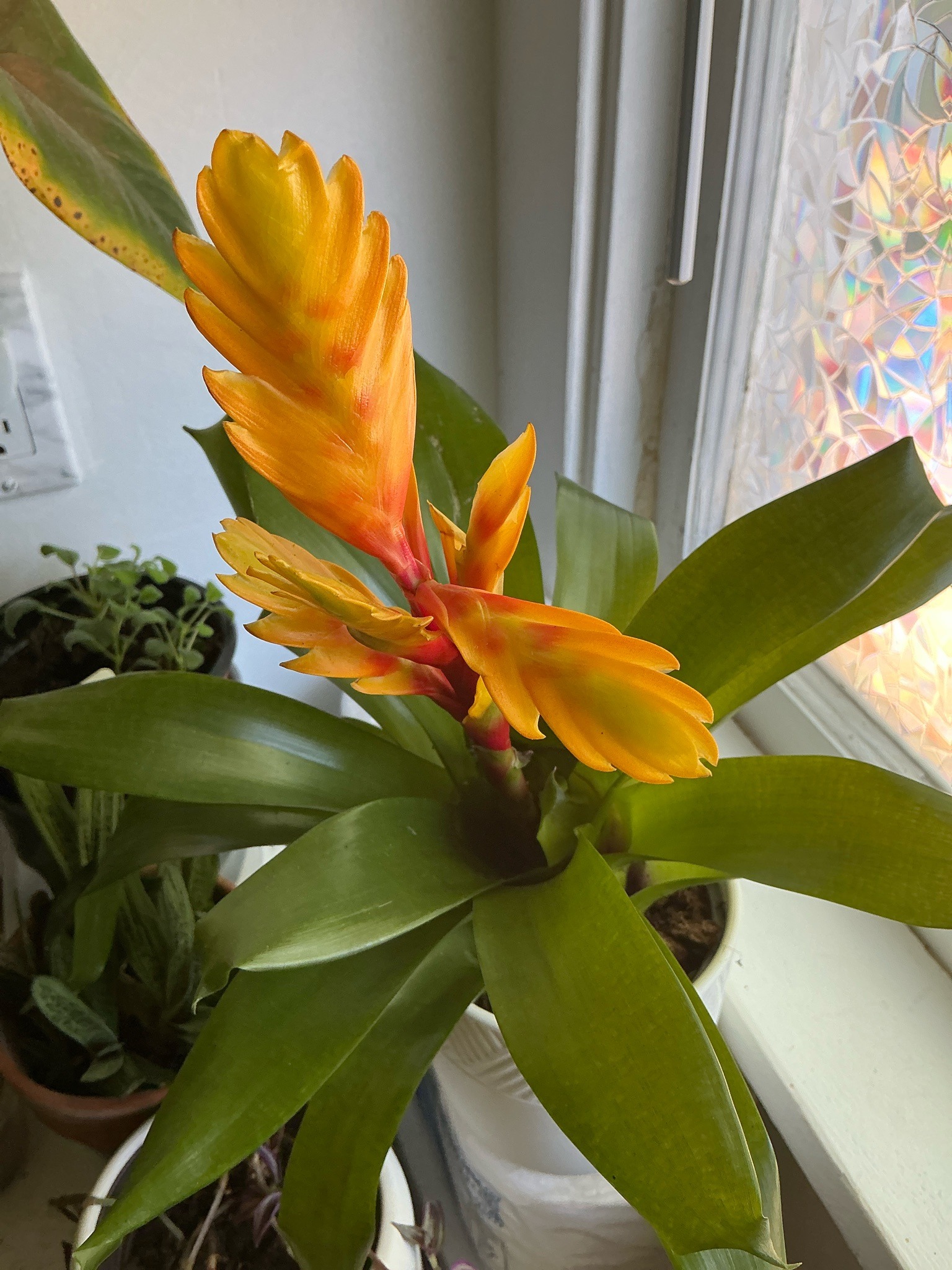
Yellow Torch Bromeliad
Vriesea splendens
An evergreen perennial epiphyte featuring a rosette of broad, glossy green leaves and a striking, upright flower spike composed of bright yellow and orange flattened bracts.
- Light
- Bright, indirect light for 6 to 8 hours daily; avoid harsh, direct midday sun which can scorch the foliage.
- Water
- Keep the central cup filled with fresh water, flushing and replacing it frequently to prevent stagnation. Water the potting medium sparingly, allowing it to dry partially between applications. Use rainwater or filtered water if possible.
- Growth
- Clump-forming, stemless epiphyte with a rosette growth habit, typically reaching a mature height and spread of 1 to 2 feet with a moderate growth rate.
Care instructions
Provide bright, indirect sunlight and maintain high humidity. Water by filling the central cup of the rosette with clean water, keeping it slightly moist, and allow the potting mix to dry moderately between waterings. Use a well-draining epiphytic potting mix and feed sparingly with a diluted, balanced liquid fertilizer during the spring and summer growing season.
Growing details
Sunlight
Bright, indirect light for 6 to 8 hours daily; avoid harsh, direct midday sun which can scorch the foliage.
Watering
Keep the central cup filled with fresh water, flushing and replacing it frequently to prevent stagnation. Water the potting medium sparingly, allowing it to dry partially between applications. Use rainwater or filtered water if possible.
Soil
Chunky, highly porous, and well-draining media such as an orchid mix consisting of bark, perlite, and peat moss. Prefers a slightly acidic to neutral pH range of 5.5 to 6.5.
Hardiness zone
USDA hardiness zones 10 to 11; grown as an indoor houseplant in cooler temperate climates as it cannot tolerate frost.
Growth habit
Clump-forming, stemless epiphyte with a rosette growth habit, typically reaching a mature height and spread of 1 to 2 feet with a moderate growth rate.
Bloom season
Blooms primarily in spring or summer, producing long-lasting, vibrant yellow and orange flattened floral bracts that persist for several weeks.
Propagation
Propagated by separating offsets, known as pups, that emerge from the base of the parent plant once they reach about one-third the size of the mother plant.
Common pests & issues
Susceptible to root rot if left in waterlogged soil with poor drainage. Common pests include mealybugs and scale insects, which can be treated by wiping leaves with a damp cloth or applying insecticidal soap.
Similar species
Guzmania species, which often have solid red or yellow bracts and lack the characteristic dark cross-banding frequently seen on the foliage of some Vriesea varieties.