
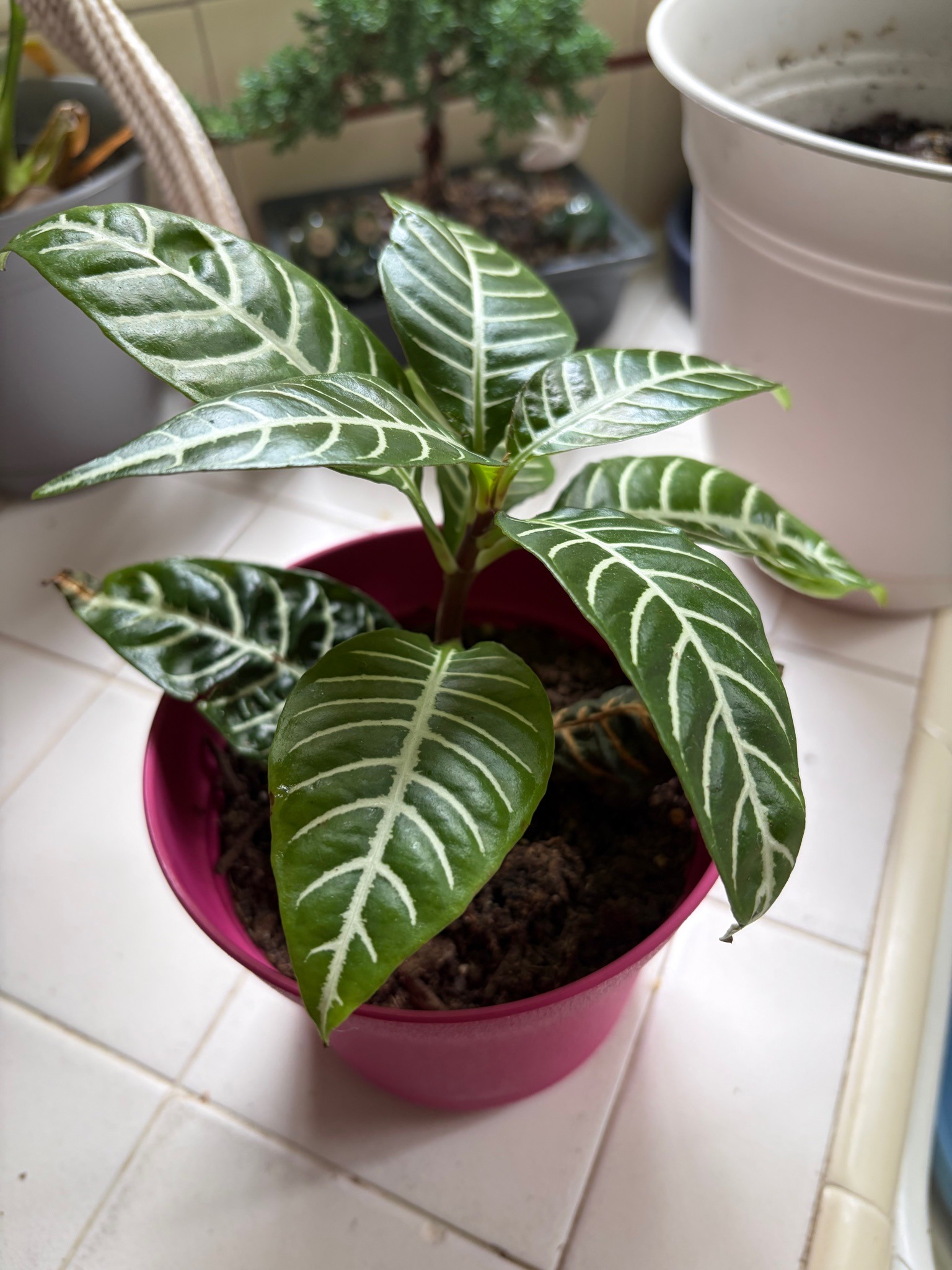
Zebra Plant
Aphelandra squarrosa
A popular houseplant recognized for its dark green, glossy leaves prominently marked with stark white or yellowish veins, creating a striped appearance.
- Light
- Bright, indirect light for 6 to 8 hours daily; protect from harsh direct afternoon sun which can scorch the leaves.
- Water
- Water thoroughly when the top inch of soil feels slightly dry. Avoid letting the plant dry out completely, which causes wilting, but prevent waterlogging to avoid root rot.
- Growth
- Perennial evergreen subshrub with an upright, branching growth form, reaching a mature height and spread of 1 to 2 feet indoors.
Care instructions
Provide bright, indirect sunlight, keep the soil consistently moist but well-drained, and maintain high humidity levels. Fertilize monthly during the active growing season.
Growing details
Sunlight
Bright, indirect light for 6 to 8 hours daily; protect from harsh direct afternoon sun which can scorch the leaves.
Watering
Water thoroughly when the top inch of soil feels slightly dry. Avoid letting the plant dry out completely, which causes wilting, but prevent waterlogging to avoid root rot.
Soil
Rich, well-draining potting mix containing peat moss or organic matter, with an acidic to neutral pH range of 5.5 to 6.5.
Hardiness zone
USDA zones 10 to 11, typically grown indoors or in greenhouses in cooler climates.
Growth habit
Perennial evergreen subshrub with an upright, branching growth form, reaching a mature height and spread of 1 to 2 feet indoors.
Bloom season
Summer to autumn, producing bright yellow, four-sided terminal flower bracts with short-lived yellow flowers.
Propagation
Propagated primarily through stem cuttings taken in spring, rooted in a warm, humid environment with a rooting hormone.
Common pests & issues
Susceptible to mealybugs, aphids, and spider mites, especially in dry indoor conditions. Fungal leaf spots can occur if humidity is too high with poor airflow.
Similar species
Calathea zebrina, which features similar striped foliage but belongs to the Marantaceae family and has velvety leaves without the pronounced raised white vein structure of Aphelandra squarrosa.