
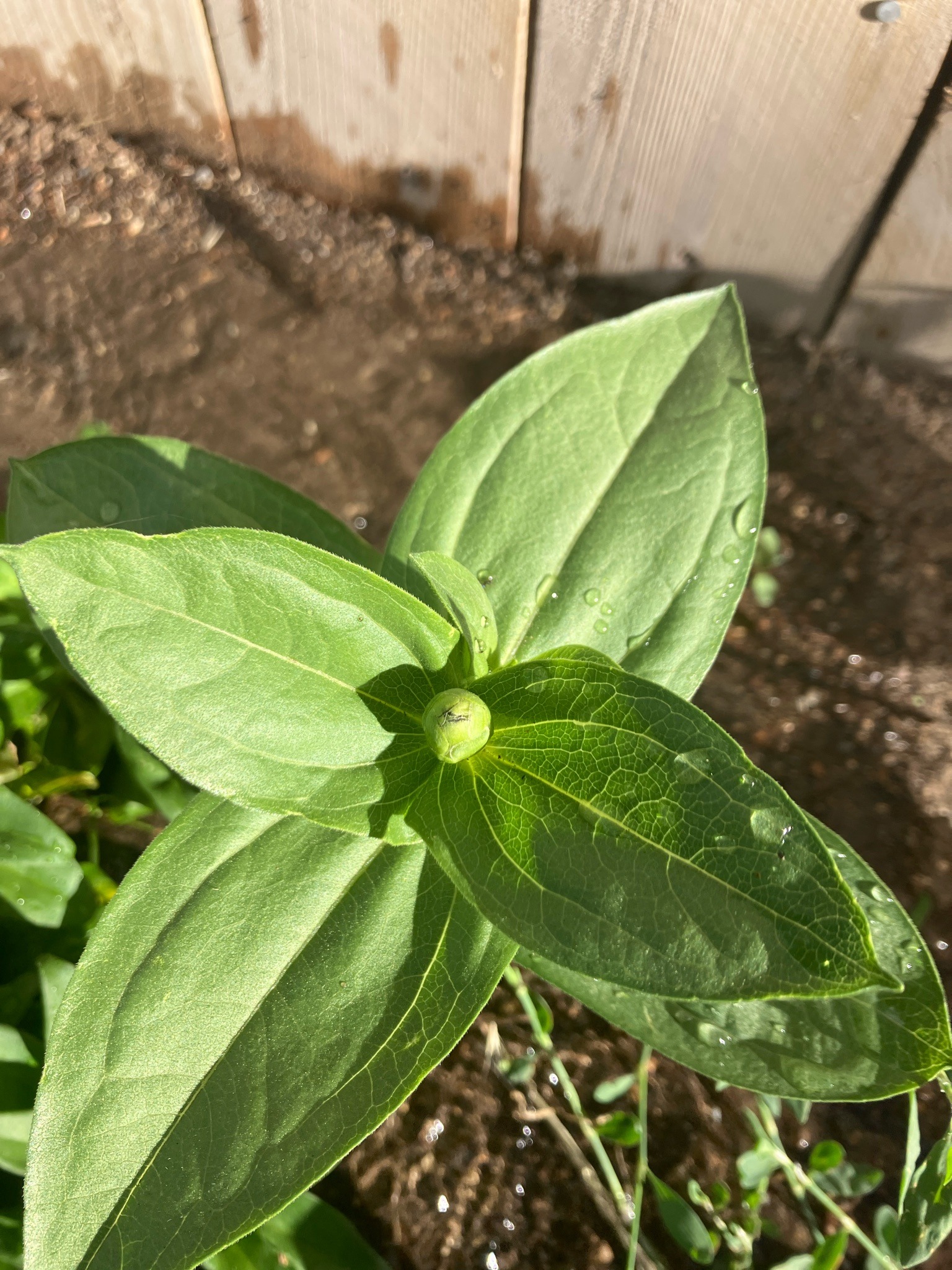
Zinnia
Zinnia elegans
An upright annual with rough-textured, lance-shaped leaves arranged oppositely on hairy stems, featuring a central flower bud that develops into a colorful composite bloom.
- Light
- Full sun; requires 6 to 8 hours of direct sunlight per day for best flowering and disease resistance.
- Water
- Moderate watering; keep soil moist but not soggy. Avoid overhead watering to prevent powdery mildew. Drought tolerant once established.
- Growth
- Annual herb; upright growth form ranging from 6 inches to 4 feet tall and 12-24 inches wide depending on the cultivar.
Care instructions
Plant in full sun with well-draining soil. Water at the base to keep foliage dry and apply a balanced fertilizer every 4-6 weeks to encourage continuous blooming.
Growing details
Sunlight
Full sun; requires 6 to 8 hours of direct sunlight per day for best flowering and disease resistance.
Watering
Moderate watering; keep soil moist but not soggy. Avoid overhead watering to prevent powdery mildew. Drought tolerant once established.
Soil
Rich, well-draining soil with a neutral to slightly acidic pH (5.5 to 7.5).
Hardiness zone
Usually grown as an annual in USDA zones 2-11; not frost tolerant.
Growth habit
Annual herb; upright growth form ranging from 6 inches to 4 feet tall and 12-24 inches wide depending on the cultivar.
Bloom season
Late spring through the first frost; flowers come in various colors (except blue) and can be single, semi-double, or double.
Propagation
Propagated by seeds sown directly in the garden after the last frost or started indoors 4-6 weeks early.
Common pests & issues
Susceptible to powdery mildew, bacterial leaf spot, and gray mold. Pests include aphids, spider mites, and Japanese beetles.
Similar species
Dahlias (have tuberous roots), Cosmos (have finer, feathery foliage), and Marigolds (have distinct scent and different leaf shapes).