How to Care for African Milk Tree
Grow African Milk Tree with bright light, sparse watering, and gritty soil for tall, upright ridged succulent columns.
Read the full African Milk Tree encyclopedia entry →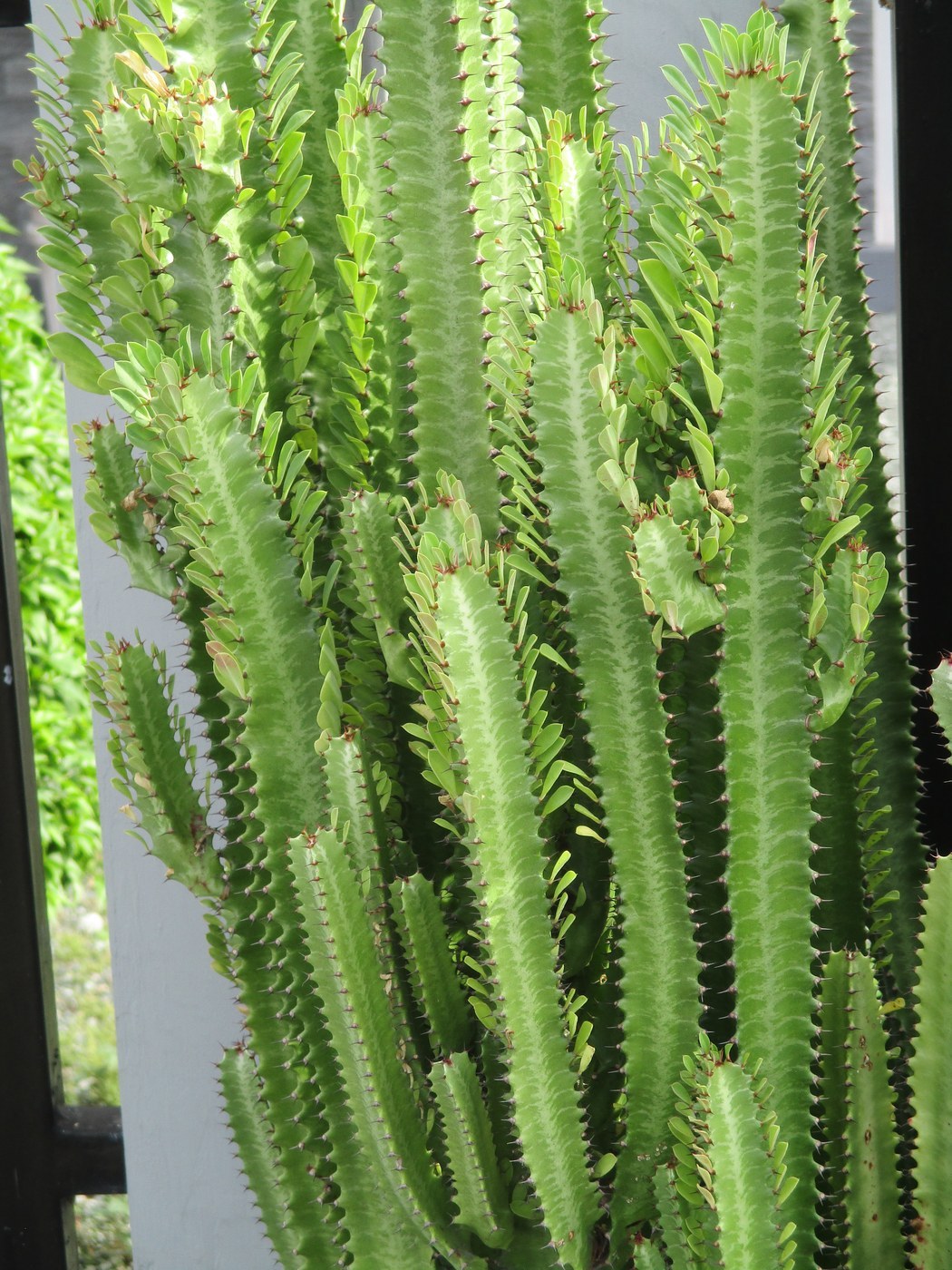
The African Milk Tree (Euphorbia trigona) is a striking, fast-growing succulent that forms tall, upright, three-sided ridged columns lined with small teardrop leaves and paired spines. Easy and architectural, it makes a bold vertical statement with very little care. Handle it carefully when pruning, as its stems exude a milky sap.
Light
Provide bright light with some direct sun. A south- or west-facing window indoors keeps the columns sturdy and richly colored, and the reddish-leaved varieties develop their best tones in strong light. Outdoors it takes full sun once acclimated. In low light the plant grows weak and leans toward the window, and its leaves drop.
Water
Water sparingly and let the soil dry out before watering again. In spring and summer a thorough soak every week or two is usually enough; in autumn and winter reduce to monthly or less. This succulent stores water in its stems, so soggy soil quickly causes rot. When in doubt, wait longer before watering.
Soil & Potting
Use a gritty, fast-draining cactus or succulent mix amended with extra perlite, pumice, or coarse sand. Good drainage is critical, so always use a pot with drainage holes. A heavier terracotta pot also helps counterbalance the plant, which can become top-heavy as it grows tall.
Humidity & Temperature
Average household humidity suits it fine, and it prefers warm, dry conditions. Keep it between 60 and 85 degrees Fahrenheit and protect it from frost, since it is not cold-hardy. Avoid cold, damp locations, which combine the two things it dislikes most: chill and excess moisture.
Feeding
Feed lightly during the growing season with a diluted balanced or cactus fertilizer about once a month from spring through summer. Do not fertilize in autumn and winter while growth slows. This is not a heavy feeder, and over-fertilizing produces soft, floppy growth.
Propagation
Propagate from stem cuttings taken in the warm season. Cut a branch, rinse or blot the milky sap from the cut, and let the cutting callus for several days to a week before planting in dry, gritty mix. Wear gloves and eye protection when cutting because the sap is a skin and eye irritant. Water sparingly until roots establish.
Repotting / Pruning
Repot every two to three years in spring, moving to a slightly larger, stable pot. Prune only to control height or shape, again wearing gloves and protecting your eyes from the sap. Because tall stems can topple, staking or repotting into a wider heavy container helps keep large specimens upright.
Common Problems & Pests
Mealybugs and spider mites are the usual pests, especially indoors in dry air; treat promptly with insecticidal soap or by wiping the stems. The most common problem is rot from overwatering or poor drainage, showing as soft, yellowing, or blackening stems. Leaf drop and stretched, leaning growth indicate too little light, though some seasonal leaf loss is normal.
Seasonal Care Tips
Water and feed lightly through the warm growing months, then let the plant rest with much drier soil and no fertilizer in autumn and winter. Some leaf drop in cooler months is natural. Keep it well away from frost and cold windows, and rotate the pot occasionally so the tall columns grow evenly.
Frequently asked questions
How often should I water an African Milk Tree?
Water sparingly and only after the soil has dried out. Roughly every one to two weeks in spring and summer and monthly or less in winter, always letting the mix dry between waterings.
Why is my African Milk Tree dropping leaves?
Some leaf drop is normal in cooler months or when light dims. Heavier loss with leaning, stretched stems means it needs brighter light, so move it to a sunnier window.
Should I be careful of the milky sap?
Yes. The sap is a skin and eye irritant, so wear gloves and eye protection when pruning or taking cuttings, and wash your hands afterward.
Why is my plant turning soft and yellow at the base?
That is usually rot from overwatering or poor drainage. Use a gritty fast-draining mix in a pot with drainage holes and let the soil dry fully between waterings.
African Milk Tree identified by the community
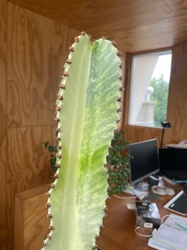
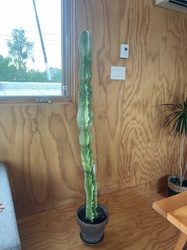
Recent African Milk Tree specimens identified with Plant Identifier.