African Milk Tree
Euphorbia trigona
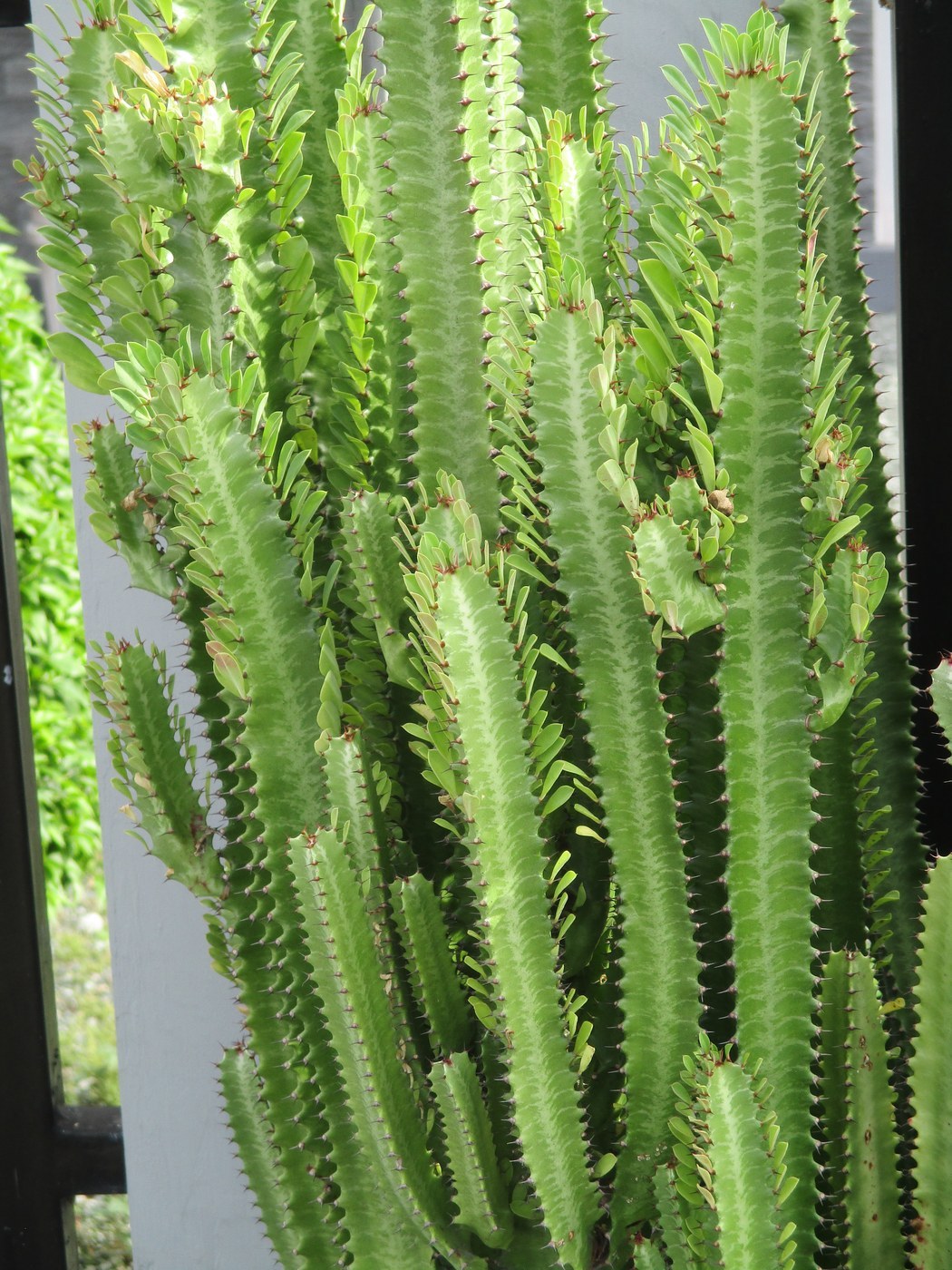
The African milk tree is a fast-growing, upright succulent with ridged, branching green stems that resemble a cactus. Despite the look, it is a Euphorbia that exudes milky white sap when cut, not a true cactus.
- Light
- Bright light to some direct sun
- Water
- Sparingly; let soil dry
- Difficulty
- Easy
Got a plant like this?
Identify any plant from a photo, free.
Overview
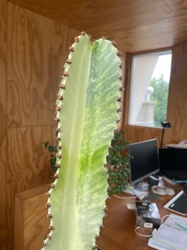
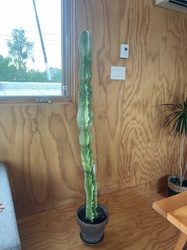
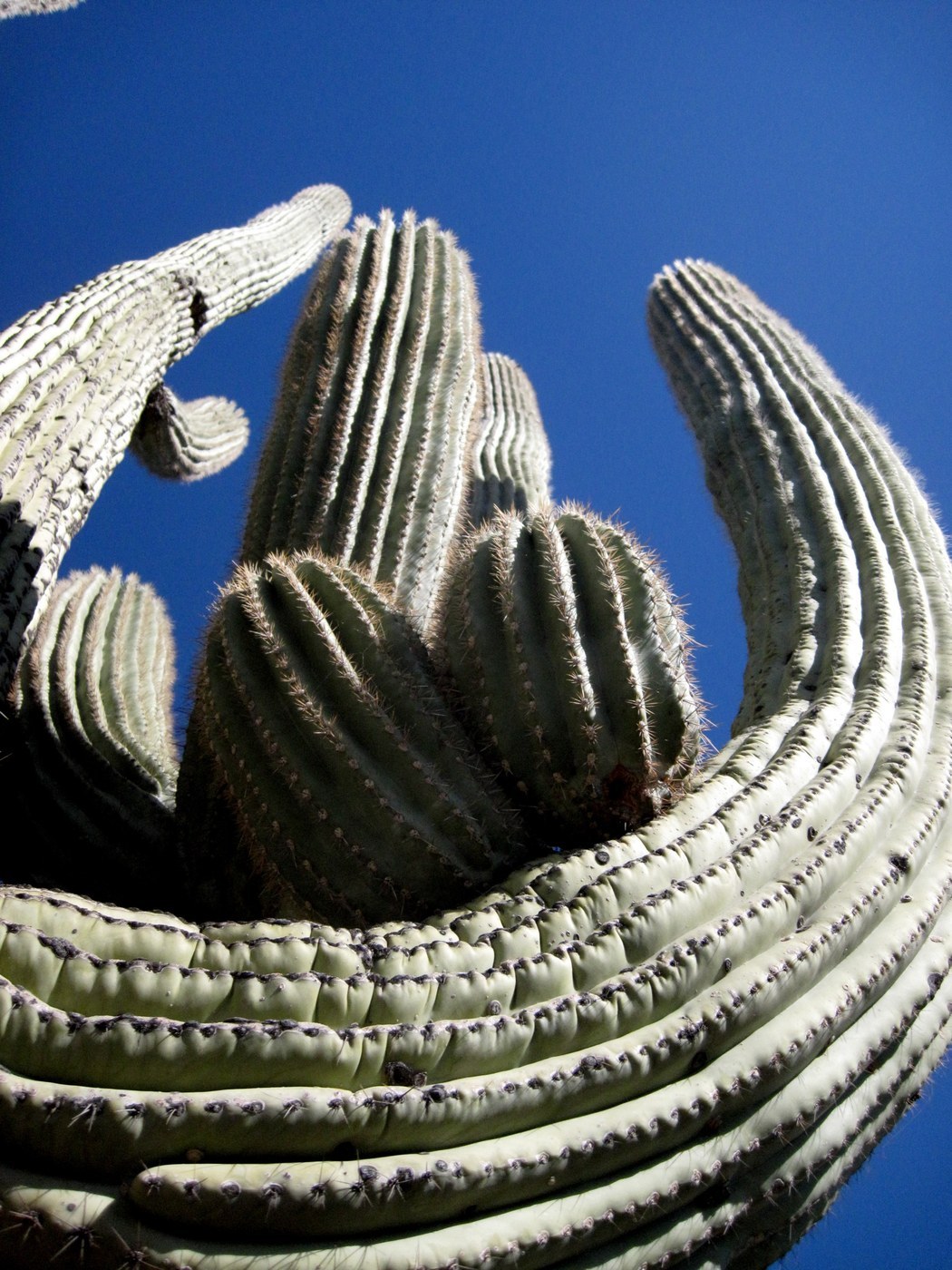
The African milk tree (Euphorbia trigona) is a popular columnar succulent that grows in an upright, candelabra-like form of three- or four-sided ridged stems. Though often mistaken for a cactus, it is a Euphorbia and exudes a milky white latex when cut.
It grows quickly for a succulent and can reach several feet tall indoors, making a bold architectural houseplant. A red-leaved cultivar, 'Rubra,' is especially prized.
Small teardrop-shaped leaves grow along the ridges, and short spines line the stem edges, adding to its cactus-like appearance.
How to identify it
- Upright, three- or four-sided ridged green stems that branch vertically like a candelabra
- Small, teardrop-shaped leaves along the ridge edges
- Short paired spines along the stem ridges
- Milky white latex sap when cut
- 'Rubra' cultivar has reddish-purple foliage
Care & growing
- Light: Bright light with some direct sun; tolerates a range but greens best in good light
- Water: Water sparingly when soil dries; drought-tolerant and rot-prone if overwatered
- Soil: Well-draining cactus or succulent mix
- Temperature: Warm; protect from frost, keep above about 50 F
- Feeding: Light feeding during the growing season
- Propagation: From stem cuttings; rinse the cut end and let cuttings callus before planting
Habitat & origin
Native to Central and West Africa, where it grows in warm, dry to seasonally moist regions. Its exact wild origin is somewhat obscured by long cultivation.
It is grown worldwide as an easy, fast-growing ornamental houseplant and as a hedge or boundary plant in frost-free climates.
Frequently asked questions
Is the African milk tree a cactus?
No. Despite its cactus-like look it is a Euphorbia, and unlike cacti it produces milky white sap when cut.
Why is my plant leaning or stretching?
It bends toward light and stretches in dim conditions. Give it bright light and rotate the pot for even, upright growth.
How big does it get?
Indoors it can reach several feet tall, growing in an upright candelabra form of ridged, vertically branching stems.
How do I propagate it?
Cut a stem segment, rinse the cut end, let it callus for several days, then plant in dry, well-draining soil.
African Milk Tree guides
In-depth guides for identifying, growing, and caring for African Milk Tree.
How to Care for African Milk Tree
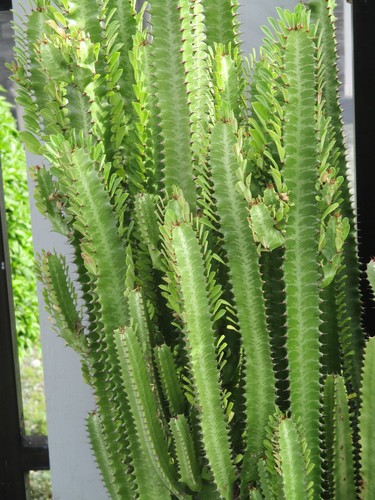
Grow African Milk Tree with bright light, sparse watering, and gritty soil for tall, upright ridged succulent columns.
African Milk Tree Identification Guide
How to identify the African Milk Tree by its upright triangular ridged stems, paired thorns, and small teardrop leaves.
African Milk Tree identified by the community
Real specimens identified with Plant Identifier.