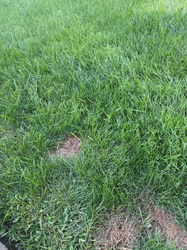
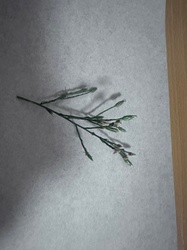
Annual Bluegrass Identification Guide
Identify annual bluegrass (Poa annua) by its light-green tufts, boat-shaped leaf tips, and profuse whitish seed heads that appear even on closely mown turf.
Read the full Annual Bluegrass encyclopedia entry →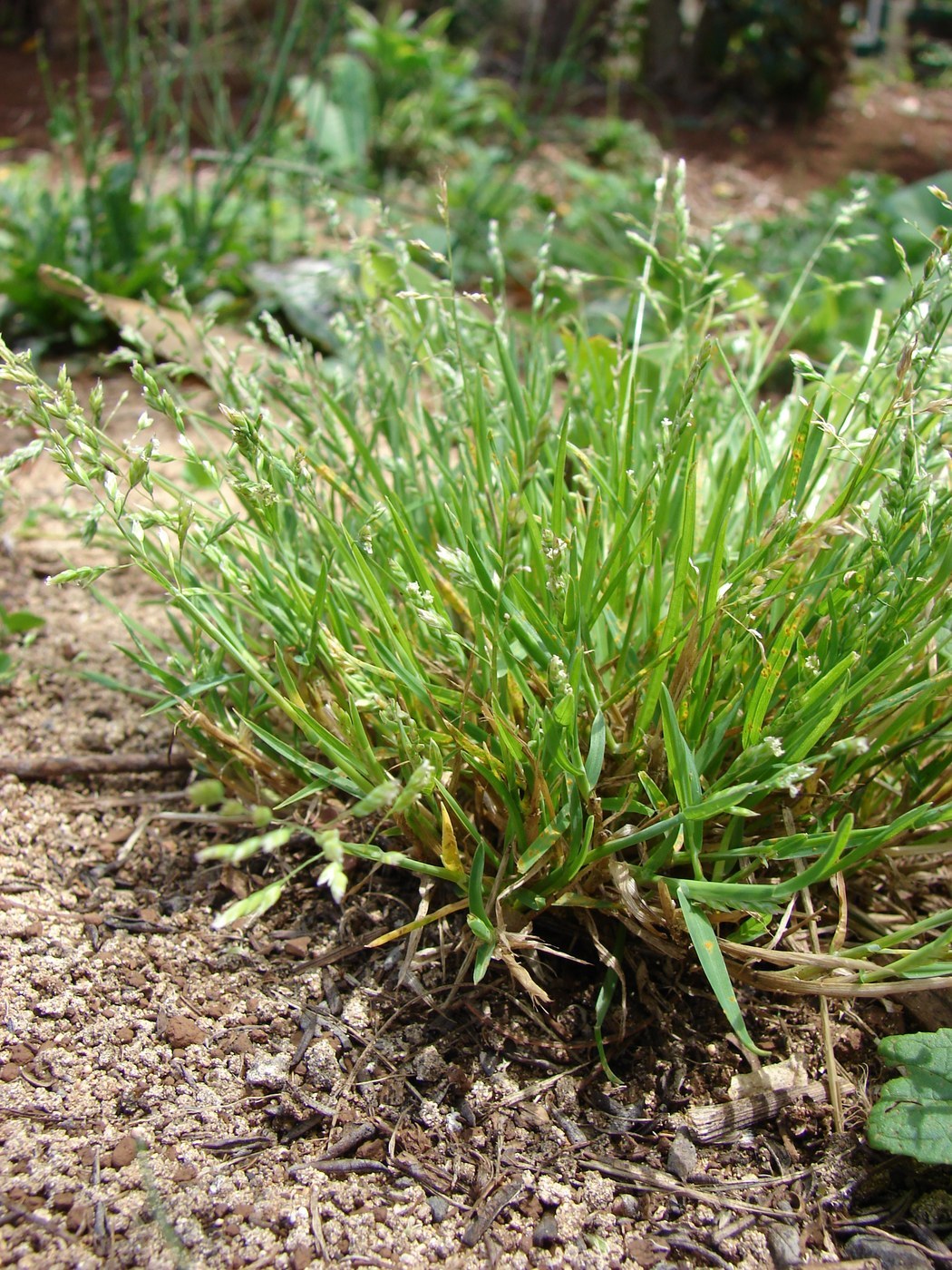
Key Identifying Features
Annual bluegrass (Poa annua) is a cool-season grass weed that grows in small, light yellow-green tufts and is famous for producing abundant whitish seed heads even when mowed very short. Two classic Poa features confirm it: a boat-shaped (keeled) leaf tip that you can see if you flatten the blade against your finger, and fine wrinkles (lines) along the leaf. It is lighter green than most surrounding turf, making patches stand out.
- Low, dense light green tufts
- Boat-shaped leaf tip (canoe-prow shape)
- Profuse whitish/greenish seed heads even at low mowing heights
- Cool-season annual; thrives in cool, moist conditions
Leaves & Stems
Leaf blades are soft, smooth, and light green with two faint translucent lines flanking the midrib and a distinctive prow-shaped tip. The leaf is folded in the bud and has a relatively tall membranous ligule where blade meets sheath. Stems are flattened slightly and the plant forms shallow-rooted clumps, sometimes spreading. The pale color and fine texture are quick visual cues.
Flowers & Fruit
The seed head is an open, branched panicle of small spikelets that ranges from greenish to whitish, giving heavy stands a frosted or white-flecked look. Annual bluegrass produces seed prolifically and continuously, even under close mowing on golf greens and lawns — this relentless seeding is a hallmark and the main reason it is so persistent. Peak seeding is in cool spring weather.
How to Tell It Apart from Look-Alikes
- Kentucky bluegrass (Poa pratensis): Also boat-tipped but is a darker green perennial that spreads by rhizomes and does not produce the constant whitish seed heads of annual bluegrass.
- Rough bluegrass (Poa trivialis): Similar light green but glossy and stoloniferous; lacks the heavy seeding habit at mowing height.
- Bentgrass/turfgrasses: Lack the boat-shaped leaf tip; the canoe tip is the key Poa check.
Where You'll Find It
Annual bluegrass invades lawns, golf courses, athletic fields, garden beds, paths, and moist compacted soil throughout temperate regions. It prefers cool, moist, fertile conditions and shade-to-sun, germinating in late summer and fall and flourishing through spring before fading in summer heat.
Quick ID Checklist
- Light yellow-green tufts, lighter than surrounding turf
- Boat-shaped leaf tip when flattened
- Whitish seed heads even at low mowing height
- Folded-in-bud leaves with a tall membranous ligule
- Cool, moist conditions; spring seeding
Pale tufts producing white seed heads plus a canoe-shaped leaf tip confirm Poa annua.
Frequently asked questions
How can I identify annual bluegrass in my lawn?
Look for light yellow-green patches that are paler than the rest of the turf and produce abundant whitish seed heads even when mowed short. Flatten a leaf blade and you will see a boat-shaped, canoe-prow tip typical of Poa grasses.
Why does annual bluegrass produce seed even when mowed low?
It is genetically adapted to flower and set seed at very low heights, which is why it persists on closely mown golf greens and lawns. This prolific seeding makes it especially hard to eradicate.
How is it different from Kentucky bluegrass?
Both have boat-shaped leaf tips, but Kentucky bluegrass is a darker green perennial that spreads by underground rhizomes, while annual bluegrass is a pale-green clumping annual that seeds heavily and dies back in summer heat.
When is annual bluegrass most visible?
It germinates in late summer and fall and is most conspicuous in spring, when its pale tufts and whitish seed heads stand out before it declines in the heat of summer.
Annual Bluegrass identified by the community
Recent Annual Bluegrass specimens identified with Plant Identifier.