Apple Tree Identification Guide
Identify apple trees by their oval toothed leaves, pink-white five-petaled blossoms, and the familiar pome fruit. Includes how to separate apple from pear, crabapple, and hawthorn.
Read the full Apple Tree encyclopedia entry →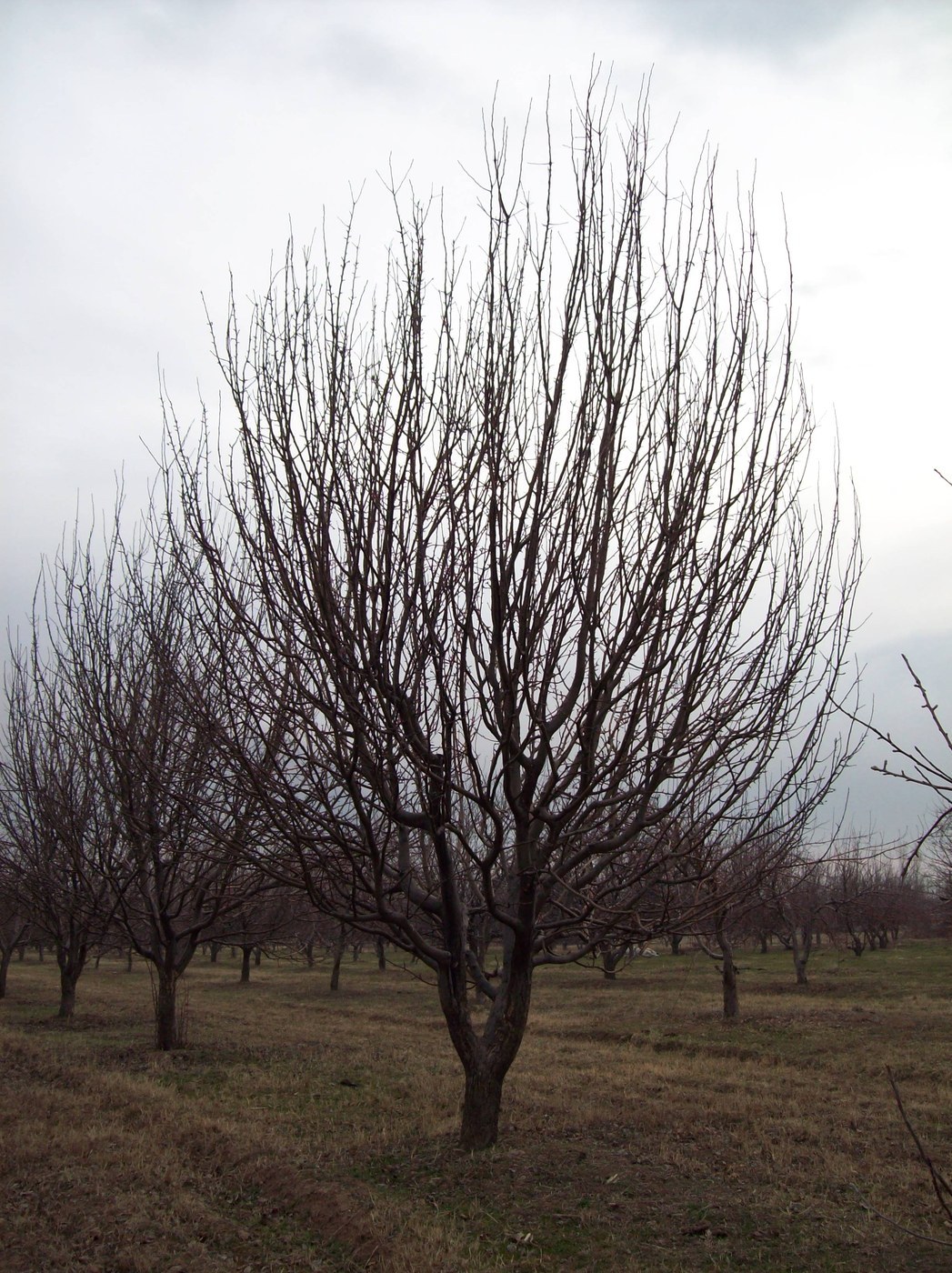
Key Identifying Features
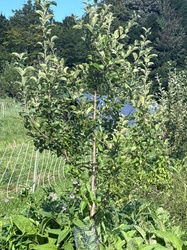
The domestic apple (Malus domestica) is a small to medium deciduous tree in the rose family. It is most reliably identified by its clusters of five-petaled white-to-pink blossoms in spring and its pome fruit with the classic apple shape and a persistent calyx at the base. Out of fruit, the oval, finely toothed, softly hairy leaves and spreading, often crooked branches are the giveaways.
- Five-petaled flowers, white flushed pink, in clusters
- Pome fruit with a dimpled top and a five-pointed star of seeds inside
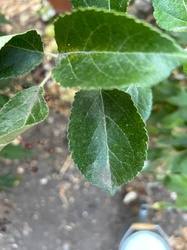
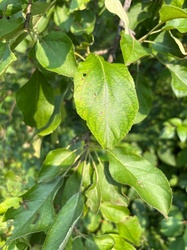
- Oval, serrated leaves with downy undersides
- Spreading crown with rough, scaly grey-brown bark
Leaves & Stems
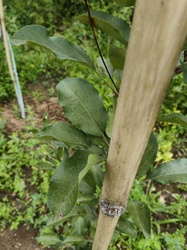
Apple leaves are alternate, elliptic to oval, 5 to 10 cm long, with finely toothed (serrate) margins and a soft, woolly underside. The leaf surface is dull green, not glossy. Young twigs are downy. Bark is grey-brown, scaly, and develops shallow cracks with age. Many orchard trees carry short stubby spur shoots that bear the flowers and fruit. Branches often grow in a wide, irregular, sometimes gnarled crown.
Flowers & Fruit
In spring, apple trees bloom in showy clusters of five-petaled flowers, white inside and pink on the outside of the bud, fragrant and rich in nectar. The fruit is a pome: the fleshy part develops from the floral tube, and the true core holds seeds in a five-chambered star (visible if you cut the apple across its equator). A dried calyx remains at the blossom end of the fruit, opposite the stem, a useful confirming detail. Fruit color spans green, yellow, and red.
How to Tell It Apart from Look-Alikes
- Pear (Pyrus): glossier leaves with finer or rounded teeth, flowers usually pure white with dark anthers, and elongated pear-shaped fruit with gritty stone cells.
- Crabapple (Malus): essentially a small-fruited apple; fruit under about 5 cm. Telling species apart is hard, but a true "apple" has larger fruit.
- Hawthorn (Crataegus): also rose-family with white blossoms, but leaves are deeply lobed, twigs bear sharp thorns, and fruit is a small red haw with one to a few stony seeds.
The downy leaf undersides plus the five-pointed seed star plus a persistent calyx confirm apple over its relatives.
Where You'll Find It
Apples are grown throughout temperate regions worldwide and need winter chill to fruit well. Look for them in home gardens, commercial orchards, hedgerows, and as feral escapes along roadsides and old homesteads. They prefer full sun and well-drained soil.
Quick ID Checklist
- Oval, finely toothed leaves with downy undersides
- Spring clusters of five-petaled pink-white flowers
- Pome fruit with dimpled blossom end and persistent calyx
- Five-pointed star of seeds when cut crosswise
- Scaly grey-brown bark, spreading crown
- Short spur shoots bearing flowers and fruit
Frequently asked questions
How do I tell an apple tree from a pear tree before fruit appears?
Apple leaves are dull with soft, downy undersides; pear leaves are glossier and nearly hairless. Apple bark is scaly grey-brown, while pear bark tends to be more blocky and darker.
What is the star inside an apple?
Cutting an apple across its equator reveals a five-pointed star of seed chambers. This radial five-part core is a consistent feature of apples and their Malus relatives.
Is it an apple or a crabapple?
They are the same genus. The practical distinction is fruit size: crabapples bear small fruit under about 5 cm across, while cultivated apples bear larger fruit.
Why do some apple trees have thorny-looking short branches?
Those are spur shoots, short stubby branches that bear the flowers and fruit. They are not true thorns. If you see real sharp thorns and lobed leaves, suspect hawthorn instead.
Apple Tree identified by the community
Recent Apple Tree specimens identified with Plant Identifier.