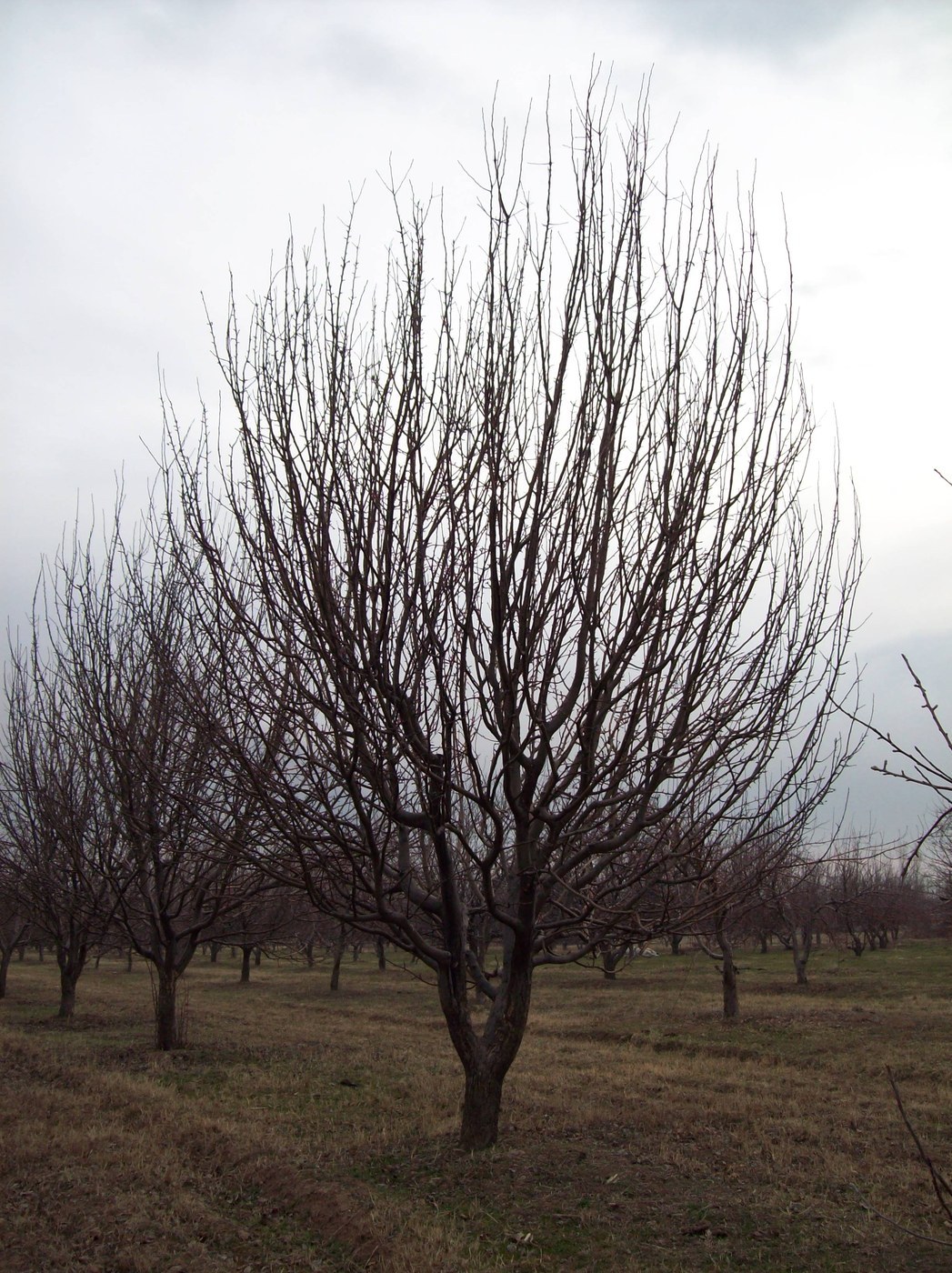
Apple Tree
Malus domestica
The apple tree is a deciduous fruit tree grown worldwide for its familiar fruit. With thousands of cultivars and the need for cross-pollination, it is a rewarding but slightly demanding garden and orchard tree.
- Light
- Full sun
- Water
- Regular, deep watering; keep soil evenly moist
- Difficulty
- Moderate
Got a plant like this?
Identify any plant from a photo, free.
Overview
The apple is a deciduous tree in the rose family, descended primarily from the wild apple Malus sieversii of Central Asia. It is one of the most widely cultivated tree fruits in the world, with thousands of named cultivars.
Apples are grown on rootstocks that control their final size, allowing trees from dwarf patio forms to full-size orchard standards. Most varieties require a second, compatible apple nearby for cross-pollination to set a good crop.
Apple trees offer fragrant spring blossom and provide important early-season forage for pollinators, making them a centerpiece of orchards and home gardens alike.
How to identify it
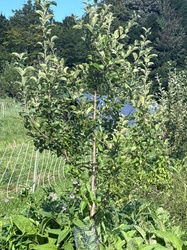
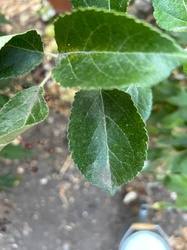
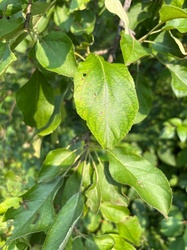
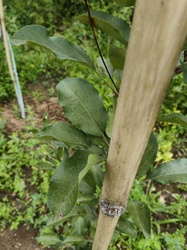
- Leaves: Oval to elliptical, finely toothed, dark green, often with a slightly downy underside, arranged alternately
- Flowers: Showy five-petaled blossoms, white flushed with pink, borne in clusters in spring
- Fruit: The familiar pome — round, with a central core of seeds, ranging from green to yellow to deep red
- Bark: Greyish-brown, becoming scaly and fissured with age
- Size: From 2 m (dwarf) to 10 m (standard) depending on rootstock
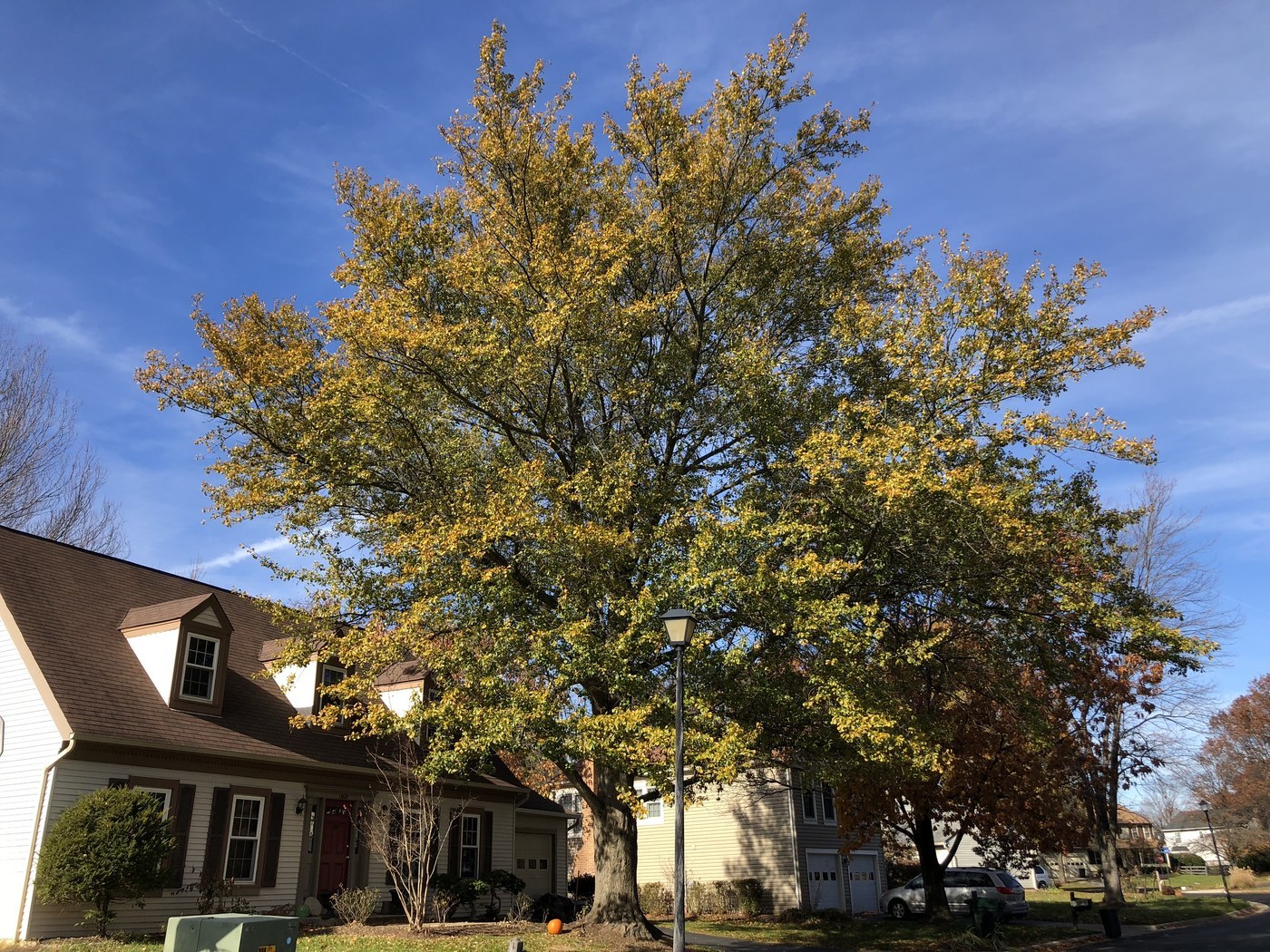
- Habit: Spreading, rounded crown; deciduous
Care & growing
Light: Full sun — at least 6–8 hours daily for good flowering and fruit.
Water: Keep soil evenly moist, especially in the first years and during fruit development. Deep, regular watering beats frequent shallow watering.
Soil: Fertile, well-draining loam with a slightly acidic to neutral pH; dislikes waterlogged ground.
Temperature: Most apples need a period of winter cold (chilling hours) to flower properly; choose varieties suited to your climate. Hardy across temperate zones.
Feeding: Feed in early spring with a balanced fertilizer; mulch to retain moisture and suppress weeds.
Pollination: Most varieties need a different, compatible apple flowering at the same time nearby for cross-pollination.
Propagation: Grafted onto a chosen rootstock; seeds do not come true to the parent variety.
Habitat & origin
The cultivated apple originated from wild apple species in the mountains of Central Asia, especially Kazakhstan, and was spread along ancient trade routes into Europe and beyond.
Today apples are grown throughout the world's temperate regions — Europe, North America, China (the largest producer), and the Southern Hemisphere. They are equally at home in commercial orchards, community plantings and backyard gardens, with dwarf forms suited even to small spaces and large containers.
Frequently asked questions
Do I need two apple trees to get fruit?
Usually yes. Most apple varieties are not self-fertile and need a different, compatible apple flowering at the same time nearby. A few self-fertile types exist, and crabapples can also serve as pollinators.
Why won't my apple tree fruit?
Common causes include lack of a pollination partner, insufficient sun, too little winter cold (chilling hours), young age, or heavy pruning. Trees often take several years to begin bearing.
How big will my apple tree get?
It depends on the rootstock. Dwarfing rootstocks keep trees to 2–3 m, while vigorous or seedling rootstocks can produce trees 6–10 m tall.
When do apple trees bear fruit?
Most grafted trees begin fruiting within 2–5 years, depending on the variety and rootstock; dwarf trees usually bear sooner than full-size standards.
Apple Tree guides
In-depth guides for identifying, growing, and caring for Apple Tree.
How to Care for Apple Tree
Grow a healthy, productive Malus domestica with full sun, even moisture, annual pruning, and a pollination partner nearby.
Apple Tree Identification Guide
Identify apple trees by their oval toothed leaves, pink-white five-petaled blossoms, and the familiar pome fruit. Includes how to separate apple from pear, crabapple, and hawthorn.
Apple Tree identified by the community
Real specimens identified with Plant Identifier.