How to Care for Artichoke
Artichoke (Cynara cardunculus var. scolymus) is a bold architectural plant needing full sun, deep watering, and rich soil to thrive.
Read the full Artichoke encyclopedia entry →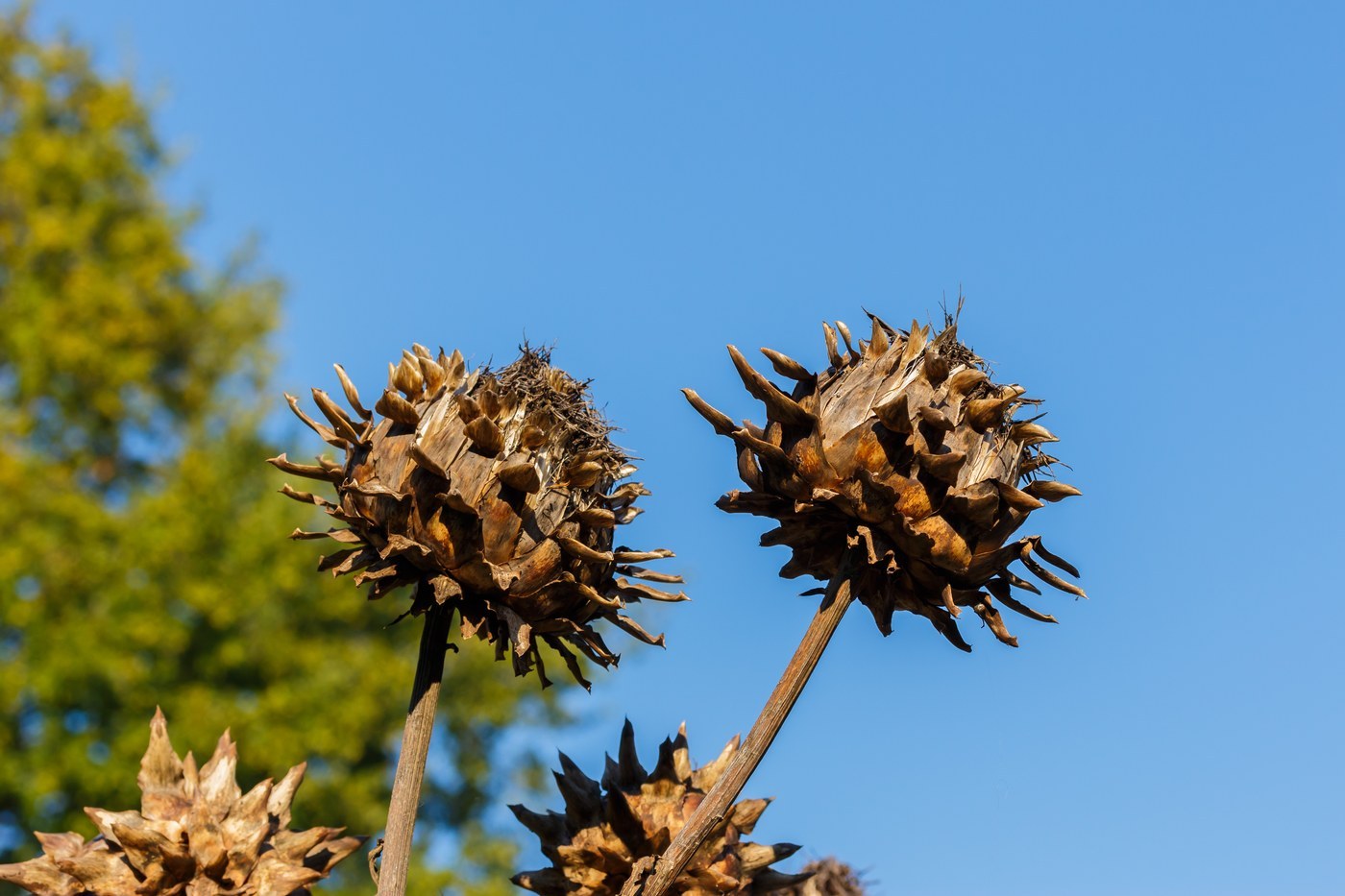
The Artichoke (Cynara cardunculus var. scolymus) is a striking, architectural perennial with large, deeply lobed silvery-green leaves and dramatic flower buds that open into vivid violet thistle blooms. Grown as an ornamental focal point in warm gardens and borders, it makes a bold statement with its size and structure, though it takes some effort to establish.
Light
Artichokes need full sun to develop their strong, upright form and abundant buds. Choose the sunniest spot in the garden, sheltered from strong winds that can damage the large leaves and tall flower stalks. In very hot climates a little afternoon shade is tolerated, but overall this is a sun-loving plant that performs poorly in shade.
Water
Provide deep, regular watering to support the plant's rapid growth and large leaf mass. The roots run deep, so water thoroughly rather than shallowly, keeping the soil consistently moist but not waterlogged. During hot, dry spells, increase watering to prevent wilting and stress. Good moisture is essential for lush foliage and well-formed buds; a mulch helps conserve it.
Soil & Potting
Artichokes demand rich, deep, well-draining soil generously amended with compost or well-rotted organic matter. They are heavy feeders and root deeply, so loosen and enrich the soil well before planting. A slightly acidic to neutral pH is ideal. Heavy, poorly drained soils invite crown rot, so improve drainage on clay sites. In containers, use a large, deep pot with rich, free-draining mix.
Humidity & Temperature
Artichokes favor mild, frost-free conditions and thrive in regions with cool, moist winters and warm summers. They can be grown as short-lived perennials in mild zones and as annuals where winters are harsh. Protect the crown from hard frost with a thick mulch or by lifting in cold climates. Prolonged extreme heat can stress the plant and cause buds to open prematurely.
Feeding
As vigorous, hungry plants, artichokes benefit from generous feeding. Work plenty of compost into the soil at planting, then feed regularly through the growing season with a balanced fertilizer or additional compost topdressing. Steady nutrition fuels the large leaves and strong flower stalks. Avoid excessive nitrogen alone, which produces leaves at the expense of the ornamental buds.
Propagation
Artichokes are propagated by seed, by division, or by rooted offshoots. Seed can be started indoors in late winter and may need a cool spell to encourage budding the first year. More reliably, divide established clumps or detach rooted offsets from the base of a mature plant in spring, replanting them promptly in enriched soil. Offsets from a good parent keep the plant's form true.
Repotting / Pruning
Cut back old, spent flower stalks and tired foliage to tidy the plant and direct energy into the crown. In mild areas, cut the plant down and mulch heavily for winter dormancy. Divide congested clumps every few years to keep them vigorous, as older centers decline. Container plants should be moved up to larger pots as they grow and refreshed with new soil.
Common Problems & Pests
Aphids are a frequent pest, clustering on buds and new growth, and can be hosed off or treated with insecticidal soap. Slugs and snails damage young plants, while poor drainage leads to crown and root rot, the most serious threat. Powdery mildew and botrytis may appear in damp, crowded conditions, so ensure spacing and airflow. Consistent moisture and rich, well-drained soil prevent most issues.
Seasonal Care Tips
In spring, plant or divide, enrich the soil, and begin regular feeding and deep watering as growth surges. Through summer, water deeply, mulch to conserve moisture, and stake tall flower stalks if needed. In autumn, cut back spent growth. In winter, protect the crown from frost with a heavy mulch in mild zones, or grow the plant as an annual where hard freezes occur.
Frequently asked questions
How much sun does an artichoke need?
Artichokes need full sun to develop their bold form and plentiful buds. Give them the sunniest, wind-sheltered spot you have; they perform poorly in shade.
How often should I water an artichoke?
Water deeply and regularly to keep the soil consistently moist but not waterlogged. Their deep roots prefer thorough soakings, and watering should increase during hot, dry spells.
What soil is best for artichokes?
Rich, deep, well-draining soil amended with plenty of compost is ideal, with a slightly acidic to neutral pH. Avoid heavy, waterlogged soils that cause crown rot.
How do I propagate artichokes?
Start seed indoors in late winter, or more reliably divide established clumps and detach rooted offsets from the base of a mature plant in spring, replanting them in enriched soil.
Will artichokes survive winter?
In mild, frost-free climates they grow as perennials if the crown is protected with a heavy mulch. In cold-winter regions they are usually grown as annuals or lifted for protection.
Artichoke identified by the community
Recent Artichoke specimens identified with Plant Identifier.