Artichoke
Cynara cardunculus var. scolymus
The globe artichoke is a striking thistle grown in gardens for its large, scaly flower buds. Left unharvested, the buds open into large, vivid purple blooms.
- Light
- Full sun
- Water
- Deep, regular watering
- Difficulty
- Moderate
Got a plant like this?
Identify any plant from a photo, free.
Overview
The globe artichoke is a tender perennial in the daisy family (Asteraceae), a domesticated form of the wild cardoon.
Large and architectural, the plant forms a rosette of deeply cut silvery leaves topped by tall flower stalks. In mild climates it lives for several years; in colder zones it is grown as an annual.
How to identify it
A bold, statuesque thistle with grey-green foliage and large bud-like flower heads.
- Leaves: Long (up to 2-3 ft), deeply lobed, silvery-green, with a slightly fuzzy underside; often spineless in cultivated types
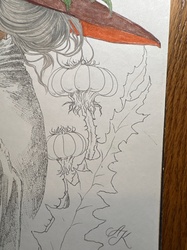
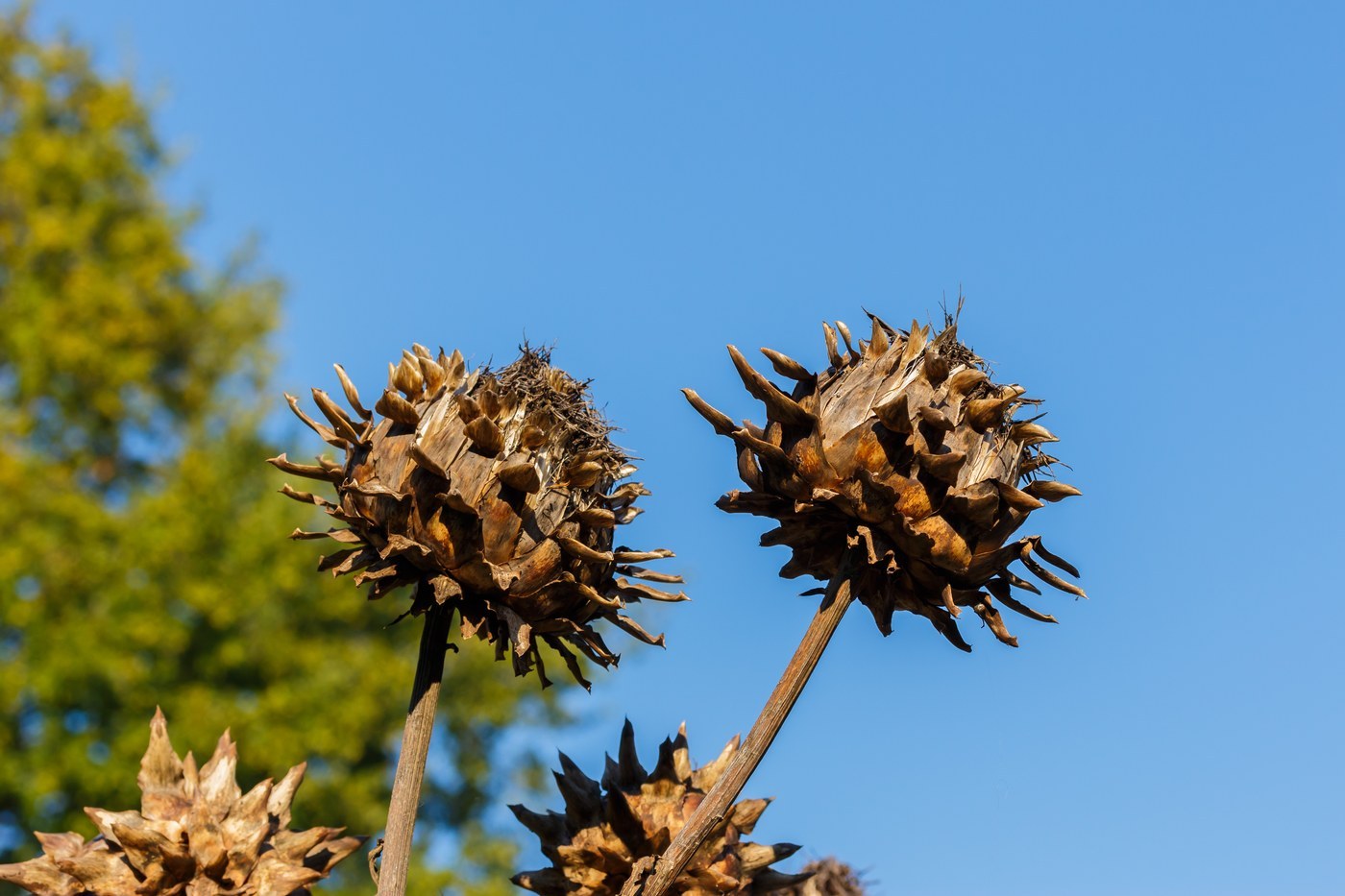
- Flower buds: Round to oval green (sometimes purple-tinged) heads of tightly overlapping fleshy bracts
- Flowers: If unpicked, buds open into large, vivid violet-blue thistle blooms
- Habit: Robust clump 3-5 ft tall and wide
- Stems: Thick, ridged, branching flower stalks
Care & growing
Light: Full sun for best bud production.
Water: Deep, consistent watering; drought stresses the plant.
Soil: Deep, rich, well-drained soil with plenty of compost; pH 6.5-7.0.
Temperature: Prefers mild, frost-free Mediterranean climates; needs winter protection below about 20 F.
Feeding: Heavy feeder — apply compost and balanced fertilizer through the growing season.
Propagation: From offshoots (divisions) of the crown, root cuttings, or seed; named varieties are usually cloned to stay true.
Habitat & origin
The artichoke was domesticated in the Mediterranean basin from the wild cardoon and has been cultivated since at least Roman times.
Commercially it thrives in coastal Mediterranean-climate regions; California (especially Castroville) is a major center of production. Gardeners grow it as a perennial in mild zones and as an annual elsewhere.
Frequently asked questions
What does an artichoke plant look like?
It forms a bold rosette of long, deeply lobed silvery-green leaves and tall, branching stalks topped with round, scaly flower buds that open into large violet thistle blooms.
Can artichokes survive winter?
In mild climates (roughly USDA zone 7 and warmer) they overwinter as perennials with mulch protection. In colder areas grow them as annuals or dig and store the crowns.
How long until an artichoke plant matures?
Perennial plants form buds in their second year; certain varieties grown from seed can produce buds in their first season if started early indoors.
Artichoke guides
In-depth guides for identifying, growing, and caring for Artichoke.
How to Care for Artichoke
Artichoke (Cynara cardunculus var. scolymus) is a bold architectural plant needing full sun, deep watering, and rich soil to thrive.
Artichoke Identification Guide
Identify the globe artichoke by its silvery jagged leaves, tall stalks, and the unmistakable scaly green flower buds that open into purple thistle blooms.
Artichoke identified by the community
Real specimens identified with Plant Identifier.