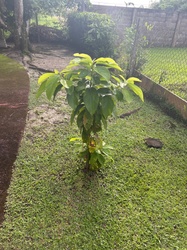
Avocado Tree Identification Guide
Identify the avocado tree by its large glossy evergreen leaves, anise-scented foliage, tiny greenish flowers, and the heavy single-seeded fruit. Includes how to separate it from related laurels and mango.
Read the full Avocado Tree encyclopedia entry →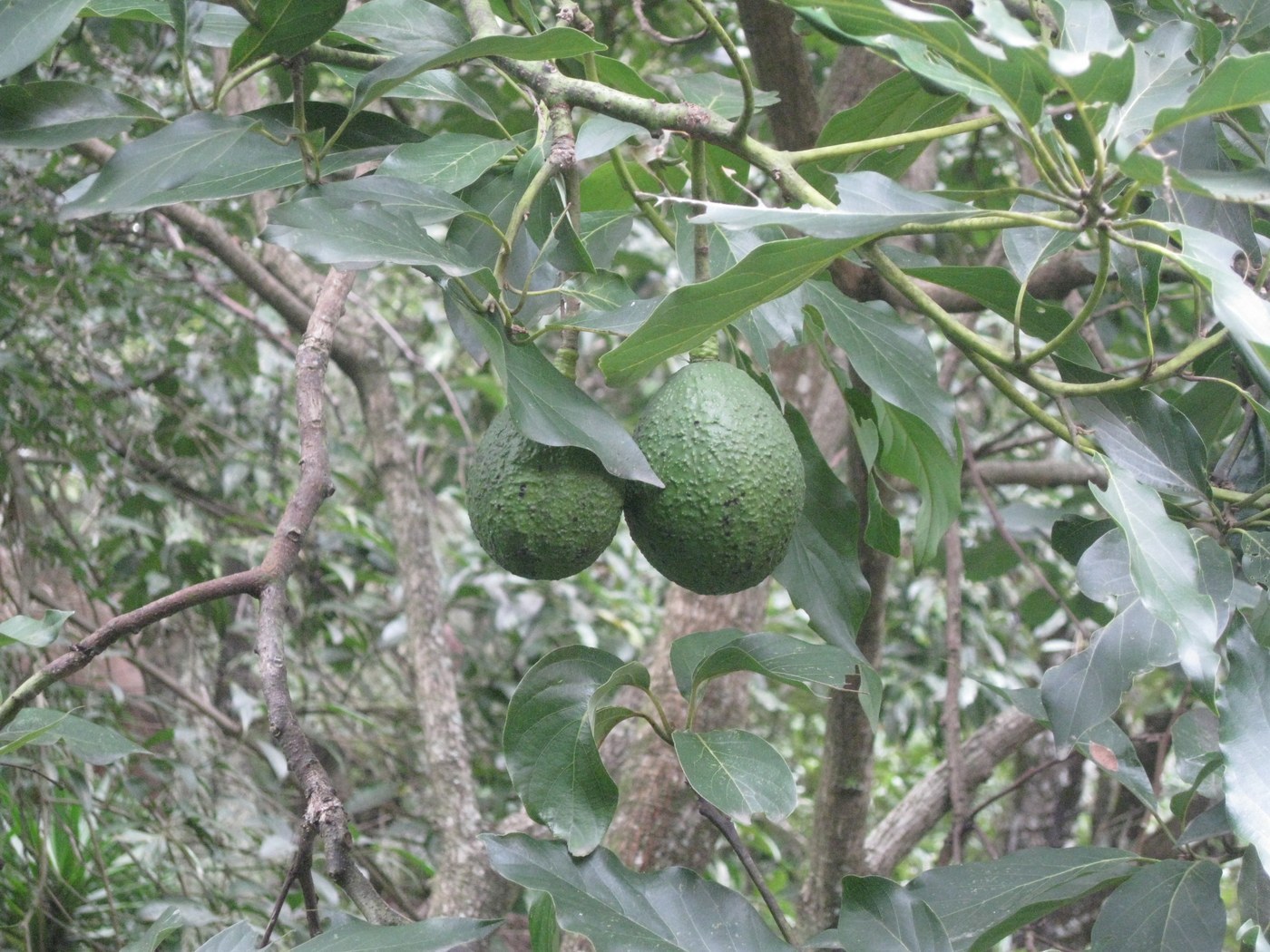
Key Identifying Features
The avocado (Persea americana) is a large evergreen tree in the laurel family. It is most readily identified by its large, glossy, leathery leaves, the anise or licorice scent released when leaves are crushed, and of course the heavy, pear-shaped fruit with a single very large seed. The dense, dark, broad crown is also distinctive.
- Large, glossy, dark green leaves clustered toward branch tips
- Anise/licorice scent from crushed foliage (especially Mexican-race types)
- Tiny greenish-yellow flowers in branched sprays
- Heavy single-seeded fruit with leathery to thick skin
Leaves & Stems
Avocado leaves are alternate, elliptic to oval, 10 to 30 cm long, leathery, glossy dark green above and paler, sometimes reddish-tinged, beneath. New growth often flushes bronze or coppery red. Many varieties, particularly the Mexican race, give off a distinct anise smell when the leaf is crushed, a strong identifying clue. Twigs are stout and green when young, turning grey-brown. Bark is grey-brown and develops shallow furrows. Trees can reach 15 to 20 m if unpruned.
Flowers & Fruit
Avocado produces masses of small, greenish-yellow flowers (each only 5 to 10 mm) in branched panicles. They are subtle and easily overlooked. The flowers have an unusual time-staggered male/female opening behavior (protogynous dichogamy) split into type A and type B groups, which aids cross-pollination. The fruit is a large berry (botanically), pear-shaped to round, with green to purple-black skin that may be smooth or pebbly, buttery flesh, and a single large round seed that fills much of the interior.
How to Tell It Apart from Look-Alikes
- Bay laurel and other Lauraceae: share aromatic leaves, but their leaves are smaller, and they lack the large single-seeded avocado fruit.
- Mango (Mangifera): also a large evergreen with glossy leaves and reddish new growth, but mango leaves are longer and narrower, and the fruit has a flat fibrous stone, not a round seed.
- Magnolia: similar large glossy leaves, but magnolia leaves are not anise-scented and produce showy flowers and cone-like fruit.
The anise-scented foliage plus the single oversized seed are the decisive avocado identifiers.
Where You'll Find It
Avocados are grown in tropical and subtropical climates: Mexico and Central America (their native range), California, Florida, the Mediterranean, and parts of Africa and Asia. They are frost-sensitive and need well-drained soil. Look for them in orchards, large home gardens, and as shade trees in warm regions.
Quick ID Checklist
- Large glossy leathery evergreen leaves
- Crushed leaves smell of anise or licorice
- New growth flushes bronze or red
- Tiny greenish-yellow flowers in sprays
- Heavy pear-shaped fruit with one large seed
- Broad dense crown, frost-sensitive warm-climate tree
Frequently asked questions
Why do avocado leaves smell like licorice?
Avocado is in the laurel family and its leaves contain aromatic oils. Crushing a leaf, especially of Mexican-race types, releases an anise or licorice scent that helps confirm the tree.
How can I tell an avocado tree from a mango tree?
Both are glossy-leaved evergreens with reddish new growth, but mango leaves are longer and narrower and its fruit holds a flat fibrous stone. Avocado leaves are broader, anise-scented, and the fruit has one large round seed.
Why doesn't my avocado tree set much fruit?
Avocado flowers open as female and male at different times of day, split into A and B types. Without a compatible partner tree flowering at the offset time, fruit set can be poor.
Is the avocado a fruit or a vegetable?
Botanically the avocado is a large single-seeded berry. Its oversized seed filling much of the fruit is one of the most reliable identifiers of the species.
Avocado Tree identified by the community
Recent Avocado Tree specimens identified with Plant Identifier.