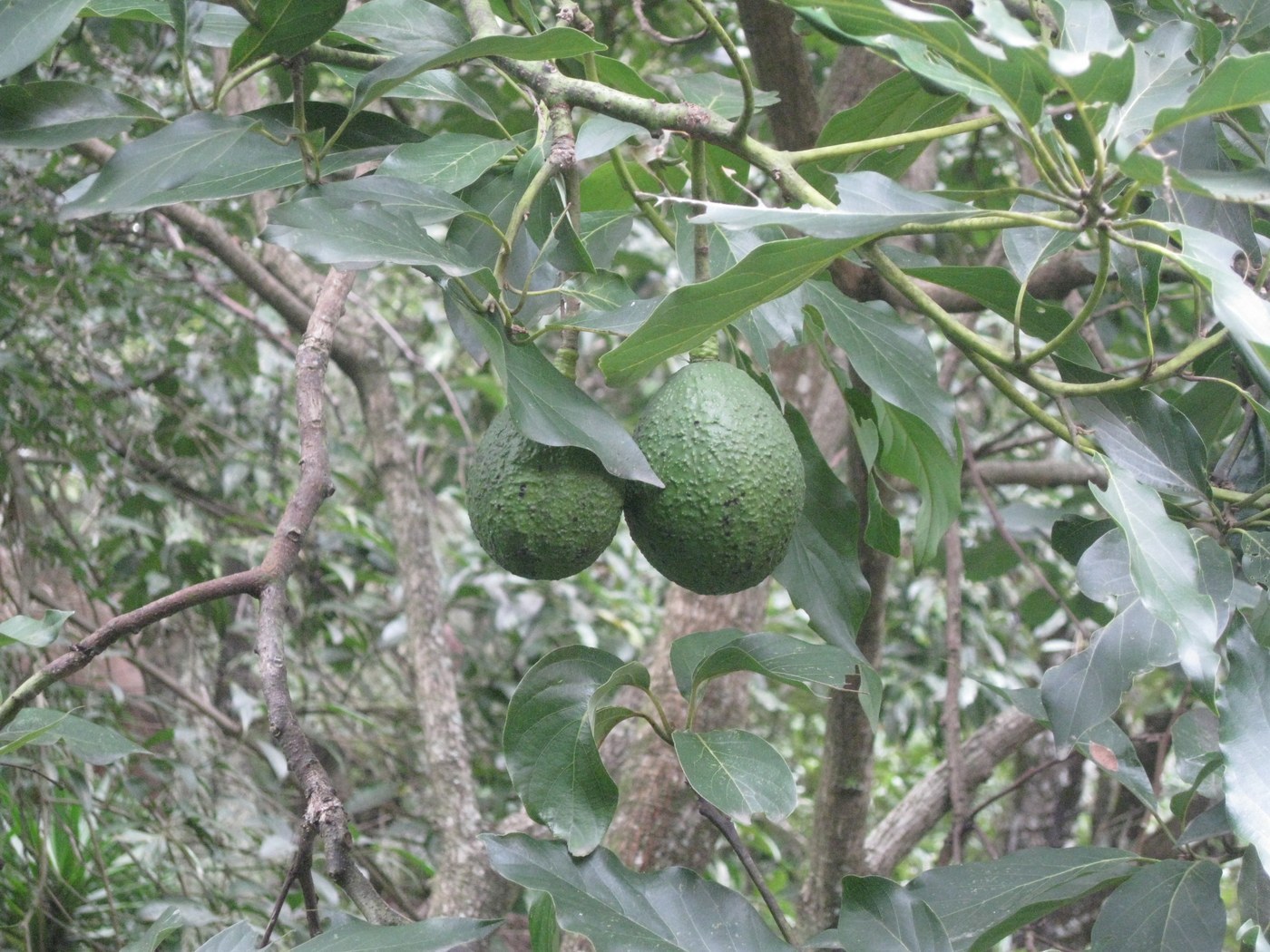
Avocado Tree
Persea americana
The avocado is a broadleaf evergreen fruiting tree. Frost-tender and vigorous, it is a popular subtropical orchard tree and a fun, if slow-fruiting, houseplant from a sprouted pit.
- Light
- Full sun
- Water
- Deep, regular watering; allow soil to dry slightly
- Difficulty
- Moderate
Got a plant like this?
Identify any plant from a photo, free.
Overview
The avocado is a fast-growing evergreen tree in the laurel family, native to south-central Mexico and Central America, where it has been cultivated for thousands of years. Its fruit is botanically a large berry with a single big seed.
Cultivars are grouped into Mexican, Guatemalan and West Indian races, with 'Hass' being the dominant commercial variety.
Avocados are frost-tender and best suited to subtropical and Mediterranean climates. In cooler regions they are often grown as ornamental houseplants from a sprouted pit, though such trees rarely fruit indoors.
How to identify it
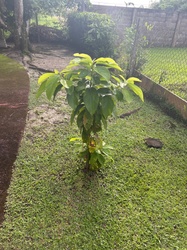
- Leaves: Large, glossy, leathery, elliptical evergreen leaves, often reddish when young; some types are anise-scented when crushed
- Flowers: Small, greenish-yellow flowers in panicles, with an unusual time-staggered male/female opening cycle
- Fruit: Large, pear-shaped to round berry with a single large seed; skin green to dark purple-black, smooth or pebbly
- Bark: Greyish-brown
- Size: Up to 10–20 m (30–65 ft) in the ground; much smaller in pots
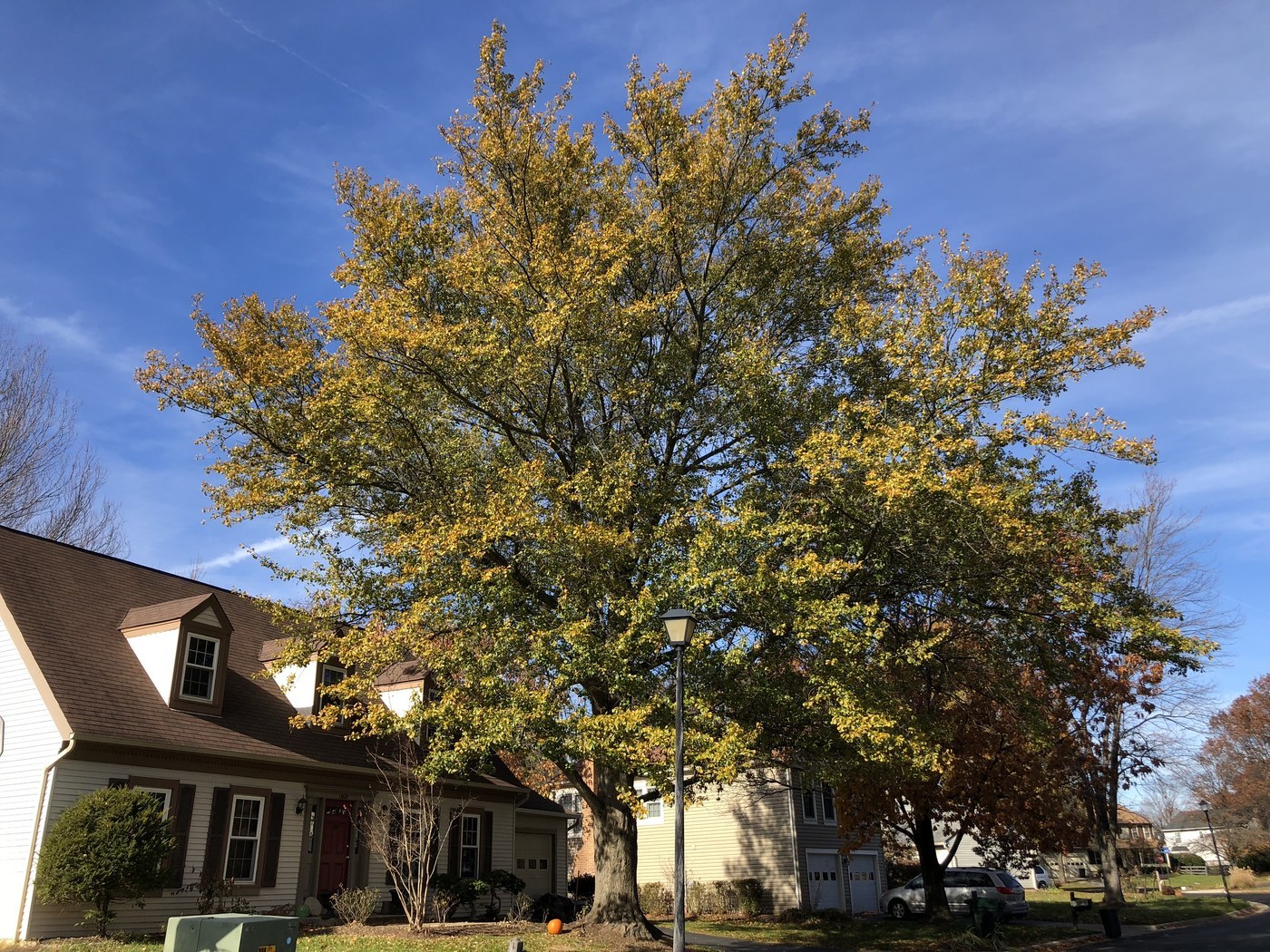
- Habit: Spreading evergreen with a dense canopy
Care & growing
Light: Full sun for outdoor trees; the brightest possible light indoors.
Water: Water deeply and regularly, allowing the soil to dry slightly between waterings. Avocados have shallow roots that hate both drought and waterlogging.
Soil: Loose, well-draining soil is essential; they are very prone to root rot in heavy or soggy ground.
Temperature: Frost-tender. Hardiness varies by race, but most are damaged below about -2 to -4 °C (25–28 °F). Best in warm subtropical to Mediterranean climates.
Feeding: Feed during the growing season with a balanced fertilizer including zinc and other micronutrients.
Pollination: Flowers are 'type A' or 'type B'; planting both improves fruit set, though many trees still self-pollinate to some degree.
Propagation: Commercially grafted for reliable fruit; easily sprouted from a pit, but seedlings are slow and may take 5–13 years to fruit, if at all.
Habitat & origin
Persea americana is native to south-central Mexico and Central America, originating in tropical and subtropical highland and lowland forests.
It is now grown commercially in warm climates worldwide, including Mexico (the largest producer), California, Florida, Peru, Chile, Spain, Israel and South Africa. In cold-winter regions, avocados are kept as container or houseplants, moved outdoors in summer and protected from frost.
Frequently asked questions
Why won't my avocado grown from a pit produce fruit?
Seed-grown avocados can take 5–13 years to fruit, if ever, and the fruit may differ from the parent. Indoors, the lack of sun, space and pollination usually means they stay leafy ornamentals. Grafted trees fruit far sooner and more reliably.
Do I need two avocado trees to get fruit?
Not strictly — many trees self-pollinate to some degree — but planting a 'type A' and a 'type B' variety together improves pollination and yields significantly.
How do I keep an avocado tree small?
Regular pruning and growing dwarf cultivars (such as 'Wurtz'/'Little Cado') in containers keeps the naturally large tree to a manageable size.
Why is my avocado tree getting brown leaf tips?
Brown, crispy leaf tips often indicate salt buildup from tap water or over-fertilizing, or inconsistent watering. Flush the soil occasionally and water evenly with low-salt water.
Avocado Tree guides
In-depth guides for identifying, growing, and caring for Avocado Tree.
How to Care for Avocado Tree
Grow a lush Avocado Tree with full sun, deep watering with slight drying between, warm frost-free conditions and free-draining soil.
Avocado Tree Identification Guide
Identify the avocado tree by its large glossy evergreen leaves, anise-scented foliage, tiny greenish flowers, and the heavy single-seeded fruit. Includes how to separate it from related laurels and mango.
Avocado Tree identified by the community
Real specimens identified with Plant Identifier.