Bird of Paradise Identification Guide
Identify the bird of paradise (Strelitzia reginae) by its large paddle-shaped banana-like leaves and the spectacular orange-and-blue crane-head flower it's named for.
Read the full Bird of Paradise encyclopedia entry →
Key Identifying Features
The bird of paradise (Strelitzia reginae) is identified by:
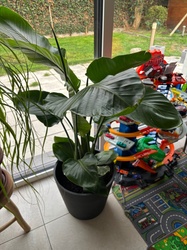
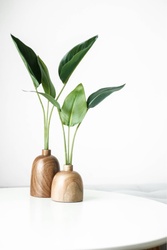
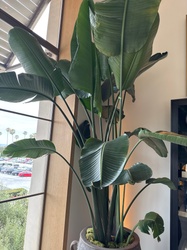
- Large, paddle-shaped, banana-like leaves on long upright stalks, forming a fan.
- The iconic flower resembling a bird's head: vivid orange sepals and blue petals emerging from a beak-like green bract.
- A clumping, stemless growth habit from the base.
Leaves & Stems
Leaves are stiff, leathery, oval-to-paddle-shaped, gray-green to blue-green, typically 30–50 cm (12–20 in) long on long, rigid petioles that can double the overall height. The leaves arrange in a flat, two-ranked fan rising from a basal clump — there is no true trunk in S. reginae (the giant white S. nicolai does form woody trunks).
Leaves resemble a small banana plant but are stiffer and held more upright, and often develop natural splits along the margins from wind. The plant grows from a thick rhizome and spreads into clumps.
Flowers & Fruit
The namesake bloom is unmistakable: a horizontal, beak-like green-and-pink bract (spathe) from which emerge a sequence of bright orange sepals and vivid blue arrow-shaped petals, looking exactly like the crest and beak of a tropical crane or bird. Blooms appear mainly in cooler months on mature plants. Pollinated by sunbirds in the wild; fruit is a woody capsule with seeds bearing orange tufts. The flower is the single most diagnostic feature.
How to Tell It Apart from Look-Alikes
- Banana plant (Musa): softer, larger leaves on a fleshy pseudostem, no fan arrangement of rigid petioles, and very different drooping flower; bird of paradise leaves are stiffer and held in a fan.
- Giant white bird of paradise (Strelitzia nicolai): much larger, with woody trunks and white-and-blue flowers; S. reginae stays clumping with orange-and-blue flowers.
- Traveler's palm (Ravenala): huge flat fan of banana-like leaves but on a tall trunk, and it's a different genus.
- Canna lily: softer leaves and frilly flowers, herbaceous and dying back seasonally.
The clincher: stiff paddle leaves in a fan + orange-and-blue crane-head flower = Strelitzia reginae.
Where You'll Find It
Native to South Africa's Eastern Cape coast. Worldwide it's grown as an ornamental for warm gardens and as a large statement houseplant. Outdoors it thrives in frost-free, sunny climates (USDA zones 10–12) and tolerates coastal conditions.
Quick ID Checklist
- Large, stiff, paddle/banana-shaped leaves
- Leaves on long petioles in a flat fan
- Clumping base, no woody trunk (S. reginae)
- Orange-and-blue crane-head flower from a beak-like bract
- Gray-green leaves often wind-split
A fan of stiff, paddle-shaped leaves topped by an orange-and-blue bird-shaped flower is the classic bird of paradise.
Frequently asked questions
Why is it called bird of paradise?
The flower looks strikingly like the head of a colorful tropical bird: a horizontal beak-like green bract releases pointed orange sepals and blue petals that resemble a crane's crest and beak. The resemblance gives the plant its name.
How do I tell it apart from a banana plant?
Banana plants have soft, large leaves on a fleshy pseudostem and droop, while bird of paradise has stiffer, gray-green paddle leaves held upright on long stalks in a flat fan, plus its unmistakable orange-and-blue flower.
Why won't my bird of paradise flower?
It typically blooms only when mature (often 4-6 years old), root-slightly-crowded, and given lots of bright, direct light. Young or low-light indoor plants may grow only foliage for years before flowering.
What's the difference between this and the giant white bird of paradise?
Strelitzia reginae stays a clumping plant with orange-and-blue flowers, while the giant white bird of paradise (Strelitzia nicolai) grows woody trunks several meters tall and produces larger white-and-blue flowers.
Bird of Paradise identified by the community
Recent Bird of Paradise specimens identified with Plant Identifier.