Bird of Paradise
Strelitzia reginae
The bird of paradise is a dramatic tropical plant famous for its vivid orange-and-blue flowers that resemble an exotic bird in flight. It has bold paddle-shaped leaves and makes a striking statement indoors or in warm gardens.
- Light
- Bright direct to indirect light
- Water
- When top inch is dry
- Difficulty
- Moderate
Got a plant like this?
Identify any plant from a photo, free.
Overview
The bird of paradise (Strelitzia reginae) is an evergreen tropical perennial native to South Africa. It is named for its spectacular flower, which features bright orange sepals and vivid blue petals arranged to resemble the head and plumage of a tropical bird.
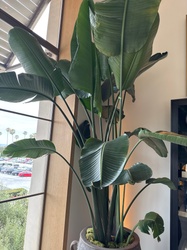
It forms a clump of long-stalked, banana-like leaves and, when mature, sends up its distinctive crane-like blooms. A larger relative, Strelitzia nicolai (giant white bird of paradise), is grown mainly for its dramatic foliage.
It is a showpiece plant outdoors in warm climates and a bold architectural houseplant elsewhere, though it needs strong light and patience to flower indoors.
How to identify it
- Flowers: Striking orange (sepals) and blue (petals) blooms emerging from a horizontal boat-shaped bract, resembling a bird's head
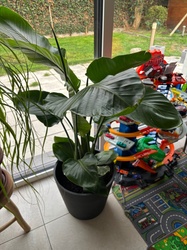
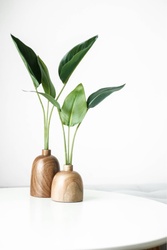
- Leaves: Large, leathery, paddle- or banana-shaped leaves on long stalks, blue-green in color
- Habit: Clumping, upright perennial, fan-like arrangement of leaves
- Size: Commonly 3-5 feet tall (S. reginae); the giant white form reaches 20+ feet
- Roots: Fleshy, tuberous root system
Care & growing
Light: Needs lots of bright light, including some direct sun, to grow well and flower. Insufficient light prevents blooming.
Water: Water when the top inch of soil dries; keep evenly moist in summer, drier in winter. Avoid waterlogging.
Soil: Rich, well-draining potting mix.
Temperature: Prefers 65-80°F (18-27°C); protect from frost.
Humidity: Appreciates moderate to high humidity.
Feeding: Feed regularly during the growing season to support blooming.
Propagation: By division of the clump; seed-grown plants take several years to flower. Maturity and a pot-bound root system encourage blooming.
Habitat & origin
Strelitzia reginae is native to the eastern coastal regions of South Africa, where it grows in open, sunny areas and along riverbanks in a mild, subtropical climate.
It is widely cultivated outdoors in warm, frost-free climates (USDA zones 10-12), including California, Florida, and the Mediterranean, where it is a landmark landscape and cut-flower plant, and grown as a houseplant elsewhere.
Frequently asked questions
Why won't my bird of paradise flower?
It usually needs to be mature (3-5 years), receive plenty of bright direct light, and be somewhat root-bound. Indoors, insufficient light is the most common reason it won't bloom.
Why are my leaves splitting?
Splitting along the leaf edges is natural for bird of paradise — it helps the large leaves shed wind in the wild and does not harm the plant.
How much light does it need indoors?
As much bright light as possible, including a few hours of direct sun near a south- or west-facing window, to grow strongly and have any chance of blooming.
How can I tell the common from the giant bird of paradise?
Strelitzia reginae stays 3-5 feet tall with orange-and-blue flowers, while Strelitzia nicolai grows 20+ feet with a tree-like trunk and white-and-blue blooms grown mainly for foliage.
Bird of Paradise guides
In-depth guides for identifying, growing, and caring for Bird of Paradise.
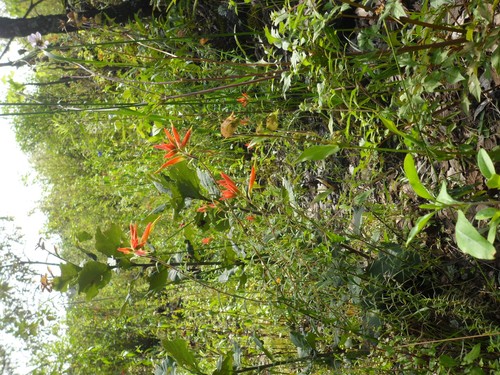
How to Care for Bird of Paradise
Grow dramatic bird of paradise for its crane-like orange-and-blue blooms in bright light with steady warmth.
Bird of Paradise Identification Guide
Identify the bird of paradise (Strelitzia reginae) by its large paddle-shaped banana-like leaves and the spectacular orange-and-blue crane-head flower it's named for.
Bird of Paradise identified by the community
Real specimens identified with Plant Identifier.