Bitternut Hickory Identification Guide
How to identify Bitternut Hickory (Carya cordiformis) by its unmistakable sulfur-yellow buds, slender compound leaves, and small thin-husked nuts.
Read the full Bitternut Hickory encyclopedia entry →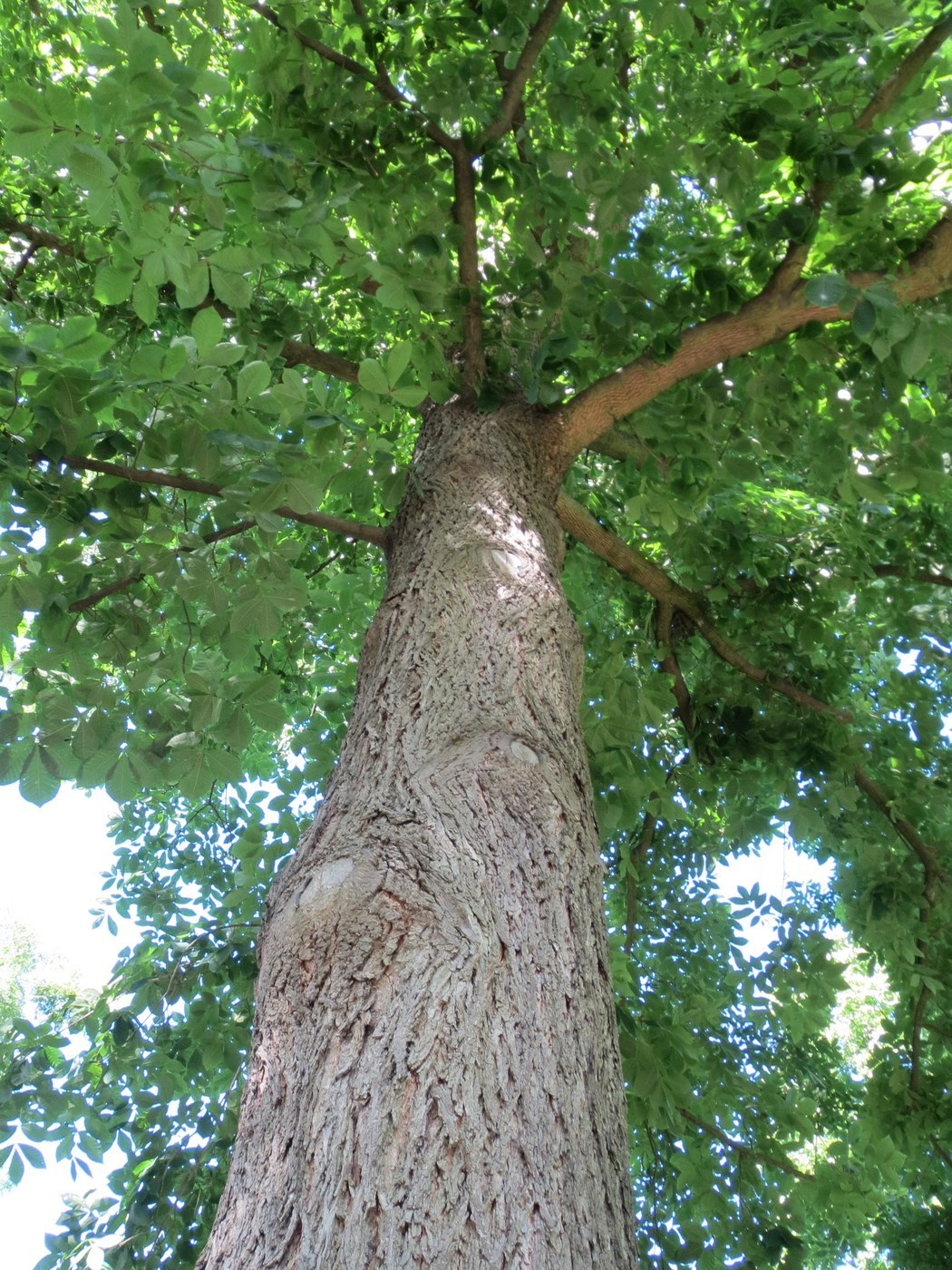
Key Identifying Features
Bitternut Hickory (Carya cordiformis) is the easiest hickory to identify thanks to one feature: its bright sulfur-yellow, scurfy buds. No other hickory or eastern tree has these mustard-colored, elongated terminal buds covered in a powdery yellow coating. If you find compound hickory leaves on a tree with yellow buds, you have bitternut. It is a tall, slender tree reaching 50-80 feet, common in moist eastern forests.
- Sulfur-yellow, valvate (non-overlapping) buds
- Tight, smooth gray bark with shallow, interlacing ridges (never shaggy)
- Small, thin-husked nuts with four winged ridges
Leaves & Stems
Leaves are pinnately compound, 6-10 inches long, typically with 7-11 leaflets (often 9) — more than most other hickories and noticeably slender. Leaflets are lance-shaped, finely toothed, and gradually taper to a point; the terminal leaflet is barely larger than the side ones. The foliage is thin and a bright yellow-green, turning clear yellow in fall.
Twigs are slender and greenish-brown to gray. The flattened, four-angled, yellow terminal bud is the giveaway, visible year-round. Bark stays comparatively smooth and gray-brown with low, netted ridges, unlike the shaggy-barked hickories.
Flowers & Fruit
In spring, slender green male catkins hang in three-branched clusters, while inconspicuous female flowers form at branch tips. The fruit is a small, nearly round nut about 1 inch across enclosed in a thin husk with four wing-like ridges along the upper half. The husk splits only partway, and these four ridges help confirm the identification.
How to Tell It Apart from Look-Alikes
- Shagbark / Shellbark hickory: shaggy, peeling bark and large overlapping brown buds; bitternut bark is tight and buds are yellow.
- Pignut hickory: brown buds, usually 5-7 leaflets, pear-shaped husk; bitternut has yellow buds and more leaflets.
- Mockernut hickory: large fuzzy brown buds, fragrant downy leaves; bitternut buds are yellow and leaves nearly hairless.
- Ash (Fraxinus): opposite leaves and twigs; all hickories are alternate.
The yellow buds resolve any uncertainty instantly.
Where You'll Find It
Bitternut Hickory favors moist, rich bottomlands, stream terraces, and lower slopes, though it also grows on drier upland sites. Its range covers most of the eastern United States and into southern Ontario and Quebec — from New England and Minnesota south to Texas and Florida. It is the most widespread of the hickories and tolerates wetter ground than its relatives.
Quick ID Checklist
- Sulfur-yellow, scurfy buds (year-round clincher)
- 7-11 slender leaflets per compound leaf
- Tight, gray, shallow-ridged bark — never shaggy
- Small round nut with 4 winged ridges on the husk
- Moist forests and bottomlands across eastern North America
Frequently asked questions
What is the single best way to identify bitternut hickory?
Look at the buds. Bitternut has bright sulfur-yellow, powdery terminal buds — no other hickory or eastern tree shares this trait, so it confirms the ID year-round.
How do I separate bitternut from shagbark hickory?
Bark and buds. Shagbark has loose, peeling vertical bark plates and large brown buds; bitternut has tight gray bark and yellow buds.
How many leaflets does bitternut hickory have?
Usually 7 to 11, often 9 — more and more slender than pignut or shagbark, which typically have 5 to 7.
Bitternut Hickory identified by the community
Recent Bitternut Hickory specimens identified with Plant Identifier.