Black Currant Identification Guide
Identify black currant (Ribes nigrum) by its strongly aromatic leaves with golden resin glands, thornless stems, and clusters of matte black berries.
Read the full Black Currant encyclopedia entry →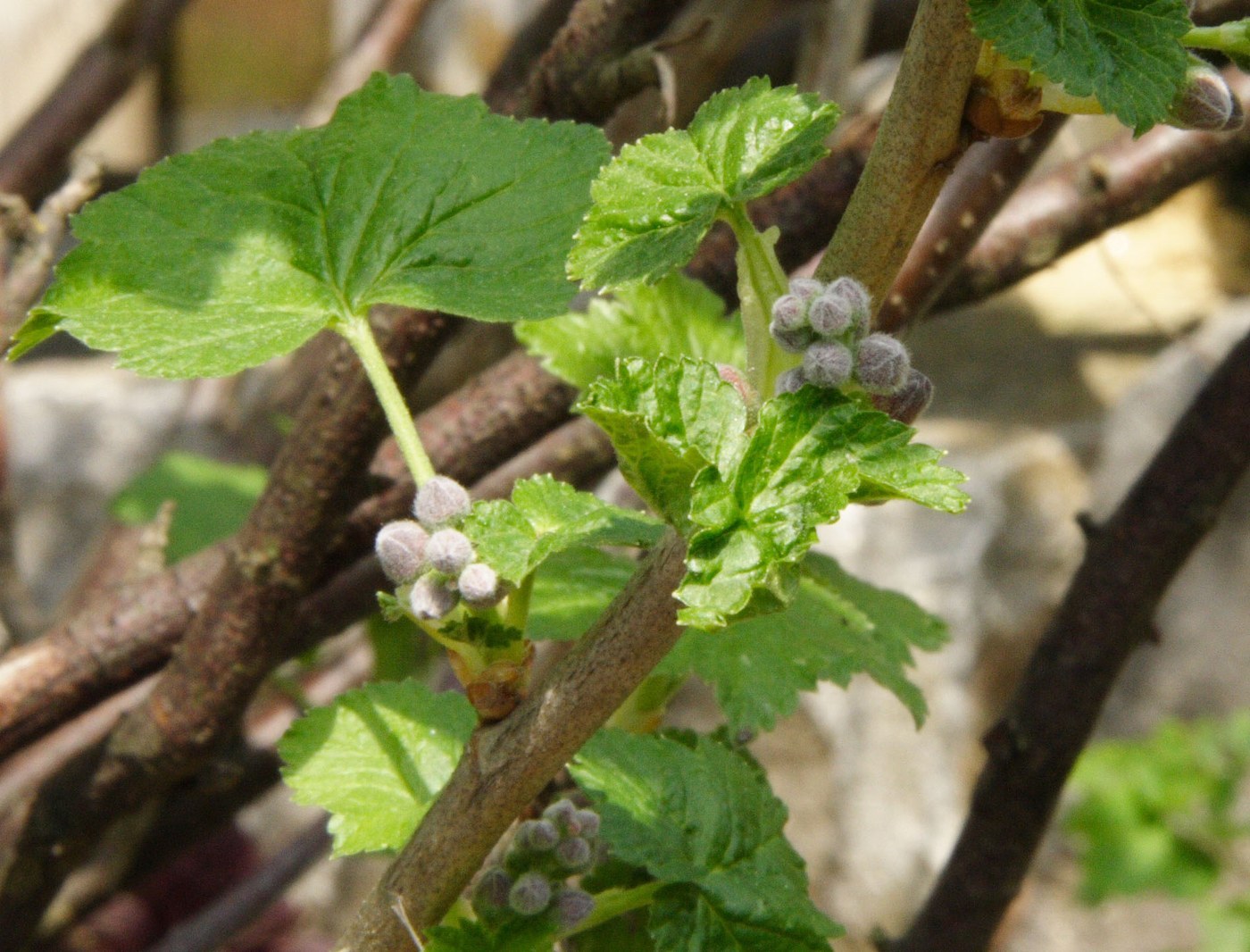
Key Identifying Features
Black currant is a thornless deciduous shrub 3-6 ft tall, forming an upright clump of woody stems. Its single most distinctive trait is smell: crush a leaf or scratch a bud and you get a powerful, musky, resinous "cat-like" aroma that no other Ribes shares. Combined with clusters of dull black berries, this makes it easy to confirm.
- Strongly aromatic foliage when crushed (musky, pungent)
- No thorns on the stems
- Matte black berries in short hanging clusters
- Tiny golden resin glands dotting the underside of leaves
Leaves & Stems
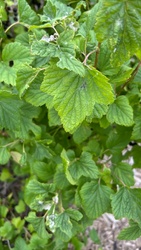
Leaves are palmately 3-5 lobed, 1.5-4 in. across, with serrated margins — broadly maple-shaped like other currants. The key detail is the underside: scattered yellowish, sticky resin glands that release the scent. Foliage is mid- to dark green and slightly rough. Stems are upright, gray-brown, and spineless; new shoots are aromatic when scratched. The plant has a stronger, coarser smell than red currant or gooseberry.
Flowers & Fruit
In spring, drooping racemes of small bell-shaped flowers appear, greenish outside and tinged reddish-purple or brownish inside — somewhat hairy. These mature into hanging clusters of round berries, 8-12 mm, ripening from green through red to a final dull, matte blackish-purple with a persistent dried calyx at the tip. The fruit is intensely flavored, dark-juiced, and aromatic — unmistakable when tasted.
How to Tell It Apart from Look-Alikes
- Red currant: Translucent red fruit and leaves with little or no scent; black currant is opaque, dark, and pungent.
- Gooseberry: Spiny stems and single/paired berries — black currant is thornless with clustered fruit.
- Chokeberry (Aronia) / elderberry: Different leaf shape (not lobed Ribes-type) and flat-topped flower heads; no resin-gland scent.
- Wild garden escapes: The musky leaf smell plus golden glands underneath is the definitive separator from all other dark berries.
Where You'll Find It
Black currant is cultivated across cool-temperate Europe, Asia, and parts of North America (note: restricted in some U.S. regions due to white pine blister rust). It naturalizes in damp woodlands, hedgerows, and along streams, and thrives in rich, moist soil in sun or part shade. Look and smell for it at moist woodland edges and old kitchen gardens.
Quick ID Checklist
- Upright thornless shrub, 3-6 ft
- Pungent musky smell from crushed leaves/buds
- Golden resin glands on leaf undersides
- 3-5 lobed maple-like leaves
- Drooping racemes of small bell flowers in spring
- Matte black berries in hanging clusters
Frequently asked questions
What is the easiest way to confirm a black currant?
Crush a leaf or bud: black currant has a powerful musky, resinous aroma unlike any other currant, and the leaf undersides carry tiny golden resin glands.
How do the berries differ from red currant?
Black currant berries are opaque, dull blackish-purple and grow in shorter clusters, while red currants are glossy, translucent red on longer strings.
Does black currant have thorns?
No. Like other true currants it is thornless; spines indicate a gooseberry instead.
Why is it banned in some places?
Black currant can host white pine blister rust, so cultivation is restricted in parts of the United States, though resistant cultivars exist.
Black Currant identified by the community
Recent Black Currant specimens identified with Plant Identifier.