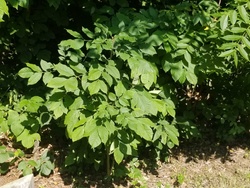
How to Care for Black Walnut
Grow the majestic Black Walnut shade tree with full sun, deep moist soil, and smart siting away from sensitive plants.
Read the full Black Walnut encyclopedia entry →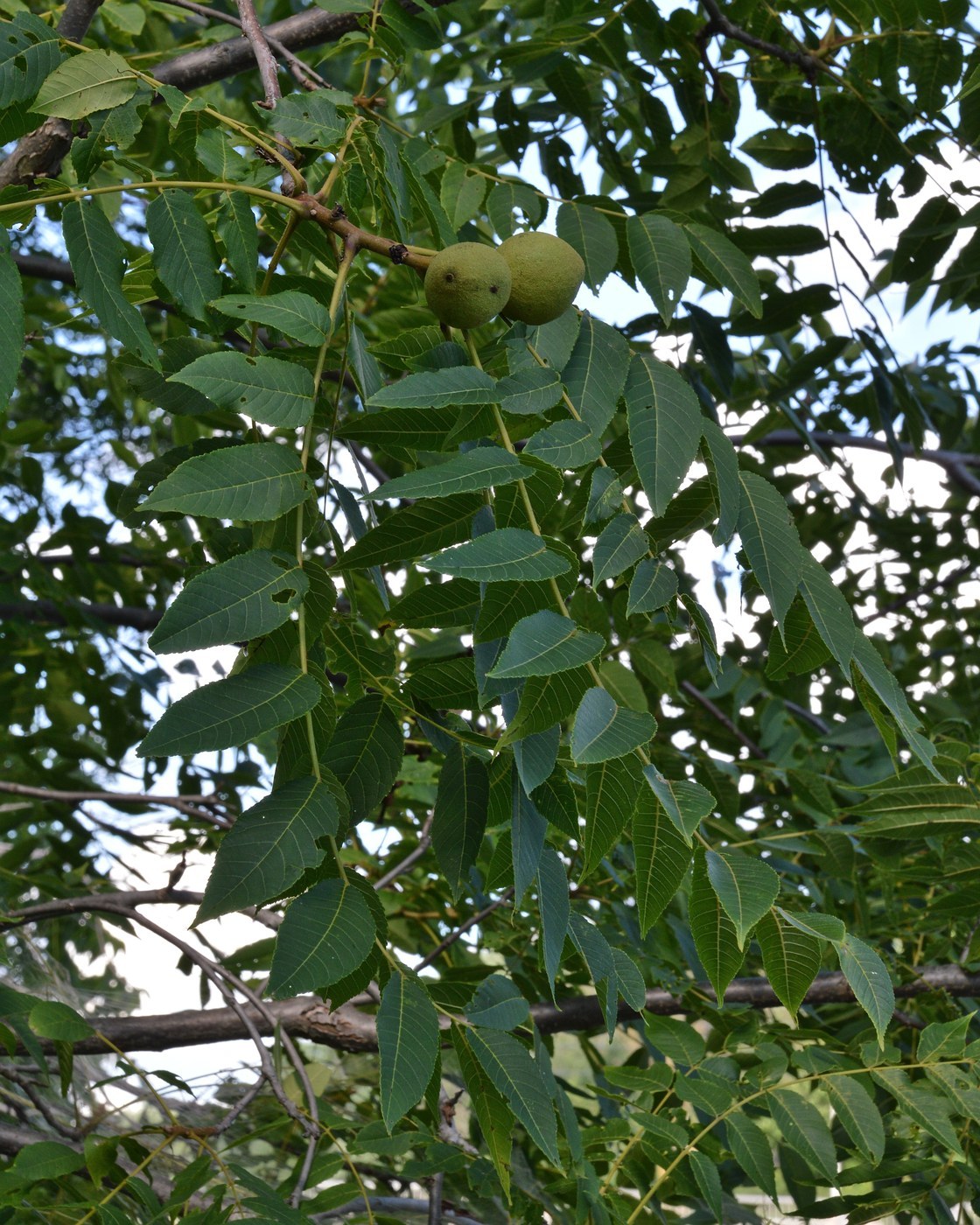
Black Walnut (Juglans nigra) is a large, long-lived deciduous shade tree valued for its stately form, handsome compound foliage, and richly figured wood. It develops a deep taproot and a broad, spreading canopy, making it a magnificent specimen where there is ample room to grow.
Light
Black Walnut demands full sun, needing at least six to eight hours of direct light daily to develop a strong, well-formed canopy. It is not shade-tolerant, particularly when young, so plant it in an open location where it will not be overtopped by other trees as it matures.
Soil & Potting
This tree thrives in deep, moist, fertile, well-draining soil, ideally a rich loam with a near-neutral pH. It grows best on bottomland-type sites with plenty of root depth for its taproot. Avoid shallow, compacted, or poorly drained soils, which stunt growth. Because of its taproot, Black Walnut is best planted young or grown from a nut where it is to remain, as it transplants poorly once established.
Water
Provide moderate, consistent moisture, especially while the tree is young and establishing. Deep, infrequent watering encourages the taproot to grow downward. Mature trees are more drought-tolerant but perform best with deep, moist soil. Keep the root zone mulched to conserve moisture and moderate soil temperature, keeping mulch a few centimeters away from the trunk.
Humidity & Temperature
Black Walnut is hardy across roughly USDA zones 4-9 and is well adapted to temperate climates with cold winters and warm summers. It requires a winter chilling period and handles a wide temperature range. Late spring frosts can occasionally damage newly emerging foliage, but established trees are very cold-hardy.
Feeding
Established trees in decent soil need little feeding. For young trees, a spring application of balanced fertilizer or a top-dressing of compost supports steady growth. Avoid heavy nitrogen, which can push weak growth. A generous organic mulch layer that breaks down over time supplies much of the tree's ongoing nutrient needs.
Propagation
Black Walnut is most commonly grown from seed (the nut), which benefits from cold stratification over winter to break dormancy; many gardeners simply plant nuts in fall where the tree is to grow. Because of the deep taproot, direct sowing or planting very young seedlings gives the best results. Named cultivars are propagated by grafting.
Repotting / Pruning
Prune in late winter to remove dead, damaged, or crossing branches and to establish a strong central leader and good structure while the tree is young. Corrective structural pruning early on pays off in a sound mature canopy. Avoid heavy pruning in spring, when the tree bleeds sap heavily. Container-grown seedlings should be planted out early before the taproot circles or deforms.
Common Problems & Pests
Black Walnut can be affected by pests such as walnut caterpillar, fall webworm, and various borers, and by diseases including anthracnose (leaf spot) and, in some regions, thousand cankers disease. Good vigor, proper siting, and clean-up of fallen debris reduce problems. Note that this tree produces juglone, a natural compound in its roots, leaves, and hulls that inhibits the growth of many sensitive garden plants nearby; site it away from vegetable beds and juglone-sensitive ornamentals, and plant only juglone-tolerant species beneath its canopy.
Seasonal Care Tips
In spring, watch for late frosts on tender new leaves and apply mulch and any needed feeding. Through summer, water young trees deeply during dry spells and monitor for caterpillars and leaf diseases. In fall the tree drops its nuts and leaves; rake up debris under the canopy to keep the area tidy. In late winter, carry out structural pruning while the tree is dormant and before heavy sap flow begins.
Frequently asked questions
Why can't I grow certain plants near a Black Walnut?
The tree releases juglone, a natural compound from its roots, leaves, and hulls that inhibits many sensitive plants. Site it away from vegetable beds and choose juglone-tolerant species for the area beneath it.
How much space does a Black Walnut need?
A lot. It becomes a large tree with a broad canopy and deep taproot, so plant it in an open location well away from buildings and other trees, with room to reach its full mature size.
Can I transplant an established Black Walnut?
It transplants poorly because of its deep taproot. It is best grown from a nut or planted as a very young seedling in its permanent spot, rather than moved once established.
When is the best time to prune a Black Walnut?
Prune in late winter while dormant to shape structure and remove dead or crossing branches. Avoid spring pruning, when the tree bleeds sap heavily from cuts.
Black Walnut identified by the community
Recent Black Walnut specimens identified with Plant Identifier.