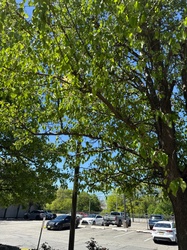
Bradford Pear Identification Guide
Identify the Bradford callery pear by its dense white spring blossoms, glossy heart-shaped leaves, neat teardrop crown, weak crotch angles, and the unpleasant smell of its flowers.
Read the full Bradford Pear encyclopedia entry →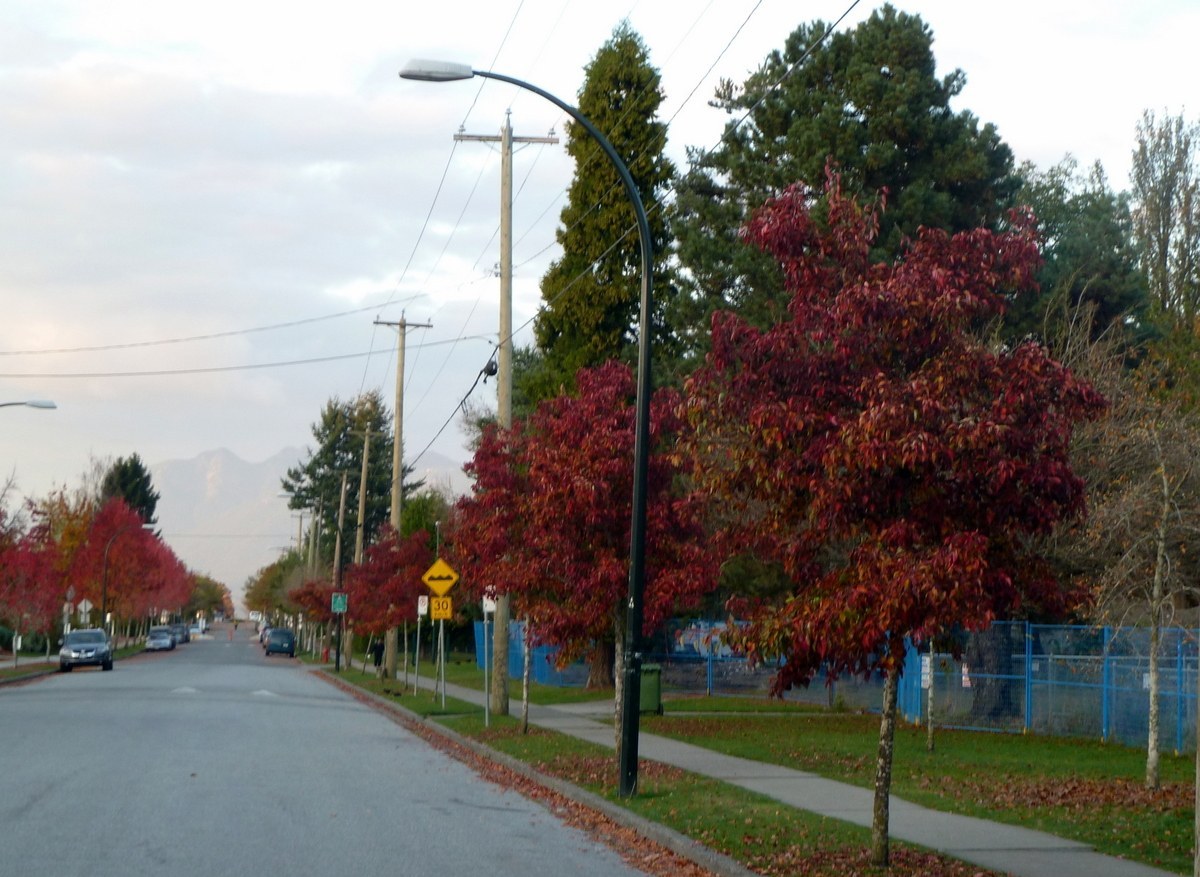
Key Identifying Features
The Bradford pear is a cultivar of the callery pear (Pyrus calleryana 'Bradford'), an enormously common — and now widely invasive — ornamental street tree. Recognize it by:
- A dense cloud of small white five-petaled flowers in early spring, before or with leaf-out
- A famously unpleasant, fishy/musty floral odor
- A neat, symmetrical teardrop or rounded "lollipop" crown packed with upright branches
- Glossy, leathery, rounded heart-shaped leaves with finely scalloped edges
- Brilliant red-to-purple fall color, often the last tree to color up
- A tendency for branches to split at narrow crotch angles in storms
Leaves & Stems
Leaves are alternate, simple, broadly ovate to nearly round, 1.5-3 inches long, with a glossy dark green surface, a pointed tip, and finely crenate (rounded-tooth) margins. The leaf stalk is long and slender, letting the leaves flutter. Foliage stays green very late and turns deep maroon, scarlet, and orange in late autumn.
The branching is diagnostic: numerous upright limbs crowd from nearly the same point, creating tight, weak V-shaped crotches. Mature trees often show storm damage from this structural flaw. Wild callery seedlings (and many cultivars) bear stout thorns; the named 'Bradford' is largely thornless, but its escaped offspring are very thorny.
Flowers & Fruit
Flowers are white, about ¾ inch wide, with five petals, borne in dense flat-topped clusters that smother the tree for one to two weeks in March-April. The smell is notoriously off-putting. Fruit is a small, hard, russet-brown pome, less than ½ inch, inconspicuous to people but eaten by birds, which spread the seeds and drive the species' invasiveness.
How to Tell It Apart from Look-Alikes
- Flowering cherry/plum: also white-to-pink in spring but with toothed (not scalloped, rounded) leaves and softer fruit; cherries have horizontal bark lenticels.
- Serviceberry (Amelanchier): white spring flowers but strappier petals, blue-purple fruit, and a more open form.
- Hawthorn: white clusters but deeply lobed/toothed leaves and red haws.
The combination of glossy round leaves + dense malodorous white blossoms + uniform teardrop crown + late fiery fall color is the Bradford pear signature.
Where You'll Find It
Planted for decades in USDA zones 5-9 along streets, in parking lots, subdivisions, and commercial landscapes throughout the eastern and central U.S. It has now escaped into fields, roadsides, and forest edges, forming thorny invasive thickets. Many states discourage or ban its sale. If you see a uniform white-blooming tree dominating a fencerow or old field in early spring, suspect feral callery pear.
Quick ID Checklist
- Symmetrical teardrop/rounded crown of crowded upright branches
- Dense white five-petaled flowers, foul-smelling, in early spring
- Glossy rounded heart-shaped leaves with scalloped edges
- Tiny hard russet-brown pea-sized fruit
- Late, intense red-purple fall color
- Weak narrow branch crotches (often storm-split); thorns on wild seedlings
A tidy, dome-shaped tree blanketed in stinky white blossoms in early spring, blazing red in late fall, is the Bradford pear.
Frequently asked questions
Why does the Bradford pear smell bad?
Its abundant white spring flowers emit volatile compounds many people describe as fishy, musty, or like rotting — a scent that attracts pollinating flies and is one of the tree's most memorable identifiers.
Is the Bradford pear invasive?
Yes. Although 'Bradford' itself is nearly fruitless and thornless, it cross-pollinates with other callery pear cultivars to produce fertile, thorny seedlings that birds spread into fields and woods, forming dense invasive thickets. Several states restrict its sale.
How can I tell a Bradford pear from a flowering cherry?
Bradford pear leaves are glossy, rounded, and scallop-edged, and the flowers smell unpleasant. Cherries have narrower, sharply toothed leaves, often pink-tinged flowers, and bark with prominent horizontal lenticel lines.
Why do Bradford pears split apart so often?
Their many upright branches arise from nearly the same point, creating tight, weak V-shaped crotches with included bark. These joints can't support the dense canopy in wind, ice, or snow, so mature trees frequently break apart.
Bradford Pear identified by the community
Recent Bradford Pear specimens identified with Plant Identifier.