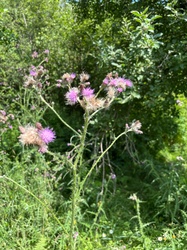
Canada Thistle Identification Guide
How to identify Canada thistle (Cirsium arvense), a colony-forming perennial weed with spiny lobed leaves and small lavender flower heads.
Read the full Canada Thistle encyclopedia entry →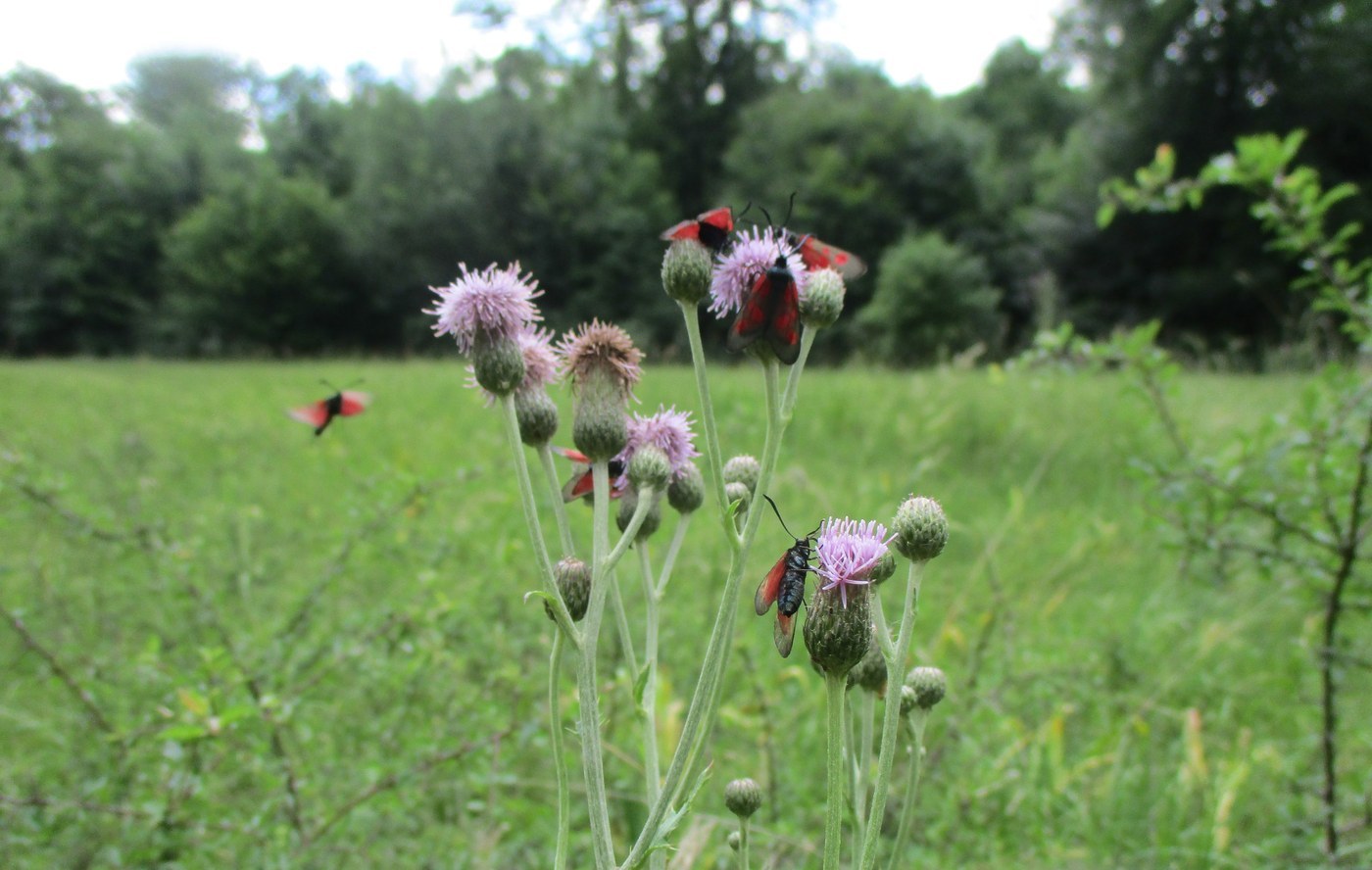
Key Identifying Features
Canada thistle (Cirsium arvense), despite the name a Eurasian native, is an aggressive creeping perennial that forms large colonies from spreading roots. Identify it by spiny, deeply lobed leaves, numerous small lavender-pink flower heads, and the way it grows in dense patches rather than as a single plant. Unlike many thistles, its stems are not spiny-winged.
- Patch-forming perennial spreading by horizontal roots
- Stems 2-5 ft tall, grooved, mostly smooth (no spiny wings)
- Many small flower heads (unlike the few large heads of other thistles)
Leaves & Stems
Leaves are alternate, lance-shaped, deeply cut into wavy, spiny lobes, with sharp prickles along the wavy margins. They are green and mostly hairless above, sometimes slightly woolly beneath. The stems are slender, grooved, and lack the spiny wings seen on bull and many other thistles, an important distinction. Plants emerge in dense stands from creeping lateral roots, so you rarely see just one.
Flowers & Fruit
From early to late summer, Canada thistle bears numerous small flower heads, each only about 1/2-3/4 inch across, in clusters at the stem tops. Flowers are lavender-pink to purple (occasionally white) with a fluffy, brush-like top over a smooth, nearly spineless bract base. Plants are typically dioecious (male and female on separate plants). Seeds bear feathery white pappus that floats on the wind, like miniature dandelion fluff.
How to Tell It Apart from Look-Alikes
- Bull thistle (Cirsium vulgare): solitary plant with large (1.5-2 inch) flower heads, very spiny winged stems, and bristly leaves; Canada thistle has small heads, wingless stems, and forms colonies.
- Musk/nodding thistle: large nodding heads with broad spiny bracts.
- Sow thistle: yellow dandelion-like flowers and milky sap, only weakly prickly.
Where You'll Find It
Canada thistle invades fields, pastures, roadsides, ditches, gardens, and disturbed ground in full sun. It is a serious agricultural weed across the northern U.S., Canada, and temperate regions worldwide, and is a legally listed noxious weed in many areas. Patches expand outward year after year.
Quick ID Checklist
- Grows in dense colonies from creeping roots
- Spiny, deeply lobed alternate leaves
- Stems without spiny wings
- Many small lavender-pink flower heads
- Wind-borne feathery white seeds
Frequently asked questions
How is Canada thistle different from bull thistle?
Canada thistle forms dense colonies from creeping roots, has small (under 1 inch) lavender flower heads, and smooth, wingless stems. Bull thistle grows as scattered single plants with large flower heads and very spiny, winged stems.
Why does Canada thistle grow in patches?
It spreads by horizontal underground roots that send up many new shoots, so a single plant quickly becomes a large interconnected colony, making it hard to control.
Is Canada thistle actually from Canada?
No. Despite the name, it is native to Europe and Asia and was introduced to North America. It is now a widespread and legally noxious weed in many regions.
What color are the flowers?
The small flower heads are usually lavender-pink to purple, occasionally white, with a fluffy brush-like top, and they mature into wind-blown seeds with feathery white tufts.
Canada Thistle identified by the community
Recent Canada Thistle specimens identified with Plant Identifier.